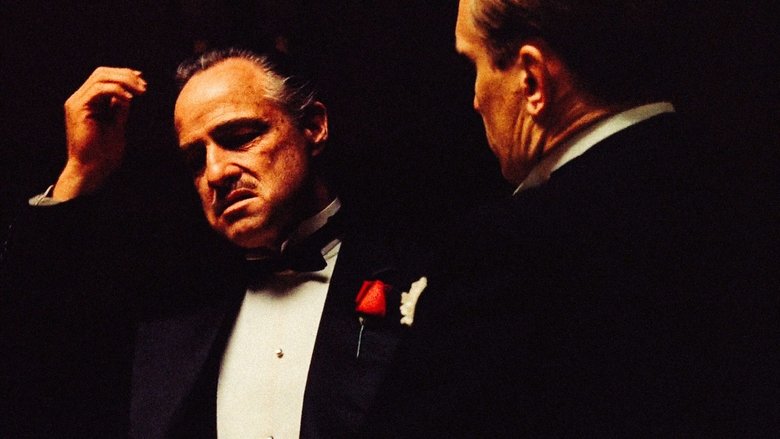
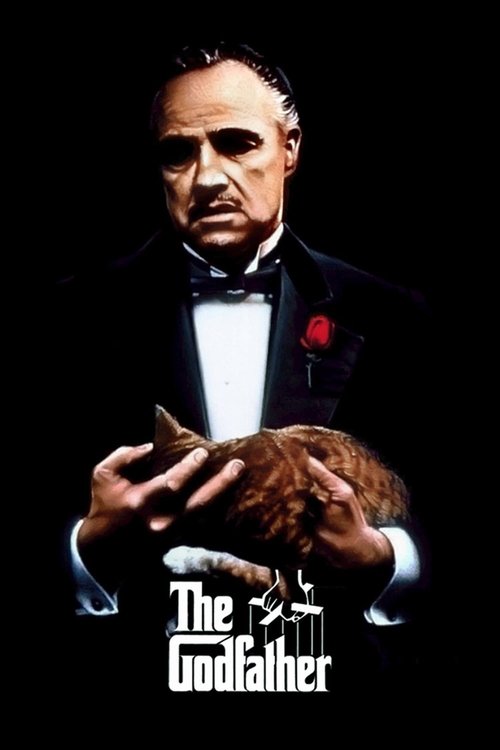
The Godfather
"An offer you can't refuse."
Overview
Set in the post-World War II era from 1945 to 1955, "The Godfather" chronicles the powerful Italian-American crime family of Don Vito Corleone. The film opens at the wedding of Vito's daughter, Connie, where the Don entertains requests for favors, establishing his immense influence and the family's code of honor. The narrative primarily follows Michael Corleone, Vito's youngest son, a decorated war hero who initially wants no part in his family's criminal activities.
A rival gangster, Virgil "The Turk" Sollozzo, approaches Don Corleone with a proposal to enter the narcotics business. Vito's refusal, based on his belief that drugs are a dirty business, ignites a brutal mob war. An assassination attempt leaves Vito incapacitated, forcing his hot-headed eldest son, Sonny, to take command. This act of violence inexorably pulls Michael into the family's affairs, setting him on a dark path of vengeance and succession.
As the conflict escalates, Michael finds himself making increasingly ruthless decisions to protect his family. His journey from a reluctant outsider to a cunning and cold-hearted leader forms the central pillar of the story. The film explores the intricate web of loyalty, betrayal, and power within the Mafia, questioning whether it's possible to maintain one's soul while navigating a world of violence and corruption.
Core Meaning
The core meaning of "The Godfather" is a tragic exploration of the corruption of the American Dream and the corrosive nature of power. Director Francis Ford Coppola presents a story that is both a critique of American capitalism and a study of a family's moral decay. The film opens with the line, "I believe in America," immediately setting up the theme of the American Dream, which the Corleone family pursues through a dark, violent interpretation of capitalism. The central message is that the pursuit of power, even when initially motivated by the desire to protect one's family, ultimately leads to the loss of humanity and soul. Michael Corleone's transformation from a principled war hero to a ruthless Don embodies this tragic trajectory, suggesting that the very methods used to secure the family's legacy are what ultimately poison it from within. The film argues that in this world, business and violence are inextricably linked, and the line between personal morality and family loyalty becomes tragically blurred.
Thematic DNA
The Corruption of the American Dream
The film opens with the line "I believe in America," immediately framing the narrative as an examination of the American Dream. However, the Corleones' path to success is a perversion of this ideal, built on crime, violence, and fear. The film suggests that the ruthless logic of capitalism, when taken to its extreme, mirrors the operations of organized crime. Vito Corleone, an immigrant who built a criminal empire, represents a dark version of the self-made man. His son Michael's journey further explores this theme, as he sacrifices his initial ideals and morality to secure the family's power and wealth, ultimately achieving a hollow and isolating version of success.
Family vs. Business
A central conflict in the film is the tension between the Corleone's identity as a loving family and their function as a ruthless criminal enterprise. Vito Corleone famously tells his godson, "A man who doesn't spend time with his family can never be a real man." Yet, the demands of the "family business" constantly force them to commit acts of betrayal and violence, often against those who are supposedly close to them. Michael's repeated claim that his actions are "strictly business, not personal" becomes increasingly hollow as the violence destroys his personal relationships, particularly with his wife, Kay. The film masterfully shows how the two concepts become indistinguishable, culminating in Michael ordering the death of his own brother-in-law.
Power and Its Corrupting Influence
"The Godfather" is a profound study of power: how it is acquired, maintained, and how it inevitably corrupts. The film meticulously details the mechanisms of power within the criminal underworld, from loyalty and respect to manipulation and brute force. Don Vito wields his power with a quiet, paternalistic authority, while Sonny's reign is passionate and reckless. Michael's arc is defined by his gradual embrace of a colder, more calculating form of power. His transformation is the film's central tragedy, demonstrating that in order to hold onto power, one must sacrifice their morality, empathy, and ultimately, their own soul. The final shot of the door closing on Kay signifies Michael's complete isolation by the power he has consolidated.
Loyalty and Betrayal
In the world of the Corleones, loyalty is the most valuable currency, and betrayal is the ultimate sin, punishable by death. The film is structured around a series of allegiances and betrayals. Characters like Luca Brasi exhibit unwavering loyalty, while others like Paulie Gatto, Tessio, and Carlo are executed for their treachery. Vito warns Michael that the person who arranges a meeting with a rival is the traitor, a lesson Michael uses to identify and eliminate Tessio. This constant threat of betrayal creates a tense and paranoid atmosphere, highlighting the fragility of relationships in a world where self-preservation often outweighs allegiance.
Character Analysis
Don Vito Corleone
Marlon Brando
Motivation
Vito's primary motivation is the preservation and prosperity of his family. He operates under a personal code of honor, believing his criminal activities are a necessary means to protect and provide for his loved ones in a society he feels has excluded them. He is driven by a desire for respect and the continuation of his legacy through his children.
Character Arc
Vito Corleone begins the film as the powerful and respected patriarch of the Corleone family. He is a man of complex morality, capable of both great kindness and ruthless violence. After the attempt on his life, his power wanes, and he is forced to pass the mantle to his son. His arc is one of transition, as he moves from the active head of a criminal empire to an elder statesman and mentor to Michael. By the end of his life, he has become a doting grandfather, seemingly removed from the violence he orchestrated, dying peacefully in his garden.
Michael Corleone
Al Pacino
Motivation
Initially, Michael is motivated by a desire for a legitimate life separate from his family. After the attack on Vito, his motivation shifts to protection and vengeance. He believes he must become ruthless to safeguard the family from its enemies. Ultimately, his motivation becomes the consolidation of power, which he rationalizes as being for the family's security, even as it destroys his personal relationships and his own soul.
Character Arc
Michael begins as the ultimate outsider, a decorated war hero who wants no part of the "family business." The assassination attempt on his father is the catalyst that pulls him in. His arc is a tragic descent from idealism to ruthlessness. He starts by killing Sollozzo and McCluskey out of a sense of duty, then flees to Sicily where he briefly experiences a different life. Upon his return and following Sonny's death, he fully embraces his destiny, becoming more cunning and colder than his father. His transformation culminates in the baptism massacre, where he eliminates all his rivals and solidifies his power, becoming the new Godfather.
Santino 'Sonny' Corleone
James Caan
Motivation
Sonny is motivated by passion, loyalty, and a fierce protective instinct for his family. He acts on emotion and impulse, whether it's dealing with business rivals or avenging perceived slights against his loved ones. He lacks the cunning and patience of his father and younger brother, which ultimately proves to be his fatal flaw.
Character Arc
Sonny's arc is short and tragic. He is introduced as the hot-tempered and impulsive underboss, groomed to be Vito's successor. When Vito is shot, Sonny takes charge, but his leadership is defined by passion and aggression rather than strategy. His lack of foresight and inability to control his emotions make him a poor Don. His arc ends abruptly when he is lured into a trap and brutally murdered at a tollbooth, a direct consequence of his rash decision to avenge his sister's abuse.
Tom Hagen
Robert Duvall
Motivation
Tom's primary motivation is loyalty to the Corleone family, particularly to Don Vito, who took him in as a boy. He is dedicated to providing sound legal and strategic advice, always aiming for negotiation and de-escalation before violence. He strives to be a trusted and indispensable part of the family structure.
Character Arc
Tom Hagen is the family's consigliere, an adopted son of German-Irish descent. He is a level-headed lawyer and the voice of reason. His arc sees him struggle to maintain his position and influence as the family's dynamics shift. While trusted by Vito, he is briefly sidelined by Sonny and later by Michael, who feels Tom is not a "wartime consigliere." Despite this, he remains loyal. His arc is one of a constant insider who is also perpetually an outsider due to his heritage, navigating the complex politics of the family with a calm and understated effectiveness.
Symbols & Motifs
Oranges
Oranges in "The Godfather" are a recurring motif that foreshadows death or imminent danger. They appear in key moments just before violence erupts, serving as a visual omen for the audience.
- Don Corleone is buying oranges from a street vendor when he is shot.
- Oranges are on the table during the meeting of the five family heads, a gathering filled with tension and deceit.
- Vito Corleone is peeling an orange and playing with his grandson moments before he dies of a heart attack in his garden.
The Closing Door
The final shot of the film, where the door to Michael's office closes on Kay, symbolizes Michael's complete separation from his former life and morality. It represents his total immersion into the world of the Mafia, his isolation from his wife and the legitimate world she represents, and the end of his transformation into the new, ruthless Godfather.
The final scene shows Kay watching as Michael's capos kiss his hand, addressing him as "Don Corleone." As she looks on in horror, one of his men closes the door, shutting her out physically and metaphorically.
The Baptism
The baptism of Connie's son is used in a powerful montage to symbolize Michael's own dark "baptism" as the new Godfather. The scene creates a stark and ironic contrast between the sacred vows of the Catholic rite and the brutal violence Michael unleashes simultaneously. As Michael renounces Satan in the church, his men are carrying out his orders to murder the heads of the other crime families, solidifying his power through bloodshed.
The film cross-cuts between Michael, standing as godfather at the baptism and answering the priest's questions, and the meticulously planned assassinations of Moe Greene, Barzini, Tattaglia, and the other rival Dons.
Fish
The symbol of fish is a classic Sicilian message indicating that someone has been killed and is now at the bottom of the sea. It signifies a confirmed death at the hands of the enemy.
After Luca Brasi is sent to infiltrate Sollozzo's organization, the Corleone family receives a package containing his bulletproof vest wrapped around a dead fish. Peter Clemenza explains the grim meaning: "It's a Sicilian message. It means Luca Brasi sleeps with the fishes."
Memorable Quotes
I'm gonna make him an offer he can't refuse.
— Don Vito Corleone
Context:
Vito says this to his godson, singer Johnny Fontane, assuring him he will get a coveted movie role. The studio head, Jack Woltz, has refused to cast Fontane. Vito's 'offer' ultimately involves placing the severed head of Woltz's prized horse in his bed.
Meaning:
This iconic line encapsulates the very nature of Don Corleone's power. It is a veiled threat presented as a reasonable proposition. The 'offer' is one that cannot be refused because the alternative is violence or death. It perfectly illustrates how the Corleone family blends the language of business with the reality of brutal coercion. The American Film Institute ranked it as the second-greatest movie quote of all time.
Leave the gun. Take the cannoli.
— Peter Clemenza
Context:
After carrying out a hit on the traitorous driver Paulie Gatto, Clemenza instructs his associate Rocco to leave the murder weapon but to remember the box of cannoli that his wife had asked him to bring home.
Meaning:
This line, improvised by actor Richard S. Castellano, is famous for its brilliant juxtaposition of the mundane and the horrific. It demonstrates how violence has become a routine, almost trivial, part of the characters' lives. The casual instruction to remember the dessert after committing a murder highlights the cold professionalism and the disconnect from the brutality of their actions.
It's not personal, Sonny. It's strictly business.
— Michael Corleone
Context:
Michael says this to a hot-headed Sonny while explaining his plan to murder Virgil Sollozzo and the corrupt police Captain McCluskey. Sonny is driven by personal vengeance for the attempt on his father's life, but Michael frames the act as a necessary strategic move.
Meaning:
This quote represents the cold, pragmatic philosophy that Michael adopts to justify his violent actions. It's a mantra he uses to separate his emotions from the ruthless decisions required by the "family business." It marks a pivotal moment in his transformation, showing his shift from a passionate individual to a calculated strategist, and it becomes a recurring theme as his actions grow increasingly personal and destructive.
A man who doesn't spend time with his family can never be a real man.
— Don Vito Corleone
Context:
Vito delivers this line to Johnny Fontane, chiding him for his womanizing and neglecting his own family while asking the Don for favors. It underscores Vito's traditional values, which exist in stark contrast to his criminal activities.
Meaning:
This quote reveals the central paradox of Vito's character and the film's themes. He espouses the supreme importance of family, yet his life as a crime boss often brings violence and tragedy to that very family. It reflects the idealized version of the patriarchal role that the characters strive for, even as their actions undermine it.
Don't ever take sides with anyone against the Family again. Ever.
— Michael Corleone
Context:
Michael says this to his brother Fredo after discovering that Fredo, out of weakness and resentment, had unknowingly provided information to his enemies. It's a moment that irrevocably damages their relationship and establishes a new, colder hierarchy within the family.
Meaning:
This chilling line, delivered with quiet intensity, demonstrates Michael's complete assumption of power and the unforgiving nature of his rule. It establishes the absolute, paramount importance of loyalty to the family above all else, including sibling bonds. It's a clear threat that foreshadows the tragic events of the sequel.
Philosophical Questions
Can one remain a good person while engaging in evil acts for a supposedly good cause?
This is the central philosophical question embodied by Michael Corleone. He begins as a man with a strong moral compass, a war hero detached from his family's criminal life. However, to protect his family after the attack on his father, he chooses to commit murder. He justifies his actions as necessary for the greater good of the family. The film meticulously documents how each violent act, each lie, and each betrayal chips away at his soul. It poses the question of whether the ends can ever justify the means. By the end, Michael has secured his family's power but has lost his own humanity, becoming the very thing he once despised, suggesting that engagement with evil, regardless of the initial motive, is an inherently corrupting process.
What is the true nature of justice and power?
"The Godfather" presents a world where official systems of justice have failed. The film opens with Bonasera, the undertaker, lamenting that the American courts did not punish the men who assaulted his daughter. He turns to Don Corleone for justice, which Vito provides swiftly and brutally. This sets up a parallel system of power and justice operating in the shadows. The film explores whether this form of justice, based on personal honor, loyalty, and violent retribution, is any more or less valid than the state's. It questions the legitimacy of power, suggesting that all power structures, whether legal or criminal, are ultimately maintained through the potential for violence and coercion.
Is destiny inescapable?
Michael Corleone's story raises profound questions about fate and free will. He makes a conscious effort to escape his family's legacy, choosing a life of service and intending to marry an outsider, Kay. However, circumstances—the assassination attempt, Sonny's incompetence—conspire to pull him back in. The film explores whether Michael truly chooses his path or if he is a victim of his lineage and circumstances, destined to become the next Don. Vito himself says he never wanted this life for Michael. Yet, Michael's innate intelligence and ruthlessness make him uniquely suited for the role, leaving the audience to ponder whether his tragic fall was a series of choices or the fulfillment of an unavoidable destiny.
Alternative Interpretations
While the primary reading of "The Godfather" is a tragic tale of moral corruption, several alternative interpretations exist. One prominent view is that the film is a metaphor for American capitalism. This interpretation sees the Corleone family's operations—their focus on business, eliminating competition, and securing political influence—as a mirror of corporate America, just operating outside the law. The film's narrative of succession from the old-world values of Vito to the cold, corporate ruthlessness of Michael can be seen as a commentary on the evolution of American business practices.
Another interpretation focuses on the film as a story of immigrant assimilation and the perversion of the American Dream. From this perspective, the Corleones are a family who, facing prejudice and limited opportunities, create their own power structure. Vito's criminal enterprise is seen as a twisted path to achieving the security and influence denied to them by mainstream society. Michael's initial desire for legitimacy represents the second generation's attempt to assimilate fully, but he ultimately finds that he cannot escape the legacy and methods of the old world.
A more controversial reading suggests the film, despite its tragic elements, glorifies the Mafia. This view argues that by telling the story entirely from the Corleones' perspective and rarely showing the civilian victims of their crimes, the film invites the audience to sympathize with and even admire these violent criminals. Don Vito, in particular, is often seen as a noble, admirable figure, a man of honor and family values, which can overshadow the brutality of his profession.
Cultural Impact
"The Godfather" is widely regarded as a landmark of American cinema and one of the most influential films ever made. Upon its release in 1972, it was a massive critical and commercial success, becoming the highest-grossing film of the year and for a time, the highest-grossing film ever made. It revitalized the gangster genre, shifting the focus from the rise-and-fall gangster archetype to a more complex, family-centric saga.
The film had a profound impact on popular culture. Phrases like "I'm gonna make him an offer he can't refuse," "Leave the gun, take the cannoli," and "sleeps with the fishes" have become deeply ingrained in the global lexicon. It significantly shaped the public perception of the Mafia, creating a romanticized yet brutal image of organized crime that continues to influence countless other films and television series, most notably "GoodFellas" and "The Sopranos."
Moreover, the film changed how Italian-Americans were depicted on screen. While criticized by some for reinforcing stereotypes linking Italians to the Mafia, many argue it presented them as more fully-realized, complex characters than the one-dimensional caricatures previously seen in Hollywood. The film launched the careers of Al Pacino, James Caan, and Diane Keaton and revitalized Marlon Brando's. Its success ushered in the 'New Hollywood' era of the 1970s, a period of director-driven, character-focused, and morally complex filmmaking. In 1990, it was selected for preservation in the U.S. National Film Registry for being "culturally, historically, or aesthetically significant."
Audience Reception
Upon its 1972 release, "The Godfather" received overwhelming universal acclaim from both critics and audiences. It was a box office phenomenon, breaking records to become the highest-grossing film of the year. Audiences were captivated by its epic scope, compelling characters, and its immersive, detailed portrayal of the Mafia world. The performances, particularly Marlon Brando's Oscar-winning turn as Vito Corleone and Al Pacino's star-making role as Michael, were widely praised. Francis Ford Coppola's direction, the screenplay, the cinematography by Gordon Willis, and Nino Rota's iconic score were all lauded as masterful.
Points of praise consistently centered on the film's complex character development, especially Michael's tragic transformation. Critics and viewers were drawn to the film's exploration of profound themes like family, power, and the dark side of the American Dream. While there was some criticism from Italian-American groups for perpetuating stereotypes, many felt the film presented its characters with a depth and humanity that transcended caricature. The film's deliberate pacing and three-hour runtime were seen not as a weakness but as a strength, allowing for a rich, novelistic storytelling experience. Overall, the verdict was that "The Godfather" was not just a great gangster movie, but a true cinematic masterpiece.
Interesting Facts
- The cat in the opening scene with Marlon Brando was a stray that director Francis Ford Coppola found on the Paramount lot. He simply placed it in Brando's lap, and the cat's loud purring reportedly muffled some of the dialogue, which had to be looped later.
- The infamous horse head scene used a real severed head from a dog food company. Actor John Marley's terrified scream was genuine, as a prop head had been used during rehearsals and he was not warned about the switch for the actual take.
- Marlon Brando did not stuff his cheeks with cotton balls for the actual filming. He used cotton during his audition to create Don Corleone's bulldog-like jowls, but for the movie, he wore a custom-made dental prosthetic.
- Paramount executives were initially against casting both Marlon Brando, whom they considered difficult, and Al Pacino, who was a relative unknown. Coppola had to fight relentlessly to get his preferred actors for the roles of Vito and Michael.
- The character of Johnny Fontane was widely believed to be based on Frank Sinatra, who reportedly had connections to organized crime. Sinatra was furious about the character and allegedly confronted author Mario Puzo.
- Coppola held improvisational rehearsal sessions where the main cast would have a family meal in character to help them organically build their family dynamic and roles.
- Real-life mobsters visited the set. One of them, Lenny Montana, a former wrestler and bodyguard for the Colombo crime family, was cast on the spot as the fearsome enforcer Luca Brasi. His nervousness in the scene with Brando was real, and Coppola incorporated his fumbled lines into the final cut.
- The studio originally wanted to save money by having the film set in the 1970s and filmed in Kansas City. Coppola insisted on keeping the post-WWII New York setting to maintain the novel's integrity.
- Sonny Corleone's graphic death scene at the tollbooth was the most expensive scene in the movie, costing over $100,000 and involving James Caan being fitted with over 140 small explosive squibs to simulate the bullet hits.
⚠️ Spoiler Analysis
Click to reveal detailed analysis with spoilers
Frequently Asked Questions
Explore More About This Movie
Dive deeper into specific aspects of the movie with our detailed analysis pages
Comments (0)
No comments yet. Be the first to share your thoughts!