At its core, "The Good, the Bad and the Ugly" is a cynical and powerful anti-war film that uses the Western genre to explore the corrupting nature of greed and the futility of conflict. Director Sergio Leone portrays a world where the traditional notions of good and evil are rendered meaningless against the backdrop of the senseless violence of the Civil War. The three protagonists, despite their labels, are all driven by self-interest and a desire for wealth, suggesting that in a world consumed by chaos, moral distinctions become blurred. The film's message is that the pursuit of riches in the midst of widespread human suffering is an absurd and ultimately empty endeavor. The war itself is depicted as the ultimate evil, a chaotic force that brings out the worst in humanity.
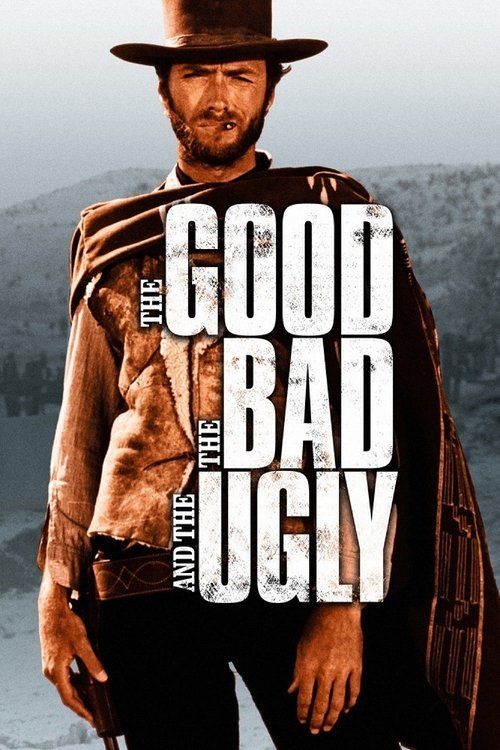
Il buono, il brutto, il cattivo
"For three men the Civil War wasn't hell. It was practice."
Director: Sergio Leone
Cast: Clint Eastwood, Eli Wallach, Lee Van Cleef, Aldo Giuffrè, Luigi Pistilli
The Good, the Bad and the Ugly — Symbolism & Philosophy
Symbols & Motifs
The Cemetery
The cemetery, particularly Sad Hill Cemetery, symbolizes the ultimate destination of the characters' greed-driven quest and the omnipresence of death. It is a place where the pursuit of wealth and the finality of death converge. The circular design of the final duel's location suggests the cyclical nature of violence and the inescapable fate that awaits those who live by the gun.
The entire film builds towards the climax at Sad Hill Cemetery, where the gold is buried in a grave. The final three-way standoff, a "Mexican standoff," takes place in the center of the cemetery, a visually stunning and thematically potent setting for the resolution of the characters' conflicts.
Cigars
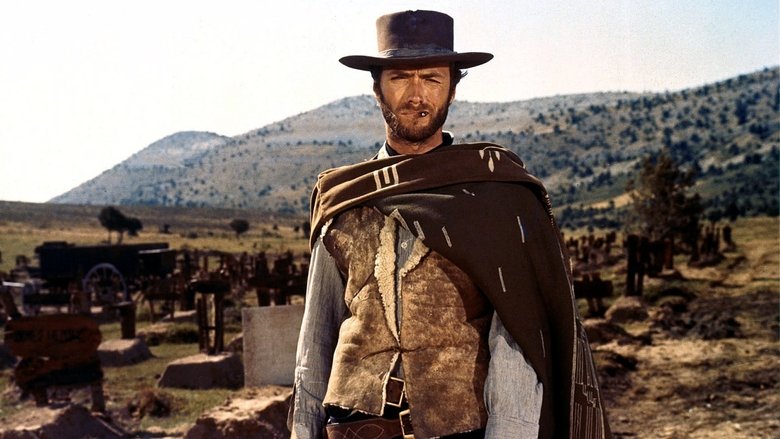
Blondie's cigars are a symbol of his cool, detached demeanor and his control over situations. They are a constant presence, often used as a prop to punctuate his laconic dialogue and to create tension. When Tuco is forced to eat a cigar given to him by Blondie, it symbolizes Blondie's dominance in their relationship.
Blondie is rarely seen without a cigar, lighting them at crucial moments before a gunfight or during a tense negotiation. The exchange of cigars between characters often signifies a temporary and untrustworthy truce.
The Desert
The vast, unforgiving desert symbolizes the harshness of the world the characters inhabit and serves as a crucible that tests their endurance and morality. It is a space devoid of law and civilization, where only the most ruthless can survive. It represents a kind of purgatory where the characters' true natures are revealed through their suffering.
One of the most memorable sequences in the film is when Tuco forces Blondie to walk across the desert without water as an act of revenge. This grueling journey strips Blondie of his usual composure and highlights the cruelty of which Tuco is capable.
Philosophical Questions
What is the nature of 'good' and 'evil' in a lawless and chaotic world?
The film consistently blurs the lines between its titular archetypes. Blondie, the "Good," is a killer motivated by money. Angel Eyes, the "Bad," operates with a cold, almost business-like logic. Tuco, the "Ugly," is both a victim and a perpetrator of cruelty. The film suggests that in the absence of societal structures and in the face of widespread violence like the Civil War, traditional moral codes collapse. Goodness becomes relative, perhaps defined not by inherent virtue but by small acts of compassion in a world of brutality, or simply by being slightly less ruthless than one's competitors.
How does war impact individual morality and the pursuit of personal goals?
The Civil War in the film is depicted as an absurd and horrific backdrop to the characters' treasure hunt. The grand, ideological conflict of the war is contrasted with the petty, selfish greed of the protagonists. However, the war inevitably affects them, forcing them into alliances and exposing them to the depths of human suffering. Blondie's uncharacteristic moment of pity for a dying soldier suggests that even the most cynical individuals cannot remain entirely untouched by the tragedy of war. The film explores whether personal quests, even immoral ones, are rendered meaningless or even more profane by the context of such widespread, senseless violence.
Core Meaning
Explore More About This Movie
Dive deeper into specific aspects of the movie with our detailed analysis pages