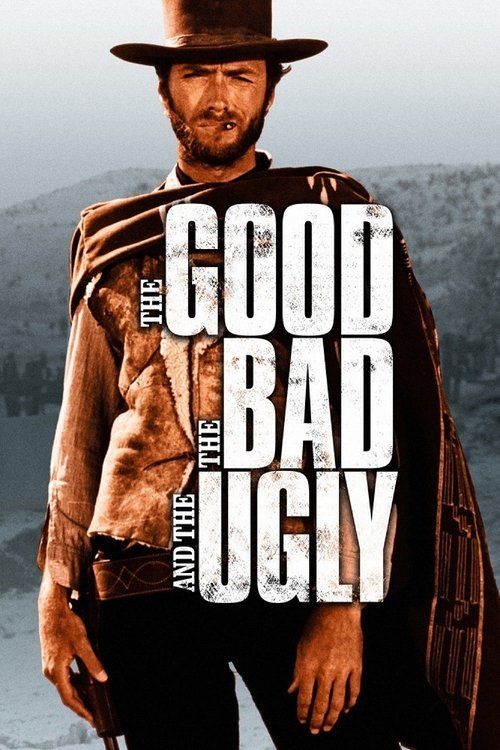
The Good, the Bad and the Ugly
Il buono, il brutto, il cattivo
"For three men the Civil War wasn't hell. It was practice."
Overview
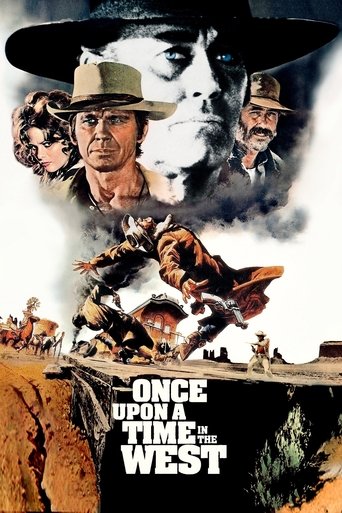
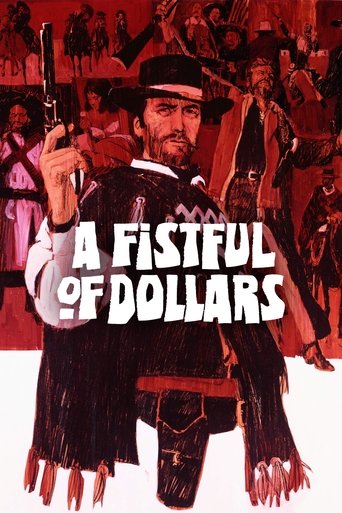
Set during the American Civil War, "The Good, the Bad and the Ugly" follows three ruthless men on a quest to find a hidden cache of Confederate gold. "The Good," a taciturn bounty hunter named Blondie, "the Bad," a sadistic mercenary named Angel Eyes, and "the Ugly," a boisterous Mexican bandit named Tuco, form a series of treacherous alliances and bitter rivalries. Each man possesses a piece of the information needed to locate the treasure, forcing them into an uneasy and violent partnership as they navigate the chaotic backdrop of the war. The film is the third and final installment of Sergio Leone's "Dollars Trilogy."
Their journey is a violent odyssey across the war-torn American Southwest, marked by captures, escapes, and brutal confrontations. The constant double-crossing and shifting loyalties highlight the characters' morally ambiguous nature, where survival and greed are the primary motivators. The vast and unforgiving landscape becomes a character in itself, mirroring the harsh realities faced by the protagonists. Director Sergio Leone deconstructs the romanticism of the Old West, presenting a grittier and more complex portrayal of its inhabitants.
Core Meaning
At its core, "The Good, the Bad and the Ugly" is a cynical and powerful anti-war film that uses the Western genre to explore the corrupting nature of greed and the futility of conflict. Director Sergio Leone portrays a world where the traditional notions of good and evil are rendered meaningless against the backdrop of the senseless violence of the Civil War. The three protagonists, despite their labels, are all driven by self-interest and a desire for wealth, suggesting that in a world consumed by chaos, moral distinctions become blurred. The film's message is that the pursuit of riches in the midst of widespread human suffering is an absurd and ultimately empty endeavor. The war itself is depicted as the ultimate evil, a chaotic force that brings out the worst in humanity.
Thematic DNA
The Ambiguity of Morality
The film famously labels its protagonists as "Good," "Bad," and "Ugly," yet their actions consistently challenge these simplistic classifications. Blondie ("The Good") is a bounty hunter who is not above betrayal and violence for personal gain. Angel Eyes ("The Bad") is a ruthless killer, but he operates with a certain cold professionalism. Tuco ("The Ugly") is a comedic and pitiable figure, but also a dangerous criminal. Leone suggests that in the brutal landscape of the West, and particularly during wartime, clear-cut moral distinctions are impossible. All three characters are antiheroes, driven by greed and a will to survive, forcing the audience to question the very nature of good and evil.
The Brutality and Futility of War
The American Civil War serves as more than just a backdrop; it is a powerful thematic element that underscores the film's anti-war message. Leone portrays the war as a senseless and chaotic slaughter, a grim reality that stands in stark contrast to the protagonists' selfish quest for gold. Scenes of battlefields littered with dying soldiers and a harrowing depiction of a prisoner-of-war camp highlight the immense human cost of the conflict. Blondie's uncharacteristic display of compassion for a dying soldier emphasizes the wastefulness of war. The film suggests that the organized violence of war is far more destructive than the individual greed of the main characters.
Greed as a Driving Force
The pursuit of $200,000 in Confederate gold is the central motivation for all three main characters. This relentless desire for wealth leads to a cycle of betrayal, violence, and cruelty. The film explores how greed can erode trust and morality, turning potential allies into deadly enemies. Each character is willing to endure immense hardship and inflict suffering on others to achieve their financial goal. The iconic final standoff in the cemetery is the ultimate culmination of their greed-fueled journey, a tense and operatic confrontation for the ultimate prize.
The Unromanticized West
"The Good, the Bad and the Ugly" is a prime example of the "Spaghetti Western," a subgenre that offered a grittier, more cynical, and visually distinct alternative to the traditional Hollywood Western. Leone deconstructs the romantic myths of the American frontier, populating his film with morally ambiguous antiheroes instead of clean-cut heroes. The world he presents is dirty, violent, and unforgiving, a far cry from the sanitized version often seen in American Westerns of the time. This realistic and complex portrayal of the West had a profound influence on the genre.
Character Analysis
Blondie (The Good)
Clint Eastwood
Motivation
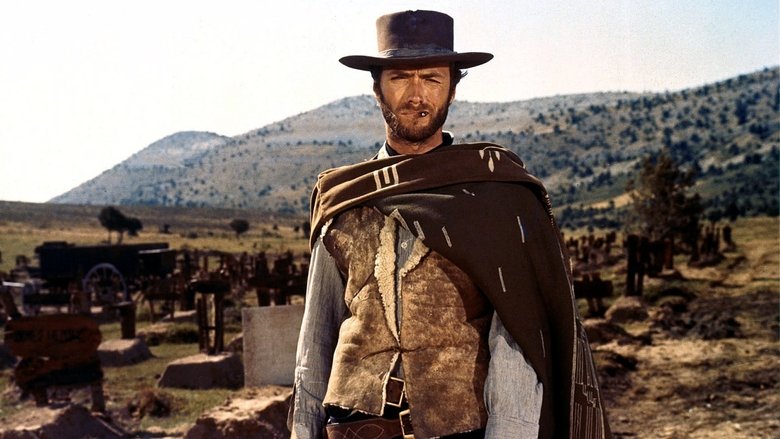
Blondie's main motivation is to acquire the $200,000 in gold. He is also driven by a strong sense of self-preservation and a desire to maintain his independence. He operates according to his own set of rules in a world without them.
Character Arc
Blondie begins and ends the film as a pragmatic and self-interested bounty hunter. His arc is not one of significant moral transformation but rather a reinforcement of his personal code. While he is capable of compassion, as seen with the dying soldier, his primary motivation remains his own survival and enrichment. He consistently outsmarts his rivals through his cunning and stoicism. In the end, he upholds his own form of justice by killing Angel Eyes and leaving Tuco with a share of the gold, albeit in a cruel and humiliating manner.
Angel Eyes (The Bad)
Lee Van Cleef
Motivation
Angel Eyes is motivated solely by greed. He is relentless in his pursuit of the gold and is willing to torture and kill anyone who stands in his way. He believes that money is the ultimate measure of a man's worth.
Character Arc
Angel Eyes is a static character who remains consistently ruthless and sadistic throughout the film. He is introduced as a man who will do anything for money, including killing his own employers. His arc is a straight line of villainy, serving as the primary antagonist and a representation of pure, unadulterated evil in the film's moral spectrum. He never wavers from his cruel and calculating nature, ultimately leading to his demise in the final duel.
Tuco Ramirez (The Ugly)
Eli Wallach
Motivation
Like the others, Tuco is driven by the desire for the gold. However, his motivations are also more personal and immediate: survival, revenge against those who have wronged him, and a certain vanity. He sees the gold as a means to escape his life of poverty and hardship.
Character Arc
Tuco is the most complex and developed character in the film. He is a wanted bandit who is both comedic and dangerous. His arc is a series of ups and downs, from being a victim of Blondie's schemes to seeking brutal revenge. A key moment in his development is the encounter with his estranged brother, a priest, which reveals a more vulnerable and perhaps regretful side to his character. Despite his many flaws, Tuco is a survivor, and his emotional range makes him a compelling and memorable figure.
Symbols & Motifs
The Cemetery
The cemetery, particularly Sad Hill Cemetery, symbolizes the ultimate destination of the characters' greed-driven quest and the omnipresence of death. It is a place where the pursuit of wealth and the finality of death converge. The circular design of the final duel's location suggests the cyclical nature of violence and the inescapable fate that awaits those who live by the gun.
The entire film builds towards the climax at Sad Hill Cemetery, where the gold is buried in a grave. The final three-way standoff, a "Mexican standoff," takes place in the center of the cemetery, a visually stunning and thematically potent setting for the resolution of the characters' conflicts.
Cigars
Blondie's cigars are a symbol of his cool, detached demeanor and his control over situations. They are a constant presence, often used as a prop to punctuate his laconic dialogue and to create tension. When Tuco is forced to eat a cigar given to him by Blondie, it symbolizes Blondie's dominance in their relationship.
Blondie is rarely seen without a cigar, lighting them at crucial moments before a gunfight or during a tense negotiation. The exchange of cigars between characters often signifies a temporary and untrustworthy truce.
The Desert
The vast, unforgiving desert symbolizes the harshness of the world the characters inhabit and serves as a crucible that tests their endurance and morality. It is a space devoid of law and civilization, where only the most ruthless can survive. It represents a kind of purgatory where the characters' true natures are revealed through their suffering.
One of the most memorable sequences in the film is when Tuco forces Blondie to walk across the desert without water as an act of revenge. This grueling journey strips Blondie of his usual composure and highlights the cruelty of which Tuco is capable.
Memorable Quotes
You see, in this world there's two kinds of people, my friend: Those with loaded guns and those who dig. You dig.
— Blondie
Context:
Blondie says this to Tuco in the Sad Hill Cemetery after he has killed Angel Eyes. He forces Tuco to dig for the gold, having already emptied Tuco's gun, thus demonstrating the truth of his statement.
Meaning:
This iconic line, delivered at the film's climax, perfectly encapsulates Blondie's cynical worldview and his position of power. It highlights the brutal simplicity of the world they inhabit, where power is determined by who holds the weapon. It's a pragmatic and unsentimental assessment of the situation.
When you have to shoot, shoot. Don't talk.
— Tuco Ramirez
Context:
Tuco says this after being confronted by a one-armed man seeking revenge. The man takes too long to monologue about his desire for vengeance, giving Tuco the opportunity to shoot him from his bathtub.
Meaning:
This line reveals Tuco's practical, if brutal, philosophy of survival. It's a piece of advice that contrasts with the often long and tense build-ups to violence in the film. It suggests that in a life-or-death situation, hesitation and posturing are fatal mistakes. Eli Wallach noted that this line became one of the most quoted from the movie.
If you miss you had better miss very well. Whoever double-crosses me and leaves me alive, he understands nothing about Tuco. Nothing!
— Tuco Ramirez
Context:
Tuco says this to Blondie early in the film during their bounty-hunting scam. It foreshadows Tuco's later pursuit of Blondie after Blondie abandons him in the desert.
Meaning:
This quote powerfully conveys Tuco's vengeful and unforgiving nature. It serves as a warning to Blondie and the audience that Tuco is not to be underestimated and that any betrayal will be met with relentless pursuit. It reveals the core of his character: a man who will not suffer being made a fool of.
I've never seen so many men wasted so badly.
— Blondie
Context:
Blondie says this to a dying Confederate soldier after giving him his poncho and a final puff of his cigar. They are on a battlefield, surrounded by the dead and dying, a stark illustration of the war's brutality.
Meaning:
This line is one of the film's most direct anti-war statements. Spoken by the usually detached and self-interested Blondie, it carries significant weight. It's a moment of genuine reflection on the senselessness of the Civil War and the tragic loss of life, showing a flicker of humanity beneath his hardened exterior.
Philosophical Questions
What is the nature of 'good' and 'evil' in a lawless and chaotic world?
The film consistently blurs the lines between its titular archetypes. Blondie, the "Good," is a killer motivated by money. Angel Eyes, the "Bad," operates with a cold, almost business-like logic. Tuco, the "Ugly," is both a victim and a perpetrator of cruelty. The film suggests that in the absence of societal structures and in the face of widespread violence like the Civil War, traditional moral codes collapse. Goodness becomes relative, perhaps defined not by inherent virtue but by small acts of compassion in a world of brutality, or simply by being slightly less ruthless than one's competitors.
How does war impact individual morality and the pursuit of personal goals?
The Civil War in the film is depicted as an absurd and horrific backdrop to the characters' treasure hunt. The grand, ideological conflict of the war is contrasted with the petty, selfish greed of the protagonists. However, the war inevitably affects them, forcing them into alliances and exposing them to the depths of human suffering. Blondie's uncharacteristic moment of pity for a dying soldier suggests that even the most cynical individuals cannot remain entirely untouched by the tragedy of war. The film explores whether personal quests, even immoral ones, are rendered meaningless or even more profane by the context of such widespread, senseless violence.
Alternative Interpretations
While the film's narrative is relatively straightforward, different interpretations exist regarding its thematic depth and the nature of its characters. One interpretation posits that the film is a political allegory for the cynicism of the post-war era, with the three main characters representing different facets of a morally bankrupt society. The backdrop of the Civil War, in this reading, serves as a critique of pointless, large-scale conflicts, perhaps reflecting contemporary anxieties about the Vietnam War.
Another perspective focuses on the moral labels of the characters. Some analyses argue that Blondie is only "Good" in a relative sense, as his actions are often just as self-serving and violent as those of the other two. In this view, the film is a study in moral relativism, suggesting that labels of "good" and "bad" are meaningless in a world driven by greed and survival. The war itself becomes the true "Bad" and "Ugly" element of the story.
There is also a reading that sees the film as a deeply religious allegory. Tuco's journey, his interactions with his priest brother, and his constant making of the sign of the cross can be interpreted as a search for redemption in a fallen world. The final scene, where Blondie spares Tuco's life, could be seen as an act of grace, albeit a harsh one. The cemetery itself, a place of death, becomes the site of a final judgment and a kind of resurrection for Tuco.
Cultural Impact
"The Good, the Bad and the Ugly" is widely regarded as one of the greatest and most influential Westerns ever made. It is the quintessential "Spaghetti Western," a genre of films produced by Italian filmmakers in the 1960s that were characterized by their gritty realism, moral ambiguity, and stylistic violence. The film's success catapulted Clint Eastwood to international stardom and solidified director Sergio Leone's reputation as a master filmmaker.
Its influence on cinema is immeasurable. Leone's innovative use of widescreen cinematography, with its sweeping long shots juxtaposed with extreme close-ups of actors' eyes, became a hallmark of his style and has been emulated by countless directors, most notably Quentin Tarantino. The film's iconic three-way "Mexican standoff" at the climax has become a cinematic trope, referenced and parodied in numerous films and television shows.
Ennio Morricone's groundbreaking and instantly recognizable score is one of the most famous in film history. Its unique blend of guitars, sound effects, and chanting became synonymous with the Western genre and has had a lasting impact on popular culture, appearing in everything from commercials to other films. The main theme became a hit single, and the soundtrack album was on the charts for over a year.
Initially met with mixed reviews from some critics who disapproved of the Spaghetti Western genre, the film's reputation has grown immensely over time. It is now celebrated for its complex themes, compelling characters, and artistic innovations, and is considered a masterpiece of world cinema that redefined the Western for a modern audience.
Audience Reception
Upon its initial release, "The Good, the Bad and the Ugly" received mixed reviews from critics, particularly in the United States, where the "Spaghetti Western" genre was often looked down upon. However, it was a massive financial success and has since been critically re-evaluated, now being widely regarded as a cinematic masterpiece and one of the greatest films of all time. Audiences have consistently praised the film for its compelling antihero characters, particularly Eli Wallach's scene-stealing performance as Tuco. The film's iconic visual style, characterized by Leone's use of dramatic close-ups and sweeping landscapes, is frequently cited as a major strength. Ennio Morricone's unforgettable score is almost universally lauded as one of the best ever composed, perfectly capturing the film's epic and cynical tone. Points of criticism, especially from early reviews, sometimes centered on the film's long runtime and its stylized, brutal violence. However, for most modern viewers, these are considered integral parts of its unique appeal. The overall verdict from audiences is that it is a stylish, entertaining, and thematically rich film that redefined the Western genre.
Interesting Facts
- The idea for the film was improvised during a meeting with United Artists executives to secure distribution for the first two films in the "Dollars Trilogy."
- The actors on set spoke in their native languages (English for the main three, and Italian or Spanish for many supporting actors) and the dialogue was dubbed in post-production.
- The bridge that Blondie and Tuco blow up had to be rebuilt and the explosion filmed a second time because the first detonation was triggered prematurely before the cameras were rolling.
- Clint Eastwood was initially reluctant to sign on for the film because he felt his character was being upstaged by Tuco. He agreed after his salary was increased to $250,000, plus 10% of the profits and a new Ferrari.
- Eli Wallach, who played Tuco, had several near-death experiences during filming, including nearly being decapitated by a train, almost being poisoned by acid stored in a soda bottle, and being on a horse that bolted during a hanging scene.
- Clint Eastwood wore the same poncho for all three films in the "Dollars Trilogy" without it ever being washed.
- The final title, "The Good, the Bad and the Ugly," was a last-minute idea by screenwriter Luciano Vincenzoni. An earlier working title was "The Two Magnificent Tramps."
- The iconic score by Ennio Morricone was composed before filming began, and Leone would play the music on set to help the actors get into character and to time their movements.
- In the original American trailer, Angel Eyes is referred to as "The Ugly" and Tuco is "The Bad," the reverse of their designations in the final film.
- The dog seen running through the cemetery during Tuco's frantic search for the grave was not planned. Director Sergio Leone released the dog without telling Eli Wallach to elicit a genuine look of surprise.
⚠️ Spoiler Analysis
Click to reveal detailed analysis with spoilers
Frequently Asked Questions
Explore More About This Movie
Dive deeper into specific aspects of the movie with our detailed analysis pages
Comments (0)
No comments yet. Be the first to share your thoughts!