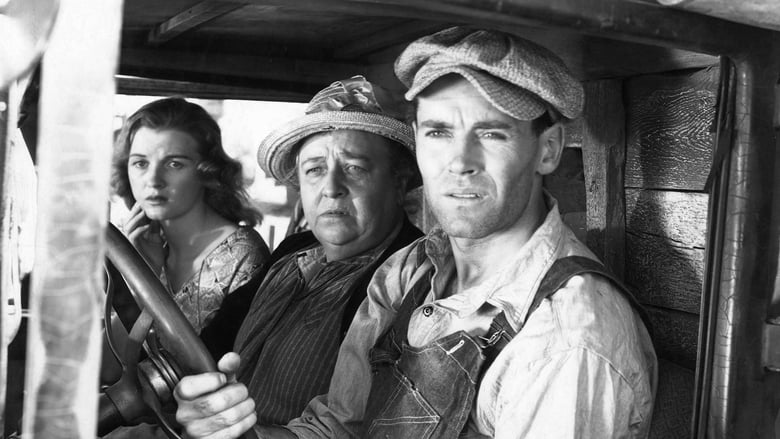
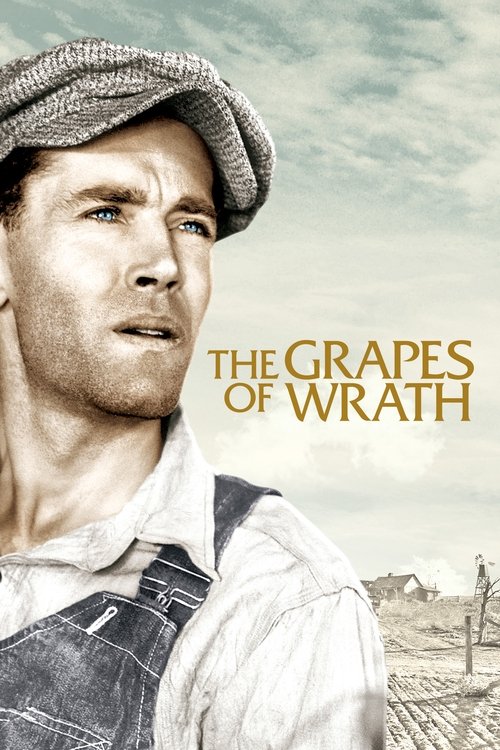
"The Joads step right out of the pages of the novel that has shocked millions!"
The Grapes of Wrath - Symbolism & Philosophy
Symbols & Motifs
The Caterpillar Tractor
Symbolizes the dehumanizing force of mechanization and industrial progress. It is described as a 'monster' that doesn't breathe air but eats land, representing a power that is made of men but can no longer be controlled by them.
In the Oklahoma scenes, the tractor literally crushes the homes of the sharecroppers, indifferent to their history and presence.
Highway 66 (The Mother Road)
Symbolizes flight, hope, and the shared burden of the dispossessed. It is the artery of the migration, connecting the displaced families into a temporary community of the road.
The Joads spend a large portion of the film on this highway, which serves as a transition zone between their lost past and their uncertain future.
Ma Joad's Box of Keepsakes
Represents the sacrifice of the past. To move forward, the family must literalize their dispossession by burning their history to save weight on the truck.
Ma goes through her mementos, including a 1904 Exposition souvenir, choosing what to keep and what to cast into the fire before leaving Oklahoma.
The Truck
Symbolizes the modern-day covered wagon. It is the Joads' mobile home, their last shred of independence, and a mechanical extension of the family's fragile unity.
The truck is overloaded and constantly on the verge of breaking down, mirroring the family's physical and emotional state.
Philosophical Questions
Can an individual soul truly be part of a 'greater soul'?
The film explores this through Tom Joad's transformation. It asks whether our identity is defined by our individual actions or by our participation in the collective struggle of our species.
Does morality change when survival is at stake?
Casy's rejection of 'sin' and 'virtue' in favor of 'just what people does' suggests a situational ethics born from the desperation of the Great Depression.
Is the 'American Dream' a promise or a lure?
The film repeatedly contrasts the colorful handbills with the gray reality of California, questioning whether the dream of self-improvement is actually a mechanism for exploitation.
Core Meaning
At its heart, the film is a testament to the indomitability of the collective human spirit. Ford emphasizes the transition from 'I' to 'We,' suggesting that individual suffering is bearable only when linked to the 'one big soul' of humanity. The director wanted to humanize the 'Okies' and the dispossessed, moving beyond mere political propaganda to create a poetic tribute to the people. While it critiques the inhumanity of a system that values profit over life, its ultimate message is one of hope and endurance: though individuals may fall, the community survives and eventually prevails.