The Grapes of Wrath
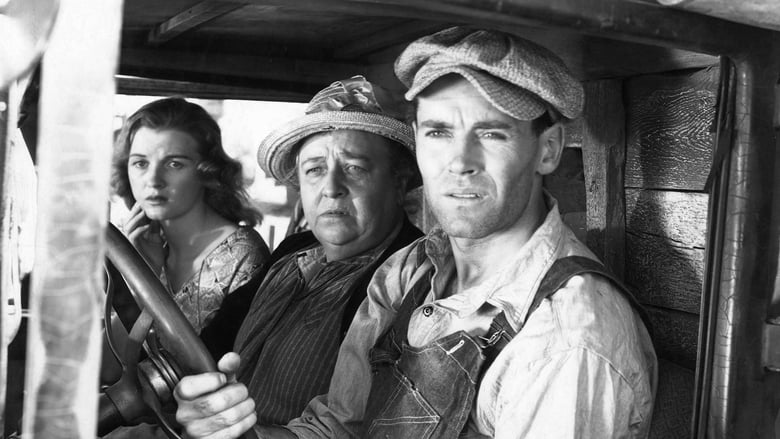
A dust-choked odyssey where the shadows of the Great Depression meet the incandescent resilience of the human spirit. An old truck carries a family's hope through a landscape of fractured dreams and mechanical cruelty.
The Grapes of Wrath

The Grapes of Wrath

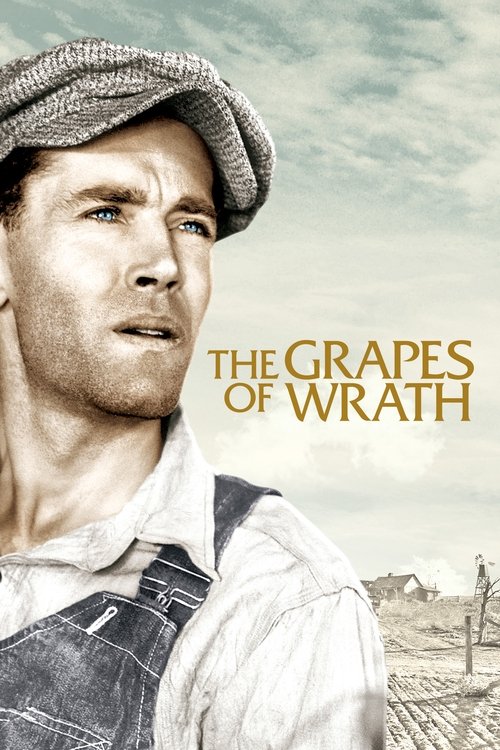
"The Joads step right out of the pages of the novel that has shocked millions!"

15 March 1940 United States of America 129 min ⭐ 7.8 (1,059)
Director: John Ford
Cast: Henry Fonda, Jane Darwell, John Carradine, Charley Grapewin, Dorris Bowdon
Drama
The Resilience of the Human Spirit Social Injustice and Class Struggle Collective Identity (The One Big Soul) The Erosion of the American Dream The Sanctity of the Family Unit
Budget: $800,000
Box Office: $1,591,000

Overview

Directed by John Ford and based on John Steinbeck's Pulitzer Prize-winning novel, The Grapes of Wrath is a definitive cinematic chronicle of the Great Depression. The story follows the Joad family, Oklahoma sharecroppers who are evicted from their ancestral land by the cold, mechanical force of bank-owned tractors. Lured by handbills promising plentiful work in California, they load their meager belongings onto a dilapidated truck and begin a perilous journey along Route 66.

Led by the newly paroled Tom Joad and the steadfast Ma Joad, the family faces a gauntlet of hardships: the deaths of the elderly grandparents, the desertion of family members, and the brutal reality of a 'promised land' that greets them with hostility, exploitation, and starvation wages. As they move from squalid 'Hoovervilles' to a rare government-run haven, the Joads' struggle evolves from a simple quest for survival into a broader awakening of social consciousness and communal solidarity.
Core Meaning

At its heart, the film is a testament to the indomitability of the collective human spirit. Ford emphasizes the transition from 'I' to 'We,' suggesting that individual suffering is bearable only when linked to the 'one big soul' of humanity. The director wanted to humanize the 'Okies' and the dispossessed, moving beyond mere political propaganda to create a poetic tribute to the people. While it critiques the inhumanity of a system that values profit over life, its ultimate message is one of hope and endurance: though individuals may fall, the community survives and eventually prevails.

Thematic DNA

The Resilience of the Human Spirit 30%
Social Injustice and Class Struggle 25%
Collective Identity (The One Big Soul) 20%
The Erosion of the American Dream 15%
The Sanctity of the Family Unit 10%

The Resilience of the Human Spirit

The film portrays the Joads as a 'marching' people who refuse to be defeated by environment, economics, or violence. This is most powerfully revealed through Ma Joad, whose strength becomes the family's anchor as the men lose their traditional roles as providers.

Social Injustice and Class Struggle

Through the visual contrast of the lush California orchards and the starving workers, the film highlights the cruelty of unregulated capitalism. It shows how the 'monster' of the bank and the greed of large landowners dehumanize those who labor on the land.

Collective Identity (The One Big Soul)

Inspired by Jim Casy's philosophy, the film moves toward the idea that every person is a piece of a larger spiritual and social whole. Tom Joad's arc culminates in his commitment to fighting for justice everywhere, rather than just protecting his own family.

The Erosion of the American Dream

California is presented as a false paradise. The 'promised land' is revealed to be a place of barbed wire and deputies, exposing the fragility of the dream of self-sufficiency and land ownership during times of systemic collapse.

The Sanctity of the Family Unit

Ford places a heavy emphasis on the family as the bedrock of civilization. The pain of the journey is measured by the gradual breaking apart of the Joad clan, and their survival is framed as a triumph of familial love.

Character Analysis

Tom Joad

Henry Fonda

Archetype: Hero
Key Trait: Moral integrity and simmering righteous anger.

Motivation

Initially motivated by a desire for quiet survival and family reunion; later driven by a quest for justice and collective action.

Character Arc

Tom begins as a self-interested parolee concerned only with returning home. Through the deaths of Casy and his own experiences with injustice, he evolves into a transcendent social revolutionary who embraces a communal soul.

Ma Joad

Jane Darwell

Archetype: The Matriarch / Mentor
Key Trait: Unwavering emotional strength and pragmatism.

Motivation

To keep the family together at all costs and to ensure their physical and spiritual survival through a period of absolute scarcity.

Character Arc

Ma moves from being the domestic heart of the home to being the dominant leader of the family. She becomes the voice of the film's concluding optimism, representing the eternal nature of 'the people.'

Jim Casy

John Carradine

Archetype: The Prophet
Key Trait: Philosophical introspection and self-sacrifice.

Motivation

To find the 'truth' about why people suffer and to discover a way to serve the 'one big soul' of humanity without a pulpit.

Character Arc

A former preacher who lost his faith in traditional religion, Casy finds a new 'holiness' in the labor movement. He sacrifices his life to protect Tom and the strikers, becoming a martyr for the cause.

Symbols & Motifs

The Caterpillar Tractor

Meaning:

Symbolizes the dehumanizing force of mechanization and industrial progress. It is described as a 'monster' that doesn't breathe air but eats land, representing a power that is made of men but can no longer be controlled by them.

Context:

In the Oklahoma scenes, the tractor literally crushes the homes of the sharecroppers, indifferent to their history and presence.

Highway 66 (The Mother Road)

Meaning:

Symbolizes flight, hope, and the shared burden of the dispossessed. It is the artery of the migration, connecting the displaced families into a temporary community of the road.

Context:

The Joads spend a large portion of the film on this highway, which serves as a transition zone between their lost past and their uncertain future.

Ma Joad's Box of Keepsakes

Meaning:

Represents the sacrifice of the past. To move forward, the family must literalize their dispossession by burning their history to save weight on the truck.

Context:

Ma goes through her mementos, including a 1904 Exposition souvenir, choosing what to keep and what to cast into the fire before leaving Oklahoma.

The Truck

Meaning:

Symbolizes the modern-day covered wagon. It is the Joads' mobile home, their last shred of independence, and a mechanical extension of the family's fragile unity.

Context:

The truck is overloaded and constantly on the verge of breaking down, mirroring the family's physical and emotional state.

Memorable Quotes

I'll be all around in the dark - I'll be everywhere. Wherever you can look - wherever there's a fight, so hungry people can eat, I'll be there.

— Tom Joad

Context:

Tom says this to Ma as he says goodbye, knowing he must flee because he is wanted for the death of a guard during the strike.

Meaning:

The film's most famous speech, symbolizing Tom's spiritual transition into a symbol of justice. He realizes he is no longer an individual but a part of a larger, eternal struggle.

We're the people that live. They can't wipe us out; they can't lick us. We'll go on forever, Pa, 'cause we're the people.

— Ma Joad

Context:

The final line of the film, spoken as the Joads drive away from the Wheat Patch camp toward another unknown destination.

Meaning:

An expression of populist indomitability. It asserts that while the rich and the powerful may die out or fail, the common laborers are the true, enduring constant of history.

Maybe there ain't no sin and there ain't no virtue, they's just what people does.

— Jim Casy

Context:

Early in the film, Casy explains to Tom why he stopped preaching and started observing the reality of people's lives instead.

Meaning:

Reflects a humanistic shift away from judgmental religious dogma toward empathy and understanding of the human condition.

Philosophical Questions

Can an individual soul truly be part of a 'greater soul'?

The film explores this through Tom Joad's transformation. It asks whether our identity is defined by our individual actions or by our participation in the collective struggle of our species.

Does morality change when survival is at stake?

Casy's rejection of 'sin' and 'virtue' in favor of 'just what people does' suggests a situational ethics born from the desperation of the Great Depression.

Is the 'American Dream' a promise or a lure?

The film repeatedly contrasts the colorful handbills with the gray reality of California, questioning whether the dream of self-improvement is actually a mechanism for exploitation.

Alternative Interpretations

While the novel is often seen as a radical call for socialist reform, the film has been interpreted by some critics as politically conservative or 'Jeffersonian.' Critics like Vivian Sobchack argue that by focusing on the 'family unit' rather than the 'family of man,' Ford pivots the story toward traditional American values of kinship and endurance rather than systemic revolution. Conversely, the film's more optimistic ending—placing the Joads in a clean, government-run camp—has been viewed as a pro-New Deal endorsement of federal intervention. Some modern readings even see the film as a religious allegory, with Tom as a Christ-figure and Casy as John the Baptist, preparing the way for a new social gospel.

Cultural Impact

The Grapes of Wrath remains a monumental achievement in social realism. Released in 1940, it brought the plight of the Dust Bowl migrants into the mainstream consciousness, humanizing a class of people often dismissed as 'Okies.' It won Academy Awards for Best Director (Ford) and Best Supporting Actress (Jane Darwell) and was one of the first 25 films selected for the National Film Registry. Its influence persists in the way cinema depicts poverty and migration, and Gregg Toland's innovative use of deep focus and low-key lighting paved the way for the visual language of Citizen Kane. Philosophically, it solidified the 'Tom Joad' figure as a permanent archetype of the American folk hero—the common man driven to radicalism by systemic cruelty.

Audience Reception

Upon release, the film was a major critical and commercial success, praised for its 'hard, truthful ring' and documentary-like authenticity. Steinbeck himself loved the adaptation, stating that Fonda's performance made him 'believe my own words.' While initially controversial for its 'leftist' themes, it resonated deeply with an public still reeling from economic hardship. However, by the 1960s, some critics (like Andrew Sarris) dismissed it as 'sentimental propaganda.' Today, it is universally regarded as a masterpiece, consistently ranked among the greatest American films for its powerful performances and visual poetry.

Interesting Facts

  • John Ford banned all makeup and perfume from the set to ensure the actors looked as gritty and realistic as possible.
  • Henry Fonda was so determined to play Tom Joad that he signed a seven-year contract with 20th Century Fox just to secure the role.
  • Producer Darryl F. Zanuck sent undercover investigators to migrant camps to see if Steinbeck had exaggerated the conditions; they found the reality was actually worse than the book described.
  • The film was famously banned in the Soviet Union by Joseph Stalin because it showed that even the poorest American families could afford to own a car.
  • The legendary cinematographer Gregg Toland used lighting inspired by the documentary photography of Dorothea Lange.
  • Henry Fonda kept the hat he wore in the film for the rest of his life, finally giving it to actress Jane Withers shortly before his death.

Easter Eggs

The 1904 Louisiana Purchase Exposition Souvenir

When Ma Joad goes through her box, she finds a porcelain dog from the 1904 World's Fair. This is a subtle nod to the shared history of the Midwest and a specific reference to the fair also featured in the later classic Meet Me in St. Louis.

The Disappearance of Noah Joad

In the film, the character Noah simply vanishes after a scene by the river without explanation. In the book, he chooses to stay behind, but the film's lack of dialogue about his departure has become a famous 'missing' detail for eagle-eyed fans.

⚠️ Spoiler Analysis

Click to reveal detailed analysis with spoilers

Frequently Asked Questions

Explore More About This Movie

Dive deeper into specific aspects of the movie with our detailed analysis pages

Comments (0)

Leave a comment

No comments yet. Be the first to share your thoughts!