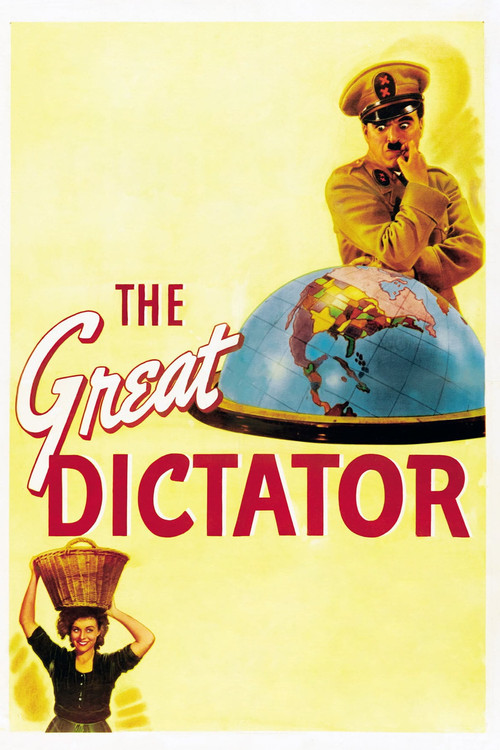
The Great Dictator
A satirical tragicomedy that wields laughter as a weapon against tyranny, painting a poignant portrait of humanity's struggle for freedom.
The Great Dictator
The Great Dictator

"Once again - the whole world laughs!"

15 October 1940 United States of America 125 min ⭐ 8.3 (3,535)
Director: Charlie Chaplin
Cast: Charlie Chaplin, Paulette Goddard, Jack Oakie, Reginald Gardiner, Henry Daniell
War Comedy
The Absurdity of Power and Tyranny Humanity vs. Inhumanity The Power of the People Persecution and Resilience
Budget: $2,000,000
Box Office: $11,000,000

The Great Dictator - Ending Explained

⚠️ Spoiler Analysis

The central twist of "The Great Dictator" is the case of mistaken identity between the amnesiac Jewish barber and the dictator Adenoid Hynkel, both played by Chaplin. After Commander Schultz, a high-ranking officer whom the barber saved in World War I, falls out of favor with Hynkel, both he and the barber are sent to a concentration camp. They manage to escape, disguised in military uniforms.

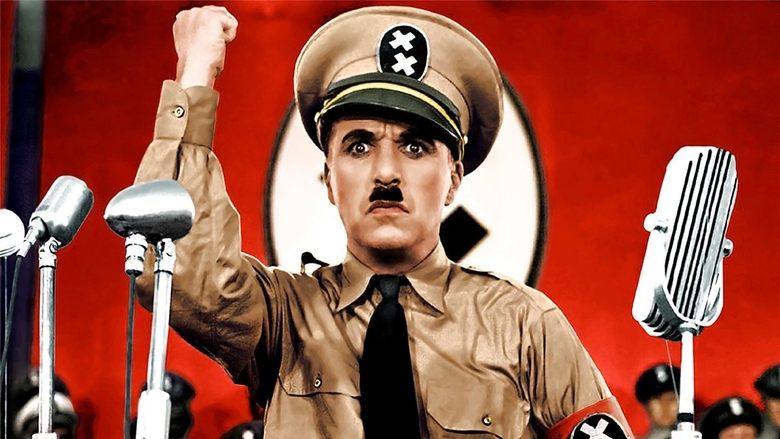
Meanwhile, Hynkel, on a duck-hunting trip, falls into a river and is mistaken for the escaped barber and arrested by his own stormtroopers. The climax of the film occurs when the escaped barber, due to his uncanny resemblance to the dictator, is mistaken for Hynkel. He is whisked away to the capital of the newly-invaded neighboring country of Osterlich and is expected to deliver a victory speech to the nation and the world.

The film's most profound reveal is that instead of delivering a fascist tirade, the barber seizes the opportunity to speak from his heart. He delivers a passionate, six-minute monologue, not as the barber or as Hynkel, but seemingly as Chaplin himself. He denounces dictatorship, greed, and hate, and makes an impassioned plea for democracy, unity, and human kindness. He ends his speech with a direct message of hope to Hannah, who has escaped to Osterlich and is listening to the broadcast in a refugee camp. The hidden meaning that becomes clear is that the film's purpose was not just satire; it was a direct and urgent call to action. The entire narrative, with its comedic and dramatic elements, serves as a setup for this final, powerful rhetorical appeal to the conscience of the world.

Alternative Interpretations

While the film's primary message is a straightforward condemnation of fascism, some critical interpretations have explored more nuanced aspects. One perspective focuses on the psychological doubling of the barber and the dictator. The fact that Chaplin plays both roles has been interpreted not just as a narrative convenience, but as a suggestion of a deeper connection—a commentary on the potential for both good (the barber) and evil (Hynkel) within a single persona, or even humanity itself. Charles Chaplin Jr. noted his father's fascination and horror with Hitler, and the sense that their roles as comic and madman "could have been the other way around," lending credence to this reading.

The controversial final speech has also been subject to varied interpretations. While most see it as a sincere humanist plea from Chaplin himself, some critics at the time and since have viewed it as an artistic misstep that breaks the narrative illusion of the film. They argue that by dropping the character of the barber and speaking directly as Chaplin, he sacrifices storytelling for propaganda. Conversely, others see this breaking of the fourth wall as a necessary and powerful rhetorical device, arguing that the urgency of the historical moment demanded such a direct address, transforming the film from mere entertainment into a vital political act.