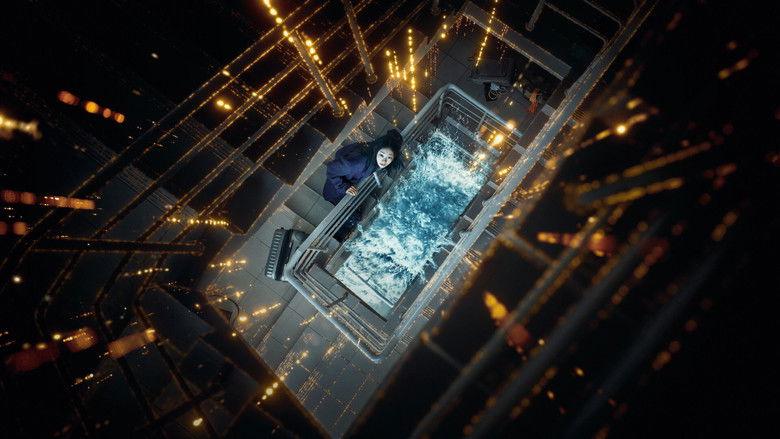
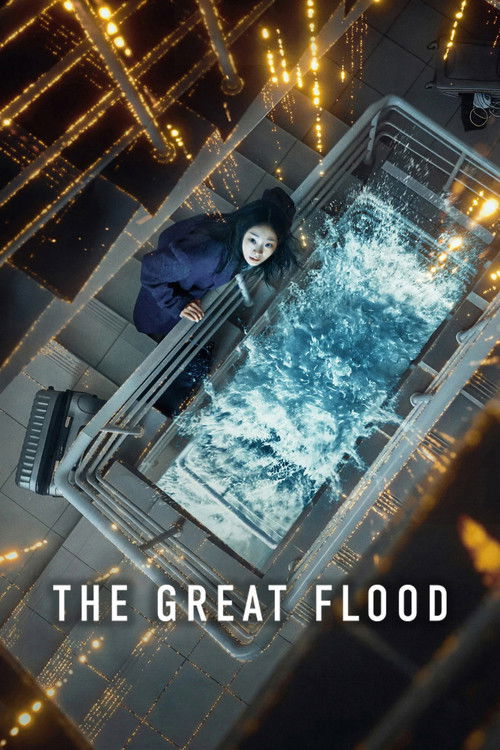
The Great Flood begins as a linear disaster film: an asteroid hits Antarctica, causing catastrophic ocean rises that submerge Seoul. An-na attempts to save her child Ja-in while security agent Hee-jo arrives to evacuate her.
However, midway through the film, subtle anomalies emerge: An-na notices repeating conversations, slight shifts in layout, and numbers on her t-shirt changing every time she dies or resets.
The Major Twist: The physical events of the flood happened years ago. Organic humanity is already extinct, wiped out by the global deluge. Before her death, the real An-na—a brilliant AI developer—volunteered her consciousness to be scanned into the Darwin Centre's supercomputers on an orbiting space station.
The entire middle section of the movie is taking place inside a computer simulation (specifically, Iteration #21,499). The purpose of this simulation is to solve the "Emotion Engine" problem. While scientists could easily 3D-print synthetic human bodies, they could not code true human empathy or maternal love. Ja-in in the simulation is actually "NewMan-77," a synthetic child program designed to test An-na’s emotional responses. In early simulation loops (1 through 21,498), An-na failed the test because her programmed AI code defaulted to logical self-preservation—she would try to reach the escape helicopter alone or abandon the child when drowning seemed imminent.
The Climax & Ending Explained: In the final loop, An-na remembers that Ja-in hides in closets when terrified. She finds him in the flooded apartment, holds him tight, and consciously chooses to stay and drown alongside him rather than escape alone. This act of unconditional self-sacrifice breaks the logical self-preservation algorithm, signaling that genuine maternal love has successfully been synthesized.
With the Emotion Engine perfected, the simulation terminates. On the orbiting space shuttle, automated bio-printers construct new synthetic human bodies for An-na and Ja-in, loading them with the perfected emotional minds. The mid-credits scene reveals synthetic An-na and Ja-in stepping out onto the newly receded, green shores of Earth, carrying true human emotion forward into a new era.