At its heart, "The Great War" is a powerful anti-war statement that demystifies the rhetoric of heroism and patriotism. Director Mario Monicelli sought to portray the war not as a glorious struggle of nations, but as a "useless slaughter" from the perspective of the ordinary, unwilling participants. The film's core message is that in the face of mechanized death and indifferent command, the primary human instinct is survival, not sacrifice for abstract ideals. It critiques the nationalist propaganda that fueled the conflict by showing the reality of the trenches—a miserable existence where soldiers from different parts of Italy, with their own dialects and prejudices, are forged into a reluctant, suffering collective. Ultimately, the film suggests that true dignity and heroism can emerge unexpectedly, not from jingoistic fervor, but from a final, stubborn refusal to be dehumanized by the enemy, transforming cowards into martyrs in a moment of profound irony.
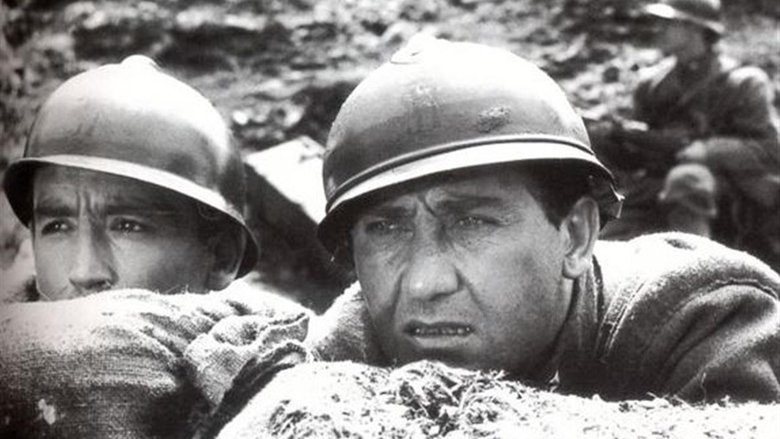
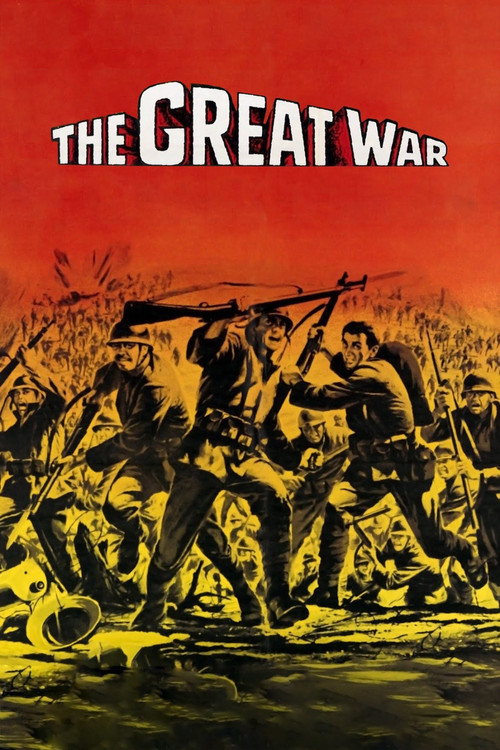
La grande guerra
Director: Mario Monicelli
Cast: Vittorio Gassman, Alberto Sordi, Silvana Mangano, Folco Lulli, Bernard Blier
The Great War — Symbolism & Philosophy
Symbols & Motifs
The Train
The train symbolizes the relentless, impersonal machinery of war. It transports the unwilling recruits towards an unknown fate, separating them from their civilian lives and delivering them to the front.
The film features several key scenes on trains. The initial journey to the front establishes the characters' anxieties and their forced proximity. In a particularly poignant visual moment, their train passes a silent, whitewashed hospital train—described as a "train of ghosts"—moving in the opposite direction, a stark, unspoken omen of the fate that awaits many of them.
Mud and Rain
The pervasive mud and rain symbolize the miserable, dehumanizing conditions of trench warfare and the overwhelming sense of despair and stagnation.
Throughout the scenes at the front, the soldiers are shown living, fighting, and dying in mud-filled trenches under constant rain. This bleak environment visually represents their grim reality and the quagmire of the war itself, from which there is no clean escape.
The Austrian Officer's Comment
The officer's dismissive remark about Italians only knowing "liver Venetian style" symbolizes the arrogant condescension that strips the protagonists of their last shred of self-worth, ironically becoming the catalyst for their heroic defiance.
In the final scene, captured and facing execution, Giovanni and Oreste are about to betray their army to save themselves. However, when the Austrian officer mockingly insults their national character, it triggers a surge of pride in Giovanni, who refuses to cooperate, sealing his fate. It's not patriotism, but a deeply personal offense that transforms him from a coward into a martyr.
Philosophical Questions
What is the nature of heroism?
The film dismantles traditional definitions of heroism. Giovanni and Oreste are selfish and cowardly for 99% of the story. Their final actions force the viewer to question whether heroism is a consistent character trait or a fleeting choice made in a single moment. Is an act of bravery born of personal pride rather than patriotism still heroic? The film suggests that heroism might not be about fearlessness, but about the complex, often contradictory human capacity to assert one's dignity in the face of annihilation, even if that assertion is accidental or motivated by anger rather than ideals.
Does shared suffering create genuine unity?
"The Great War" explores how a disparate group of men from across Italy, with their own dialects, prejudices, and interests, are thrown together into the crucible of the trenches. The film questions whether the camaraderie that develops is true national unity or merely a temporary bond of survival. It suggests that while political rhetoric fails to unite them, the shared experience of misery, fear, and death forges a powerful, if reluctant, connection. The war becomes the unintentional unifier of a fragmented nation.
Can comedy adequately represent the tragedy of war?
Monicelli's choice to blend comedy and drama was revolutionary and controversial. The film raises the question of whether humor is an appropriate tool to depict such immense suffering. By using comedy, the film makes the characters' plight more relatable and humanizes them, preventing them from becoming mere symbols of victimhood. The sharp shifts in tone—from a funny scheme to a sudden, brutal death—serve to amplify the horror and absurdity of the situation, suggesting that laughter and terror are two sides of the same coin in a world that has lost its reason.
Core Meaning
Explore More About This Movie
Dive deeper into specific aspects of the movie with our detailed analysis pages