The core meaning of "The Green Mile" is a profound exploration of the duality of human nature, contrasting profound compassion and empathy with abject cruelty and prejudice. The film serves as a powerful allegory about justice, sacrifice, and redemption, questioning the morality of capital punishment and exposing the fallibility of the systems humans create. Ultimately, it suggests that true miracles and goodness can appear in the most unexpected and desperate of places, and that the greatest sin is not just the commission of evil, but the failure of good people to prevent it. Paul Edgecomb's unnaturally long life becomes a penance for his role in destroying a divine gift, forcing him to endure the pain of outliving all his loved ones as a constant reminder of his failure.
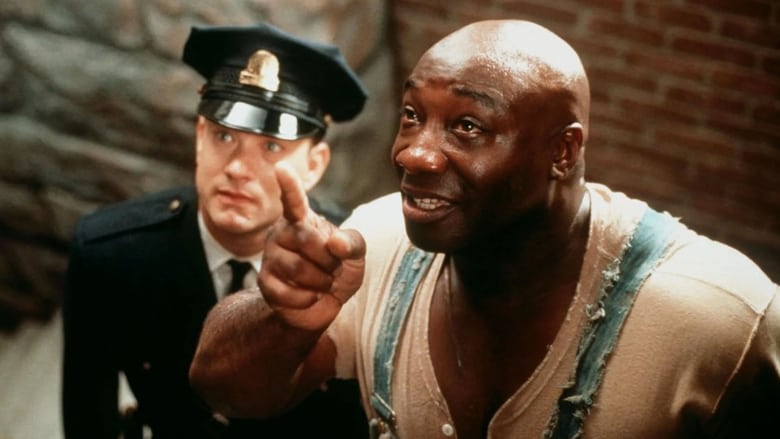

"Paul Edgecomb didn't believe in miracles. Until the day he met one."
Director: Frank Darabont
Cast: Tom Hanks, David Morse, Bonnie Hunt, Michael Clarke Duncan, James Cromwell
The Green Mile — Symbolism & Philosophy
Symbols & Motifs
The Green Mile
The physical walkway to the electric chair, named for its lime-colored floor, symbolizes the final journey between life and death. More broadly, it becomes a metaphor for life itself—a path everyone must walk towards an inevitable end, filled with a mixture of compassion and violence.
The term is used to describe death row (E Block). The film expands its meaning to include other places of waiting for death, like Melinda Moores' sickroom and Paul's nursing home, suggesting all of life is a 'Green Mile'.
Mr. Jingles (the mouse)
The intelligent mouse symbolizes hope, innocence, and the surprising resilience of life in a place defined by death. He represents a small glimmer of goodness and joy that can find its way into the darkest of circumstances. His resurrection by John and his unnaturally long life serve as tangible proof of the miracle Paul witnessed.
Mr. Jingles is befriended by inmate Eduard Delacroix. He is cruelly stomped on by Percy Wetmore but resurrected by John Coffey. The mouse reappears in the film's frame story, living with the elderly Paul, confirming the longevity granted by John's power.
John Coffey's name (J.C.)
His initials, J.C., are a clear and intentional allusion to Jesus Christ. Like Christ, he is an innocent who possesses divine healing powers, bears the suffering of others, is unjustly persecuted by the authorities, and is ultimately executed. This symbolism frames the story as a religious allegory.
The character's name is stated multiple times, with him often clarifying the spelling: "like the drink, only not spelled the same." This repetition draws attention to the name and its symbolic weight throughout the narrative.
The Swarm of 'Bugs'
The insect-like swarm that John Coffey expels after a healing symbolizes the sickness, evil, and pain he has absorbed from others. It is the physical manifestation of the world's corruption. When he transfers this 'bad death' into Percy, it represents a form of divine, karmic justice, as evil is turned back upon itself.
John first coughs up the swarm after healing Paul's infection. He later absorbs Melinda Moores' brain tumor and, instead of releasing it, transfers the malignant energy into Percy Wetmore, causing Percy to become catatonic after shooting "Wild Bill" Wharton.
Philosophical Questions
What is the nature of true justice, and can human systems ever achieve it?
The film relentlessly questions the efficacy and morality of the criminal justice system. It presents a scenario where the legal process fails completely, resulting in the state-sanctioned murder of an innocent and divine being. This raises the question of whether any human institution can be trusted with the power of life and death. The narrative suggests that true justice may be supernatural or karmic, as seen when Percy receives his comeuppance not through the law, but through John Coffey's otherworldly intervention.
Is a life of prolonged suffering worse than death?
The film explores this question from two perspectives. John Coffey, who is constantly tormented by the pain and cruelty of the world, chooses death as a welcome release. For him, life has become an unbearable burden. Conversely, Paul Edgecomb is granted an unnaturally long life, which he comes to see as a punishment. He must endure the endless pain of outliving all his friends and family. The film suggests that death can be a mercy, while a life filled with suffering and loss is a curse, challenging the simple assumption that life is always preferable to death.
What is the responsibility of good people in the face of evil?
Paul and the other 'good' guards are decent men who find themselves complicit in a grave injustice. They are powerless within the system to stop John's execution, despite knowing he is innocent. The film poses the difficult question of what their moral duty is. Paul's guilt and lifelong penance suggest that simply being a passive, sorrowful witness to evil is not enough and constitutes a moral failure of its own.
Core Meaning
Explore More About This Movie
Dive deeper into specific aspects of the movie with our detailed analysis pages