The Green Mile
A haunting prison drama steeped in Southern Gothic atmosphere, where a flicker of divine light illuminates the darkest corridor of human cruelty and injustice.
The Green Mile

The Green Mile

"Paul Edgecomb didn't believe in miracles. Until the day he met one."

10 December 1999 United States of America 189 min ⭐ 8.5 (18,404)
Director: Frank Darabont
Cast: Tom Hanks, David Morse, Bonnie Hunt, Michael Clarke Duncan, James Cromwell
Drama Crime Fantasy
Injustice and Capital Punishment Miracles, Faith, and the Supernatural Compassion vs. Cruelty Race and Prejudice
Budget: $60,000,000
Box Office: $286,801,374

Overview

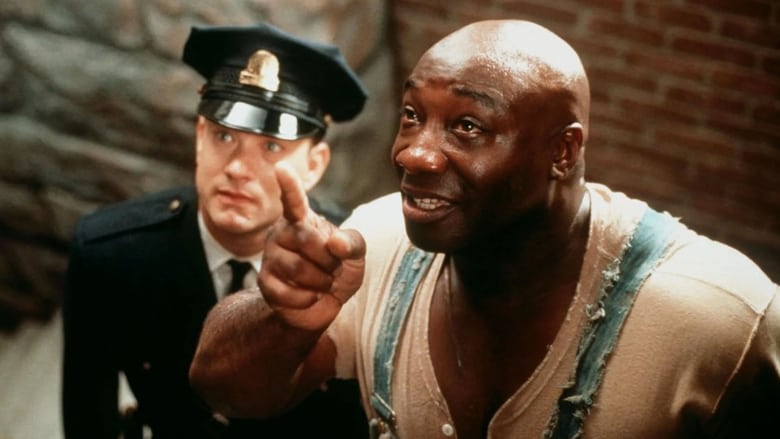
Set in 1935 at the Cold Mountain Penitentiary, "The Green Mile" is told through the memories of elderly Paul Edgecomb as he recounts his time as the head guard on death row. The block's grim routine is disrupted by the arrival of John Coffey, a towering Black man convicted of the brutal murder of two young girls. Despite his intimidating size and the horrific nature of his alleged crime, Coffey exhibits a gentle, childlike innocence and a profound fear of the dark.

As Paul and his fellow guards—the compassionate Brutus Howell and the sadistic Percy Wetmore—interact with the inmates, they witness extraordinary events. Paul soon discovers that John Coffey possesses a miraculous supernatural ability to heal the sick and afflicted, absorbing their pain into himself. This revelation forces Paul to question Coffey's guilt and confront a moral dilemma of unimaginable weight: how to preside over the execution of a man who may be a miracle from God.
Core Meaning

The core meaning of "The Green Mile" is a profound exploration of the duality of human nature, contrasting profound compassion and empathy with abject cruelty and prejudice. The film serves as a powerful allegory about justice, sacrifice, and redemption, questioning the morality of capital punishment and exposing the fallibility of the systems humans create. Ultimately, it suggests that true miracles and goodness can appear in the most unexpected and desperate of places, and that the greatest sin is not just the commission of evil, but the failure of good people to prevent it. Paul Edgecomb's unnaturally long life becomes a penance for his role in destroying a divine gift, forcing him to endure the pain of outliving all his loved ones as a constant reminder of his failure.

Thematic DNA

Injustice and Capital Punishment 35%
Miracles, Faith, and the Supernatural 30%
Compassion vs. Cruelty 20%
Race and Prejudice 15%

Injustice and Capital Punishment

The film is a stark critique of the death penalty, highlighting its potential for irreversible error and cruelty. John Coffey's wrongful conviction and execution, fueled by racial prejudice in the 1930s South, underscore the system's fallibility. The botched, gruesome execution of Eduard Delacroix, deliberately caused by the cruel guard Percy, further exposes the inhumanity inherent in the practice. Paul's eventual departure from death row signifies his loss of faith in a system that could murder an innocent man.

Miracles, Faith, and the Supernatural

The supernatural is a central theme, embodied by John Coffey's divine healing powers. His ability to cure Paul's infection, resurrect Mr. Jingles, and heal Melinda Moores positions him as a Christ-like figure. These miracles challenge the hardened cynicism of the prison guards and force them to confront the existence of a higher power and a moral order beyond human law. The film explores faith not just in a religious sense, but in the belief in inherent human goodness.

Compassion vs. Cruelty

The film presents a stark contrast between characters who embody compassion and those who represent pure cruelty. Paul, Brutus, and the other guards treat the inmates with dignity, seeing them as human beings facing their end. Percy Wetmore, in stark opposition, is sadistic and abusive, taking pleasure in the suffering of others. John Coffey is the ultimate symbol of compassion, literally absorbing the pain and sickness of others, while "Wild Bill" Wharton embodies chaotic, unrepentant evil.

Race and Prejudice

Set in the Jim Crow South, the theme of racism is a powerful undercurrent. John Coffey, a large Black man found with the bodies of two white girls, is convicted with little to no investigation, a reflection of the era's deep-seated racial biases. His conviction plays on racist stereotypes of Black men as dangerous and predatory. The film suggests a tragic parallel to real-life cases like that of George Stinney Jr., a 14-year-old Black boy executed in 1944.

Character Analysis

Paul Edgecomb

Tom Hanks

Archetype: The Moral Compass / The Witness
Key Trait: Decent and Humane

Motivation

His primary motivation is to maintain order and provide a humane environment for the inmates' final days. This shifts to protecting John Coffey and desperately seeking a way to prove his innocence, and ultimately, to fulfilling John's own wish to die and escape the world's pain.

Character Arc

Initially a compassionate but weary death row supervisor who accepts the grim necessities of his job, Paul undergoes a profound crisis of faith. After witnessing John Coffey's miracles, he is forced to confront the horrifying reality that he must execute an innocent man sent from God. His arc is one of awakening to a deeper moral truth, but it ends in tragedy. He is 'cursed' with a supernaturally long life, forced to outlive his loved ones as penance for his role in killing a miracle.

John Coffey

Michael Clarke Duncan

Archetype: The Christ Figure / The Gentle Giant
Key Trait: Empathy

Motivation

John is motivated by an innate need to heal and alleviate suffering. He tells Paul he is "rightly tired of the pain" he feels from the world and sees his execution as a merciful end to his own torment.

Character Arc

John's character does not have a traditional arc of change; rather, he is a static force of pure goodness who reveals the true nature of those around him. He begins and ends as a gentle, empathetic soul burdened by his ability to feel the world's pain. His journey is one of suffering and sacrifice. He ultimately chooses death not out of guilt, but as a release from the agony of human cruelty he constantly endures.

Percy Wetmore

Doug Hutchison

Archetype: The Sadist / The Bully
Key Trait: Cruel

Motivation

Percy is motivated by a lust for power and a sadistic desire to inflict pain and fear. He is insecure and cowardly, bullying those weaker than him (like Delacroix) while cowering before those who are genuinely dangerous (like "Wild Bill").

Character Arc

Percy is a static character who embodies cruelty, arrogance, and cowardice. Protected by nepotism, he uses his position to torment inmates. His arc is not one of change but of comeuppance. He gets his wish to be on the front line of an execution, but his sadistic sabotage of Delacroix's death leads to his downfall. He is ultimately used as a vessel for divine justice, becoming catatonic after John Coffey transfers Melinda Moores' sickness into him, which causes him to kill the true murderer, "Wild Bill."

Brutus 'Brutal' Howell

David Morse

Archetype: The Loyal Second-in-Command
Key Trait: Steadfast

Motivation

Brutus is motivated by loyalty to Paul and a commitment to doing their grim job with as much humanity as possible. He supports Paul's plan to help Melinda Moores and shares his anguish over John's fate.

Character Arc

Brutus is Paul's rock-solid deputy, a decent and imposing man who shares Paul's sense of morality. His arc mirrors Paul's. He starts as a professional doing a difficult job and is equally transformed by his encounters with John Coffey. Witnessing the miracle and participating in the execution of an innocent man breaks him, and he leaves the Mile with Paul, unable to continue in the profession.

Symbols & Motifs

The Green Mile

Meaning:

The physical walkway to the electric chair, named for its lime-colored floor, symbolizes the final journey between life and death. More broadly, it becomes a metaphor for life itself—a path everyone must walk towards an inevitable end, filled with a mixture of compassion and violence.

Context:

The term is used to describe death row (E Block). The film expands its meaning to include other places of waiting for death, like Melinda Moores' sickroom and Paul's nursing home, suggesting all of life is a 'Green Mile'.

Mr. Jingles (the mouse)

Meaning:

The intelligent mouse symbolizes hope, innocence, and the surprising resilience of life in a place defined by death. He represents a small glimmer of goodness and joy that can find its way into the darkest of circumstances. His resurrection by John and his unnaturally long life serve as tangible proof of the miracle Paul witnessed.

Context:

Mr. Jingles is befriended by inmate Eduard Delacroix. He is cruelly stomped on by Percy Wetmore but resurrected by John Coffey. The mouse reappears in the film's frame story, living with the elderly Paul, confirming the longevity granted by John's power.

John Coffey's name (J.C.)

Meaning:

His initials, J.C., are a clear and intentional allusion to Jesus Christ. Like Christ, he is an innocent who possesses divine healing powers, bears the suffering of others, is unjustly persecuted by the authorities, and is ultimately executed. This symbolism frames the story as a religious allegory.

Context:

The character's name is stated multiple times, with him often clarifying the spelling: "like the drink, only not spelled the same." This repetition draws attention to the name and its symbolic weight throughout the narrative.

The Swarm of 'Bugs'

Meaning:

The insect-like swarm that John Coffey expels after a healing symbolizes the sickness, evil, and pain he has absorbed from others. It is the physical manifestation of the world's corruption. When he transfers this 'bad death' into Percy, it represents a form of divine, karmic justice, as evil is turned back upon itself.

Context:

John first coughs up the swarm after healing Paul's infection. He later absorbs Melinda Moores' brain tumor and, instead of releasing it, transfers the malignant energy into Percy Wetmore, causing Percy to become catatonic after shooting "Wild Bill" Wharton.

Memorable Quotes

He killed them with their love. That's how it is every day, all over the world.

— John Coffey

Context:

Spoken to Paul Edgecomb in the execution chamber. Paul has just seen a vision, transmitted by John, of how "Wild Bill" Wharton was the real killer. John's words are his final, heartbreaking commentary on the state of humanity that has made him wish for death.

Meaning:

These are John's final words before his execution, explaining that the true murderer, Wharton, used the girls' love for each other against them to lure them to their deaths. The quote expands this specific evil into a universal truth, reflecting John's painful awareness of how love and goodness are constantly corrupted and destroyed by hatred in the world.

I'm tired, boss. Tired of being on the road, lonely as a sparrow in the rain. I'm tired of never having me a buddy to be with, to tell me where we's going to, coming from, or why. Mostly, I'm tired of people being ugly to each other. I'm tired of all the pain I feel and hear in the world every day. There's too much of it. It's like pieces of glass in my head, all the time.

— John Coffey

Context:

John says this to Paul when Paul offers to let him escape. Paul cannot comprehend why an innocent man with miraculous powers would accept death, and this quote reveals the immense personal suffering that accompanies John's gift.

Meaning:

This is John's explanation for why he is willing to be executed despite his innocence. It's not a confession of guilt but an expression of profound existential weariness. His supernatural empathy is a curse that forces him to constantly feel the collective pain and cruelty of humanity, making life an unbearable burden.

You can't hide what's in your heart.

— John Coffey

Context:

John says this to Paul early in the film, after Percy Wetmore has been particularly cruel. It's one of the first indications that John has a perception that goes beyond the ordinary, and it establishes the film's theme of inner goodness versus inner evil.

Meaning:

This line speaks to John's ability to see the true nature of people. He is not fooled by outward appearances or positions of authority. He can perceive the goodness in Paul and the malice in Percy, sensing the fundamental character of a person.

Please, boss, don't put that thing over my face. Don't put me in the dark. I's afraid of the dark.

— John Coffey

Context:

John makes this request in the execution chamber, just before he is put to death. It echoes an earlier request to Paul to leave a light on in his cell. The guards honor his request, forcing them to watch the light go out of the eyes of a man they know is innocent.

Meaning:

This request highlights the ultimate, tragic irony of John's fate. Despite his immense power and spiritual significance, he retains a childlike innocence and a simple, human fear. It underscores his vulnerability and makes his execution all the more heartbreaking for the guards and the audience.

Philosophical Questions

What is the nature of true justice, and can human systems ever achieve it?

The film relentlessly questions the efficacy and morality of the criminal justice system. It presents a scenario where the legal process fails completely, resulting in the state-sanctioned murder of an innocent and divine being. This raises the question of whether any human institution can be trusted with the power of life and death. The narrative suggests that true justice may be supernatural or karmic, as seen when Percy receives his comeuppance not through the law, but through John Coffey's otherworldly intervention.

Is a life of prolonged suffering worse than death?

The film explores this question from two perspectives. John Coffey, who is constantly tormented by the pain and cruelty of the world, chooses death as a welcome release. For him, life has become an unbearable burden. Conversely, Paul Edgecomb is granted an unnaturally long life, which he comes to see as a punishment. He must endure the endless pain of outliving all his friends and family. The film suggests that death can be a mercy, while a life filled with suffering and loss is a curse, challenging the simple assumption that life is always preferable to death.

What is the responsibility of good people in the face of evil?

Paul and the other 'good' guards are decent men who find themselves complicit in a grave injustice. They are powerless within the system to stop John's execution, despite knowing he is innocent. The film poses the difficult question of what their moral duty is. Paul's guilt and lifelong penance suggest that simply being a passive, sorrowful witness to evil is not enough and constitutes a moral failure of its own.

Alternative Interpretations

John Coffey as a Christ Figure: The most prominent interpretation is that John Coffey is a direct allegory for Jesus Christ. His initials (J.C.), miraculous healing powers, gentle nature, persecution by authorities despite his innocence, and ultimate sacrifice for the sins of others all strongly support this reading. The execution itself, witnessed by his sorrowful 'disciples' (the guards), is framed as a crucifixion. His final words about how love is used to kill reflects a divine sorrow for the state of the world.

A Critique of the 'Magical Negro' Trope: Some critics view the film through a more cynical lens, arguing that John Coffey's character falls into the problematic 'Magical Negro' trope. This trope describes a Black character who seems to exist solely to aid the white protagonist with their spiritual wisdom or supernatural powers, lacking their own inner life or development. In this interpretation, Coffey's purpose is to heal Paul's infection and absolve him of his guilt, sacrificing himself in the process, which can be seen as reinforcing outdated racial dynamics.

Paul's Long Life as a Curse: While his extended lifespan is a 'miracle,' it's more accurately interpreted as a form of divine punishment or penance. For allowing God's miracle to be destroyed, Paul is condemned to wander the Earth, watching everyone he loves die. His 'gift' is the curse of eternal loneliness and remembrance of his failure, making him a 'Wandering Jew' figure, forever carrying the weight of his actions on the Green Mile.

Cultural Impact

Released in 1999, "The Green Mile" arrived at a time when cinema was blending entertainment with deeper social commentary. Directed by Frank Darabont, who had previously adapted Stephen King's 'The Shawshank Redemption', the film solidified a subgenre of prestige prison dramas that explored profound humanistic themes. It was a critical and commercial success, grossing over $286 million worldwide and earning four Academy Award nominations, including Best Picture and Best Supporting Actor for Michael Clarke Duncan.

The film had a significant impact on discussions surrounding capital punishment, with its emotional and visceral portrayal of executions forcing audiences to confront the moral complexities of the issue. The character of John Coffey, a 'magical Negro' archetype who exists to heal and absolve white characters, has been a subject of critical discussion, but Michael Clarke Duncan's powerful and empathetic performance made the character iconic. The movie remains a touchstone in popular culture, praised for its powerful storytelling and emotional weight, and is often cited as one of the best Stephen King adaptations.

Audience Reception

Audience reception for "The Green Mile" has been overwhelmingly positive. It holds a high audience score on platforms like Rotten Tomatoes and was given an average grade of "A" by audiences polled by CinemaScore. Viewers consistently praise the film's profound emotional power, with many citing it as a deeply moving and tear-inducing experience. The performances, particularly those of Tom Hanks and Michael Clarke Duncan, are frequently lauded as exceptional. The compelling story, rich character development, and exploration of deep moral and spiritual themes resonate strongly with viewers. The primary point of criticism, often echoed by critics, is the film's long runtime of over three hours, which some find indulgent or slow-paced. A smaller segment of viewers also feels the supernatural elements clash with the realistic prison setting.

Interesting Facts

  • Bruce Willis was instrumental in Michael Clarke Duncan being cast as John Coffey. Having worked with him on 'Armageddon', Willis contacted director Frank Darabont and insisted Duncan was perfect for the role.
  • Tom Hanks was not the first choice for Paul Edgecomb. The role was reportedly offered to John Travolta first.
  • The filmmakers initially planned for Tom Hanks to play the elderly version of Paul Edgecomb, but the makeup tests were not convincing enough, so actor Dabbs Greer was cast in his final film role.
  • Around 15 to 30 trained mice were used to play the role of Mr. Jingles, with each one taught to perform different tricks.
  • At 6'5", Michael Clarke Duncan was tall, but he was made to look even more gigantic through clever camera angles and blocking, especially next to his costars David Morse (6'4") and James Cromwell (6'6").
  • Author Stephen King, who famously dislikes many adaptations of his work, called the film the most faithful adaptation of any of his books.
  • Director Frank Darabont wrote the screenplay adaptation in just eight weeks.
  • Sam Rockwell, who played "Wild Bill" Wharton, requested that the makeup department cover him in prosthetic zits for his nude scene to be more faithful to the character in the novel.

⚠️ Spoiler Analysis

Click to reveal detailed analysis with spoilers

Frequently Asked Questions

Explore More About This Movie

Dive deeper into specific aspects of the movie with our detailed analysis pages

Comments (0)

Leave a comment

No comments yet. Be the first to share your thoughts!