
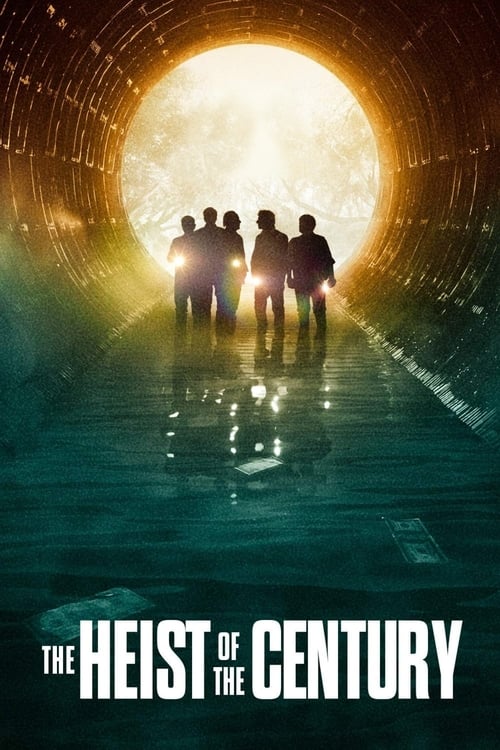
El robo del siglo
"The Story Of The Theft That Made History"
The Heist of the Century - Symbolism & Philosophy
Symbols & Motifs
The Note
Symbolizes the anti-establishment philosophy and the non-violent nature of the crime. It elevates the theft to a poetic act of rebellion.
Left in the empty vault for the police to find: "In a neighborhood of rich people, without weapons or grudges, it's just money, not love."
Toy Weapons
Represents the illusion of power and the triumph of wit over violence. They turn the robbery into a game where the rules are rewritten by the thieves.
Used throughout the heist to control the hostages and police, only revealed to be plastic replicas after the robbers have escaped.
The Rain/Puddle
Symbolizes inspiration and fluidity. The initial idea comes to Araujo as he watches rain, connecting the flow of water to the flow of the underground escape route.
In the opening scene, Araujo has his epiphany while watching a car splash water, realizing he can use the storm drains.
Philosophical Questions
Is a crime immoral if it is non-violent and victimizes a corrupt system?
The film invites the audience to root for the robbers by emphasizing that the money is insured and the victims are "rich." It challenges the binary of good vs. evil, suggesting that "robbing a thief" (the bank) might be a form of justice or art.
Does intent alter the nature of an action?
Araujo claims to be an artist, not a criminal. The film explores whether the aesthetic beauty and intellectual complexity of the plan elevate it above a common crime, or if that is just a delusion of grandeur.
Core Meaning
The film posits that ingenuity triumphs over brute force. Director Ariel Winograd explores the idea of the heist as a form of artistic expression, suggesting that a crime committed without violence and with supreme intelligence transcends mere theft to become a cultural statement. It challenges the establishment by exposing its vulnerabilities through wit rather than aggression.