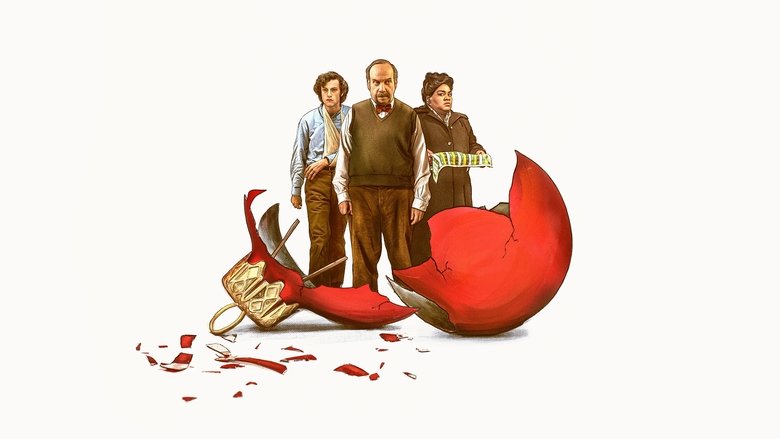
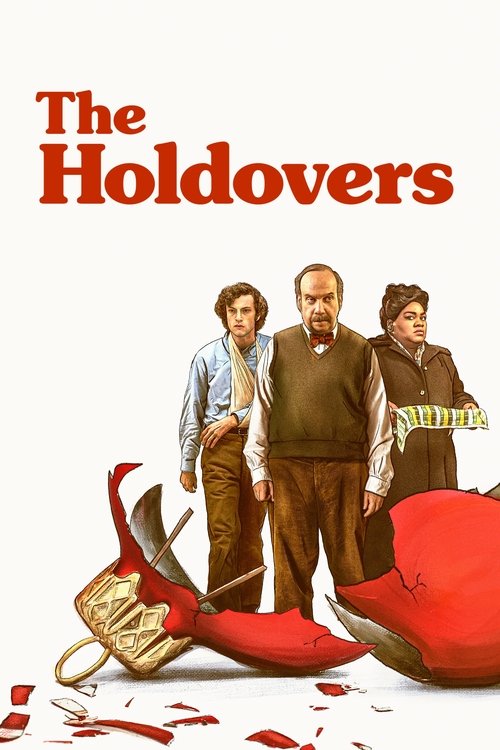
"Discomfort and joy."
The Holdovers - Ending Explained
⚠️ Spoiler Analysis
The third act of The Holdovers reveals several crucial twists that recontextualize the characters. The most significant reveal is the true status of Angus's father. Early on, Angus claims his father is dead. However, during their unauthorized trip to Boston, it is revealed that his father, Thomas, is alive but permanently confined to a psychiatric hospital due to severe mental illness. This twist shifts Angus from a standard rebellious teen to a terrified child who is acting out because he believes he is biologically destined to lose his mind like his father.
Another major reveal is the truth behind Paul's career. Paul was expelled from Harvard not because he wasn't smart enough, but because he was framed for plagiarism by the wealthy son of a legacy donor. When Paul hit the student with a car in retaliation, his prospects were ruined, leaving him trapped at Barton out of pity. The climax beautifully ties these threads together: when Angus's mother threatens to send Angus to military school over the Boston trip, Paul takes the blame. By sacrificing his job to save Angus, Paul breaks his own cycle of stagnation and proves to Angus that people can change their destinies.
Alternative Interpretations
While The Holdovers is widely viewed as a heartwarming tale of found family, some critics offer a more cynical, psychoanalytic interpretation of Paul Hunham's final sacrifice. One alternative reading suggests that Paul's decision to take the fall for Angus was not entirely altruistic, but rather a subconscious act of self-liberation. Paul was too cowardly to quit his miserable job at Barton, so he manufactured a scenario where he would be fired, thus forcing himself to finally leave his comfort zone and write his monograph.
Another interpretation views the film's 1970s setting not merely as nostalgic window-dressing, but as a deliberate mirror to contemporary America. From this perspective, the film is a critique of modern wealth inequality, institutional apathy, and the over-medication of emotional distress. Angus and his father are treated as embarrassments to be institutionalized and hidden away. The film argues that society still demands marginalized and troubled individuals to suffer in silence, making the protagonists' ultimate rebellion an act of radical, modern-day defiance disguised as a period piece.