"Discomfort and joy."
The Holdovers - Symbolism & Philosophy
Symbols & Motifs
Paul's Lazy Eye
It physically symbolizes Paul's skewed perspective on the world, as well as how the world misperceives and judges him based on his awkward exterior.
It is a constant source of mockery from the students. The visual gag of people not knowing which eye to look at represents how people fail to truly "see" Paul until Angus and Mary take the time to look deeper.
The Duffle Coat
The coat makes Paul look somewhat childlike and emotionally stunted, representing how he has never truly left his own schoolboy days behind.
Paul wears this heavy, oversized coat throughout the harsh winter, using it as a physical shield against the coldness of his environment and his own internal isolation.
The Snow Globe
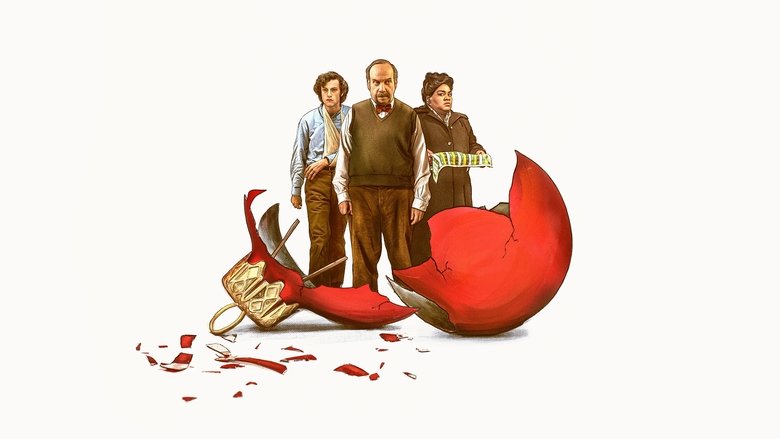
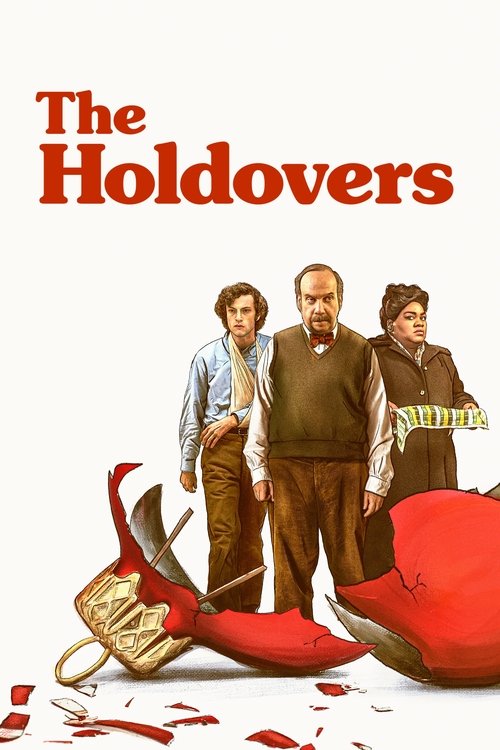
It represents a frozen, idealized, and artificial moment of familial happiness that Angus desperately wishes he could preserve.
Angus buys it in Boston and gives it to his father in the psychiatric hospital. Tragically, the father weaponizes it during an outburst, shattering Angus's illusion of a happy family reunion.
Meditations by Marcus Aurelius
The book symbolizes Paul's reliance on ancient stoicism to intellectualize his pain rather than actually feeling it.
Paul gives this book as a standard Christmas gift to his students, hiding behind the philosophical text to avoid offering genuine emotional warmth.
The Monograph Notebook
It symbolizes a blank slate, a new beginning, and the permission to dream beyond the confining walls of Barton Academy.
Mary gifts this beautiful blank notebook to Paul at the end of the film, encouraging him to finally write the book he has always talked about and to embrace his life after being fired.
Philosophical Questions
Does our history dictate our destiny?
The film explores biological and social determinism through Angus, who is terrified of inheriting his father's severe mental illness, and Paul, who feels forever branded by his past failure at Harvard. The narrative challenges this by suggesting that self-awareness, human connection, and active choices can break the chains of our past.
What are our moral obligations to those outside our immediate family?
Through the Cicero quote Non nobis solum nati sumus (Not for ourselves alone are we born), the film asks what we owe to strangers. Paul initially uses this philosophy as an empty academic weapon, but ultimately realizes true morality requires painful, personal sacrifice to protect the vulnerable.
How does systemic privilege insulate people from the realities of human suffering?
The film contrasts the insulated, wealthy boys of Barton Academy with Mary Lamb, whose son was killed in Vietnam because they lacked the money to keep him in school. It asks the audience to consider how societal structures distribute suffering unevenly based on wealth and class.
Core Meaning
The core message of The Holdovers is rooted in the Roman philosopher Cicero's quote that Paul recites early in the film: "Non nobis solum nati sumus" (Not for ourselves alone are we born). Director Alexander Payne and writer David Hemingson suggest that while life can be profoundly unfair and isolating, human connection is our primary salvation. The film argues that our history does not have to dictate our destiny, and that true teaching and healing occur not through strict discipline or isolation, but through radical empathy, vulnerability, and self-sacrifice.