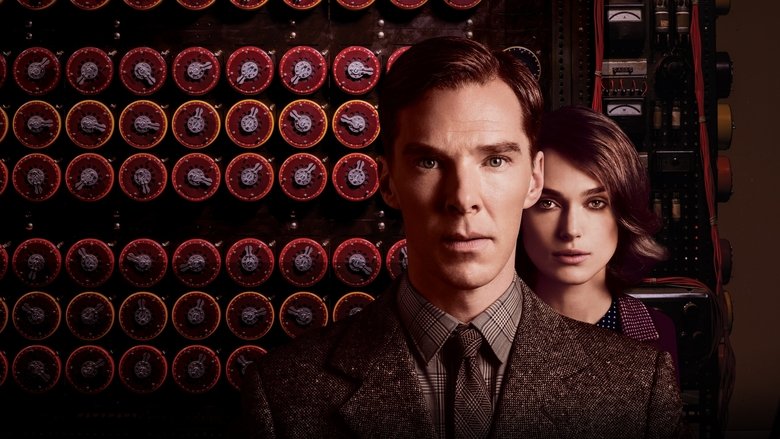
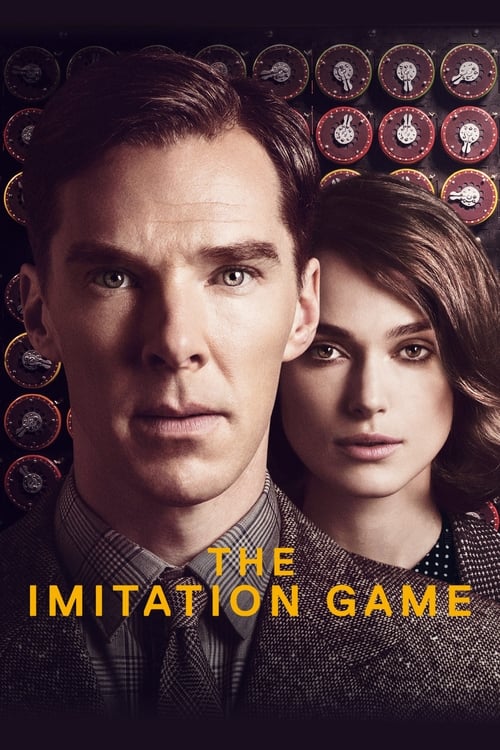
"The true enigma was the man who cracked the code."
Director: Morten Tyldum
Cast: Benedict Cumberbatch, Keira Knightley, Matthew Goode, Rory Kinnear, Allen Leech
The Imitation Game — Characters & Cast
Character Analysis
Alan Turing
Benedict Cumberbatch
Motivation
Turing is primarily motivated by his passion for solving puzzles and his deep-seated desire for intellectual connection, first embodied by his friend Christopher. He sees Enigma as the ultimate problem to be solved. His drive to build the machine is also a way to honor Christopher's memory. While he understands the stakes of the war, his focus is less on patriotism and more on the logical challenge and the creation of a machine that can think.
Character Arc
Alan Turing begins as a brilliant but arrogant and isolated individual, unable to connect with or trust his colleagues. Through his relationship with Joan Clarke and the shared pressure of their mission, he slowly learns the value of teamwork and friendship. He allows himself to be vulnerable, sharing his plans and eventually his personal secret. However, his arc is ultimately tragic. After achieving the impossible and saving millions, society's persecution forces him back into a devastating isolation, leading to his physical and mental decline.
Joan Clarke
Keira Knightley
Motivation
Joan is motivated by the intellectual challenge of the Enigma puzzle and the desire to use her talents for a meaningful purpose. She is frustrated by the limited roles available to women and sees the Bletchley Park opportunity as a chance to prove her capabilities. She is also motivated by her genuine affection and concern for Alan, recognizing his genius and his vulnerability.
Character Arc
Joan Clarke starts as a brilliant mind constrained by the sexist societal norms of the 1940s. Initially brought in for clerical work, her talent is recognized by Turing, and she becomes an essential member of the codebreaking team. Her arc is one of empowerment; she navigates the male-dominated world of Bletchley Park, asserting her intellectual worth. She develops a deep, complex friendship with Turing, becoming his closest confidante and emotional anchor. She offers him a platonic partnership that provides him with the support he desperately needs, and her insistence on being treated as an equal helps Turing grow.
Hugh Alexander
Matthew Goode
Motivation
Initially, Hugh is motivated by a desire to crack Enigma using his established methods and maintain his leadership position. He is pragmatic and focused on results. His motivation shifts as he realizes the potential of Turing's machine. Ultimately, he is driven by the goal of winning the war and comes to respect Turing's genius as the best path to that victory.
Character Arc
Hugh Alexander is initially presented as the charismatic, confident, and antagonistic leader of the codebreaking team. He clashes with Turing's abrasive and secretive methods. However, as he begins to understand the brilliance of Turing's machine, his antagonism evolves into respect and, eventually, staunch loyalty. He leads the team in threatening to quit when Commander Denniston tries to fire Turing, marking a significant turning point in his character. He becomes a key ally in protecting the project and Turing himself.
Commander Denniston
Charles Dance
Motivation
Denniston is motivated by his duty to the military hierarchy and the need to produce tangible results in the war effort. He sees Turing as an arrogant civilian who doesn't respect authority and views his machine as a costly, unproven gamble. His actions are driven by a narrow, bureaucratic perspective on how the war should be fought.
Character Arc
Commander Denniston serves as the primary antagonist within Bletchley Park. He is a rigid, by-the-book military man who is deeply skeptical of Turing's unconventional methods and expensive machine. He represents the institutional inertia and lack of vision that Turing must overcome. His character arc is minimal; he remains an obstacle throughout the main Bletchley Park narrative, valuing immediate, understandable results over long-term, revolutionary ideas. It's worth noting that this portrayal is a significant historical inaccuracy, as the real Denniston was far more supportive of the work.
Cast
Explore More About This Movie
Dive deeper into specific aspects of the movie with our detailed analysis pages