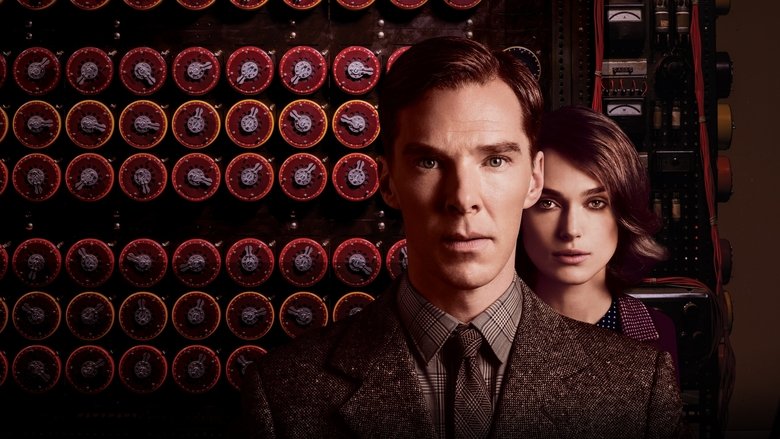
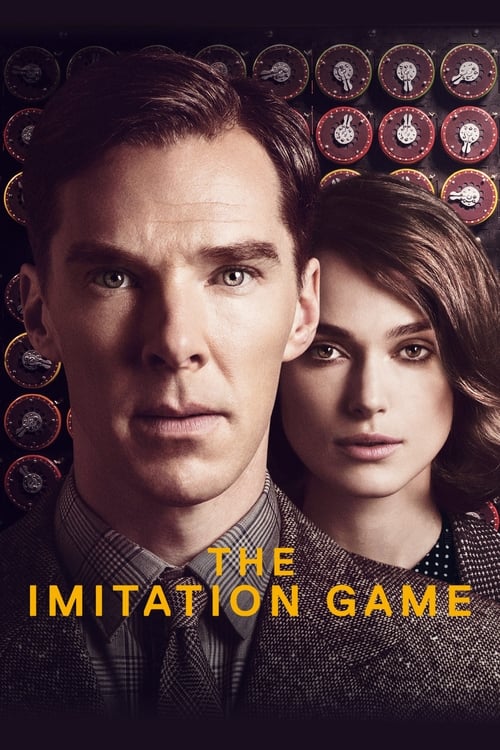
The Imitation Game
"The true enigma was the man who cracked the code."
Overview
"The Imitation Game" chronicles the life of the brilliant but socially awkward mathematician, Alan Turing, during the height of World War II. Recruited by the British military to the top-secret Bletchley Park, Turing and his team of codebreakers are tasked with the monumental challenge of cracking the supposedly unbreakable German Enigma code. Faced with skepticism from his superiors and friction with his colleagues, Turing proposes a radical solution: to build a machine that can decipher the millions of possible Enigma settings daily.
The narrative unfolds across three timelines: Turing's lonely and formative years at boarding school, where he discovers his love for cryptography and experiences a profound personal loss; the intense, high-stakes race against time at Bletchley Park; and his post-war life in the 1950s, where an investigation into a break-in at his home leads to his prosecution for homosexuality, a criminal offense at the time. The film explores Turing's complex personality, his vital contributions to the war effort, and the tragic persecution he faced for his identity.

Core Meaning
The central message of "The Imitation Game" is a celebration of those who are different and a condemnation of the societal prejudice that can stifle genius and humanity. It posits that the most groundbreaking achievements often come from individuals who think unconventionally, those whom society might initially dismiss or fail to understand. The film's recurring quote, "Sometimes it is the people no one imagines anything of who do the things that no one can imagine," encapsulates this idea. It argues that a person's worth and potential should not be judged by societal norms or prejudices, whether related to social awkwardness, gender, or sexual orientation. The film serves as both a tribute to Alan Turing's monumental, world-saving work and a tragic indictment of the intolerance that ultimately destroyed him.
Thematic DNA
Secrecy and Hidden Identities
The film is saturated with the theme of secrecy, operating on multiple levels. There is the overt secrecy of the Bletchley Park operation, where the codebreakers' work is so classified they cannot even share it with their loved ones. This professional secrecy mirrors Alan Turing's personal life, where he must conceal his homosexuality from a society that criminalizes it. This constant state of hiding creates immense psychological pressure and isolation. The narrative juxtaposes the breaking of the Enigma code with the personal codes Turing and others must use to navigate their lives, highlighting the immense burden of living with hidden truths.
Genius and Otherness
"The Imitation Game" explores the profound connection between genius and being an outsider. Turing's brilliant mind, which can conceive of a machine to defeat Enigma, is the same mind that struggles with basic social interaction and emotional cues. The film portrays his social awkwardness and arrogance not as mere personality flaws, but as integral parts of his unique cognitive makeup. This "otherness" is the source of both his greatest strength and his greatest vulnerability, allowing him to see problems in ways no one else can, while simultaneously isolating him from the very people he is trying to save.
Injustice and Persecution
A powerful theme is the tragic injustice faced by Turing. Despite being a national hero whose work is estimated to have saved millions of lives and shortened the war by several years, he is ultimately persecuted by the very government he served. His conviction for "gross indecency" and forced chemical castration serve as a brutal indictment of the homophobic laws of the era. The film contrasts his monumental, secret heroism with his public, humiliating punishment, creating a deeply poignant narrative about how society can betray its greatest minds.
The Nature of Humanity and Machines
The film's title refers to Turing's proposed test to determine if a machine can think. This philosophical question underlies much of the narrative. Turing builds "Christopher," a machine that imitates human thought processes to solve a complex problem. His own personality is often described as machine-like or logical to a fault. In the end, when being interrogated, he challenges the detective to play the imitation game with him: "Am I a machine? Am I a human? Am I a war hero? Am I a criminal?" This blurs the line between man and machine and questions the criteria by which we judge and categorize beings.
Character Analysis
Alan Turing
Benedict Cumberbatch
Motivation
Turing is primarily motivated by his passion for solving puzzles and his deep-seated desire for intellectual connection, first embodied by his friend Christopher. He sees Enigma as the ultimate problem to be solved. His drive to build the machine is also a way to honor Christopher's memory. While he understands the stakes of the war, his focus is less on patriotism and more on the logical challenge and the creation of a machine that can think.
Character Arc
Alan Turing begins as a brilliant but arrogant and isolated individual, unable to connect with or trust his colleagues. Through his relationship with Joan Clarke and the shared pressure of their mission, he slowly learns the value of teamwork and friendship. He allows himself to be vulnerable, sharing his plans and eventually his personal secret. However, his arc is ultimately tragic. After achieving the impossible and saving millions, society's persecution forces him back into a devastating isolation, leading to his physical and mental decline.
Joan Clarke
Keira Knightley
Motivation
Joan is motivated by the intellectual challenge of the Enigma puzzle and the desire to use her talents for a meaningful purpose. She is frustrated by the limited roles available to women and sees the Bletchley Park opportunity as a chance to prove her capabilities. She is also motivated by her genuine affection and concern for Alan, recognizing his genius and his vulnerability.
Character Arc
Joan Clarke starts as a brilliant mind constrained by the sexist societal norms of the 1940s. Initially brought in for clerical work, her talent is recognized by Turing, and she becomes an essential member of the codebreaking team. Her arc is one of empowerment; she navigates the male-dominated world of Bletchley Park, asserting her intellectual worth. She develops a deep, complex friendship with Turing, becoming his closest confidante and emotional anchor. She offers him a platonic partnership that provides him with the support he desperately needs, and her insistence on being treated as an equal helps Turing grow.
Hugh Alexander
Matthew Goode
Motivation
Initially, Hugh is motivated by a desire to crack Enigma using his established methods and maintain his leadership position. He is pragmatic and focused on results. His motivation shifts as he realizes the potential of Turing's machine. Ultimately, he is driven by the goal of winning the war and comes to respect Turing's genius as the best path to that victory.
Character Arc
Hugh Alexander is initially presented as the charismatic, confident, and antagonistic leader of the codebreaking team. He clashes with Turing's abrasive and secretive methods. However, as he begins to understand the brilliance of Turing's machine, his antagonism evolves into respect and, eventually, staunch loyalty. He leads the team in threatening to quit when Commander Denniston tries to fire Turing, marking a significant turning point in his character. He becomes a key ally in protecting the project and Turing himself.
Commander Denniston
Charles Dance
Motivation
Denniston is motivated by his duty to the military hierarchy and the need to produce tangible results in the war effort. He sees Turing as an arrogant civilian who doesn't respect authority and views his machine as a costly, unproven gamble. His actions are driven by a narrow, bureaucratic perspective on how the war should be fought.
Character Arc
Commander Denniston serves as the primary antagonist within Bletchley Park. He is a rigid, by-the-book military man who is deeply skeptical of Turing's unconventional methods and expensive machine. He represents the institutional inertia and lack of vision that Turing must overcome. His character arc is minimal; he remains an obstacle throughout the main Bletchley Park narrative, valuing immediate, understandable results over long-term, revolutionary ideas. It's worth noting that this portrayal is a significant historical inaccuracy, as the real Denniston was far more supportive of the work.
Symbols & Motifs
The Bombe Machine ('Christopher')
The machine, which Turing names "Christopher" after his childhood friend and first love, symbolizes his longing for connection and his attempt to recreate a mind he has lost. It is more than a tool; it is the physical manifestation of his grief, his intellect, and his deepest emotional attachments. By building the machine, he is not just breaking a code, but also trying to bridge the profound isolation he feels, creating a companion that understands logic and order, much like his bond with the real Christopher.
The machine is the central focus of the Bletchley Park storyline. Its construction, struggles, and eventual triumph drive the plot. Turing's fierce, personal defense of the machine against Commander Denniston and even his own team underscores its symbolic importance to him. The act of naming it solidifies its role as a surrogate for his lost friend.
Crossword Puzzles
Crossword puzzles represent the nature of codebreaking and Turing's unique way of thinking. They are a game of logic, patterns, and finding hidden meanings in plain sight. They symbolize how Turing's life itself is a puzzle, with different parts that need to be pieced together to be understood. They are also a tool for finding like-minded individuals, separating those who can think differently from the rest.
Turing uses a difficult crossword puzzle published in a newspaper as a recruitment tool to find new members for his team, which is how Joan Clarke is discovered. This unconventional method bypasses traditional military recruitment and directly targets minds that are suited for the cryptographic work at Bletchley Park.
The Apple
The apple is a symbol of knowledge, temptation, and ultimately, death. It subtly references the disputed story of Turing's suicide by a cyanide-laced apple, which itself is an echo of the story of Snow White, his favorite fairy tale. It can also be seen as an allusion to the biblical story of forbidden knowledge, reflecting the immense and dangerous power of the information Turing uncovered, as well as the "forbidden" nature of his sexuality in the eyes of the law.
The film ends with a postscript detailing Turing's death, which was ruled a suicide. While the act itself isn't shown, the presence of the apple in discussions of his death is a significant historical and symbolic detail. Director Morten Tyldum mentions Turing's fascination with Snow White as a true detail they couldn't fully fit into the film.
Memorable Quotes
Sometimes it is the people no one imagines anything of who do the things that no one can imagine.
— Joan Clarke (and Alan Turing/Christopher Morcom)
Context:
The quote appears three times. Christopher first says it to a young, bullied Alan. Alan then says it to Joan when he needs her to stay at Bletchley Park. Finally, Joan says it back to a broken Alan near the end of the film to remind him of his own worth and incredible achievements.
Meaning:
This is the film's central thesis. It speaks to the idea that true genius and world-changing contributions often come from outsiders and those underestimated by society. It validates Turing's eccentricities and Joan's struggle against sexism, suggesting that their unique perspectives are a source of strength. The line is first said to Alan by his childhood friend Christopher, and Alan later repeats it to Joan, passing on a piece of wisdom that defines his life.
Do you know why people like violence? It is because it feels good. Humans find violence deeply satisfying. But remove the satisfaction, and the act becomes hollow.
— Alan Turing
Context:
Turing says this to Hugh Alexander after Hugh punches him in a moment of frustration. It comes just after the team has cracked Enigma but realizes they cannot act on every piece of intelligence, as it would reveal their secret to the Germans. Turing's calm, analytical response to a violent act is jarring and demonstrates his unique mindset.
Meaning:
This quote reveals Turing's highly logical and detached view of human emotion. He analyzes violence not from a moral standpoint, but from a utilitarian one. It highlights his struggle to understand the often irrational motivations of people. The line also foreshadows the moral dilemma the team will face: they will have to make cold, logical decisions about who lives and dies, removing the 'satisfaction' of immediate victory to achieve the greater goal of winning the war.
Am I a machine? Am I a human? Am I a war hero? Am I a criminal?
— Alan Turing
Context:
This is said during Turing's interrogation in the 1951 timeline. After confessing the entirety of his top-secret work at Bletchley Park to the detective, he throws the judgment back onto his interrogator, forcing him (and the audience) to confront the profound injustice and complexity of his life.
Meaning:
This powerful series of questions, posed to Detective Nock, encapsulates the central conflicts of Turing's identity and legacy. It directly references his own "Imitation Game" test. He challenges the simplistic labels society tries to impose on him. He is all of these things and none of them. The quote poignantly illustrates the tragedy of his situation: his humanity is questioned, his heroism is a state secret, and his private life is deemed criminal.
When people talk to each other, they never say what they mean. They say something else, and you're expected to just know what they mean.
— Alan Turing
Context:
This is spoken early in the film during Turing's initial interactions at Bletchley Park, explaining to his colleagues why he is perceived as rude or difficult. It serves as a plea for understanding and a window into his cognitive differences.
Meaning:
This line perfectly captures Turing's struggle with social cues and his frustration with the subtleties of human communication. For his logical, literal mind, conversation is an inefficient, coded system he cannot easily decipher. It establishes his character as someone who finds more clarity and honesty in mathematical problems and ciphers than in everyday interaction, further highlighting his sense of alienation.
Philosophical Questions
What is the moral cost of the 'greater good'?
The film delves deeply into this question after the Enigma code is broken. The team gains the ability to foresee German attacks, but they realize they cannot act on every piece of intelligence. To do so would alert the Germans that Enigma is compromised. Thus, they are forced into the horrifying position of 'playing God,' using mathematical calculations to decide which attacks to allow and which to prevent to maximize their strategic advantage and shorten the war. This raises profound ethical questions about utilitarianism: is it justifiable to sacrifice innocent lives in the short term to save a greater number in the long term? The film portrays the immense psychological burden this places on Turing and his team, showing that such decisions, even if logical, are morally devastating.
Can a machine think? And what defines a 'person'?
The film is titled after Turing's own philosophical test for artificial intelligence. While not deeply exploring the technical aspects, it constantly blurs the line between human and machine. Turing treats his machine, Christopher, with more affection and understanding than he does most people. His own thought processes are depicted as extraordinarily logical, almost computer-like. His final, poignant question to Detective Nock—"Am I a machine? Am I a human?"—directly asks how we define personhood. Is it based on emotion, logic, societal contribution, or legal status? The film suggests that these categories are inadequate and that judging a being, whether human or machine, is a far more complex and morally fraught task than it appears.
Alternative Interpretations
One significant alternative interpretation revolves around the film's portrayal of Alan Turing's personality and sexuality. Some critics argue that by presenting Turing as potentially on the autism spectrum—socially awkward, unable to understand jokes, emotionally detached—the film creates a more 'palatable' or clichéd 'troubled genius' narrative. Biographies and accounts from colleagues suggest the real Turing, while eccentric, could be more approachable and social than depicted. This interpretation suggests the film might oversimplify his personality to fit a familiar cinematic trope, possibly at the expense of a more nuanced and accurate portrayal.
Another area of debate is the film's handling of Turing's homosexuality. While the film's central tragedy is his persecution for being gay, some have argued it is too coy in its depiction. The narrative focuses more on the secrecy and tragedy of his sexuality than on his actual relationships or desires. An alternative reading is that this focus on secrecy itself is the point, reflecting how a repressive society forced his identity into the shadows. The filmmakers' decision to invent a close, near-romantic relationship with Joan Clarke has also been interpreted as a way to make the story more conventional and perhaps downplay the centrality of his gay identity in his emotional life.
Cultural Impact
"The Imitation Game" was a critical and commercial success, grossing over $233 million worldwide against a $14 million budget, making it the highest-grossing independent film of 2014. It played a significant role in bringing the story of Alan Turing to a mainstream global audience, cementing his legacy not just as a brilliant mathematician but as a gay icon and a tragic victim of prejudice. The film's popularity reignited discussions about Turing's life and the historical injustice he suffered, amplifying the significance of his posthumous Royal Pardon, which was granted in 2013, just before the film's release.
While praised for its performances, particularly Benedict Cumberbatch's Oscar-nominated turn, the film also faced significant criticism for its historical inaccuracies. Historians and critics pointed out that the film condensed timelines, invented conflicts (like the relationship with Commander Denniston), and misrepresented the collaborative nature of the work at Bletchley Park, portraying Turing as more of a lone genius than he was. The creation of a Soviet spy subplot involving John Cairncross was also a major fabrication. Despite these liberties, the film was lauded for capturing the emotional truth of Turing's isolation and persecution. Director Morten Tyldum and others defended these changes as necessary for dramatic storytelling. The film won the Academy Award for Best Adapted Screenplay and received numerous other nominations, solidifying its place as a major entry in the prestige biopic genre.
Audience Reception
Audience reception for "The Imitation Game" was overwhelmingly positive. It received a rare "A+" CinemaScore from polled viewers, indicating exceptional satisfaction. Audiences praised the film as a moving, engrossing, and well-acted drama. Benedict Cumberbatch's performance as Alan Turing was widely cited as a highlight, with viewers finding his portrayal both brilliant and emotionally devastating. Many viewers were captivated by the thriller aspect of the codebreaking race against time and deeply moved by the tragic story of Turing's life and the injustice he faced. The film was often described as inspirational and thought-provoking.
However, some points of criticism did emerge from audiences. A minority of viewers found the film's structure, particularly the time-jumping narrative, to be occasionally confusing or that it interrupted the flow of the main wartime story. Others, particularly those with more knowledge of the historical events or computer science, found the simplification of the technical aspects and the dramatic liberties taken with the story to be unrealistic or frustrating. Despite these criticisms, the general consensus among audiences was that it was a powerful and important film that successfully brought a vital and tragic historical story to light.
Interesting Facts
- The screenplay for "The Imitation Game" topped the 2011 "Black List," an annual survey of the most-liked unproduced screenplays in Hollywood.
- Benedict Cumberbatch and the real Alan Turing are distantly related. According to the ancestry research website Ancestry.com, they are 17th cousins.
- The Bombe replica created for the film was made deliberately larger and more cinematic than the real machine, with more visible internal mechanisms to appear more complex and impressive on screen.
- Leonardo DiCaprio was originally slated to play Alan Turing before Benedict Cumberbatch was cast.
- The scenes set at Turing's childhood school were filmed at the actual Sherborne School, which Turing attended. Many of the extras playing students were current pupils.
- This was the first English-language film for Norwegian director Morten Tyldum, who had previously gained international acclaim for the thriller "Headhunters."
- To prepare for the role, Benedict Cumberbatch wore a set of replica dentures that were exact copies of Alan Turing's real false teeth.
- The Weinstein Company acquired the U.S. distribution rights for the film for $7 million, a record-breaking amount at the European Film Market at the time.
- Benedict Cumberbatch has stated that he had an emotional breakdown during the filming of the final scenes due to his strong connection to the character and the tragic nature of his story.
Easter Eggs
The wallpaper in Alan Turing's house in the 1950s scenes was designed with subtle codes, featuring dots and lines.
Production designer Maria Djurkovic intended this as a subtle visual cue to reflect Turing's mind and his life's work. It suggests that even in his domestic space, he is surrounded by the logic and patterns of cryptography, reinforcing how integral it is to his very being.
Mark Strong's character, MI6 chief Stewart Menzies, was the real-life basis for "M," the head of MI6 in Ian Fleming's James Bond novels.
This is a fun historical nod for fans of espionage fiction. Ian Fleming worked in British naval intelligence during WWII and would have been aware of Menzies, the powerful and mysterious figure who ran the Secret Intelligence Service. It connects the real-world history of Bletchley Park to a major pop culture icon.
⚠️ Spoiler Analysis
Click to reveal detailed analysis with spoilers
Frequently Asked Questions
Explore More About This Movie
Dive deeper into specific aspects of the movie with our detailed analysis pages
Comments (0)
No comments yet. Be the first to share your thoughts!