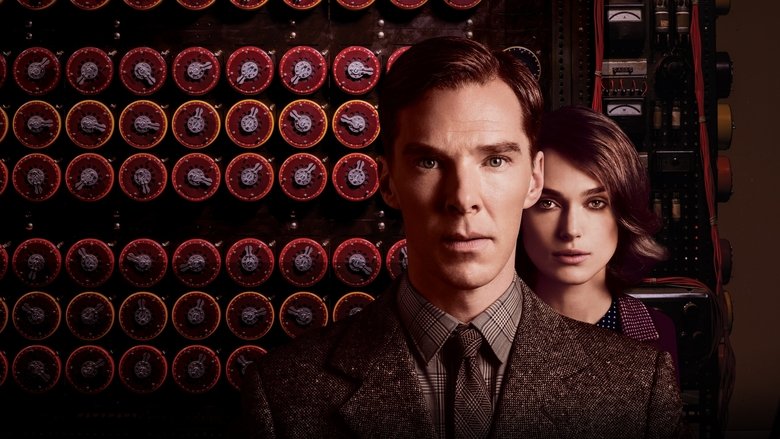
"The true enigma was the man who cracked the code."
Director: Morten Tyldum
Cast: Benedict Cumberbatch, Keira Knightley, Matthew Goode, Rory Kinnear, Allen Leech
The Imitation Game — Movie Quotes
Memorable Quotes
Sometimes it is the people no one imagines anything of who do the things that no one can imagine.
Context
The quote appears three times. Christopher first says it to a young, bullied Alan. Alan then says it to Joan when he needs her to stay at Bletchley Park. Finally, Joan says it back to a broken Alan near the end of the film to remind him of his own worth and incredible achievements.
Meaning
This is the film's central thesis. It speaks to the idea that true genius and world-changing contributions often come from outsiders and those underestimated by society. It validates Turing's eccentricities and Joan's struggle against sexism, suggesting that their unique perspectives are a source of strength. The line is first said to Alan by his childhood friend Christopher, and Alan later repeats it to Joan, passing on a piece of wisdom that defines his life.
Do you know why people like violence? It is because it feels good. Humans find violence deeply satisfying. But remove the satisfaction, and the act becomes hollow.
Context
Turing says this to Hugh Alexander after Hugh punches him in a moment of frustration. It comes just after the team has cracked Enigma but realizes they cannot act on every piece of intelligence, as it would reveal their secret to the Germans. Turing's calm, analytical response to a violent act is jarring and demonstrates his unique mindset.
Meaning
This quote reveals Turing's highly logical and detached view of human emotion. He analyzes violence not from a moral standpoint, but from a utilitarian one. It highlights his struggle to understand the often irrational motivations of people. The line also foreshadows the moral dilemma the team will face: they will have to make cold, logical decisions about who lives and dies, removing the 'satisfaction' of immediate victory to achieve the greater goal of winning the war.
Am I a machine? Am I a human? Am I a war hero? Am I a criminal?
Context
This is said during Turing's interrogation in the 1951 timeline. After confessing the entirety of his top-secret work at Bletchley Park to the detective, he throws the judgment back onto his interrogator, forcing him (and the audience) to confront the profound injustice and complexity of his life.
Meaning
This powerful series of questions, posed to Detective Nock, encapsulates the central conflicts of Turing's identity and legacy. It directly references his own "Imitation Game" test. He challenges the simplistic labels society tries to impose on him. He is all of these things and none of them. The quote poignantly illustrates the tragedy of his situation: his humanity is questioned, his heroism is a state secret, and his private life is deemed criminal.
When people talk to each other, they never say what they mean. They say something else, and you're expected to just know what they mean.
Context
This is spoken early in the film during Turing's initial interactions at Bletchley Park, explaining to his colleagues why he is perceived as rude or difficult. It serves as a plea for understanding and a window into his cognitive differences.
Meaning
This line perfectly captures Turing's struggle with social cues and his frustration with the subtleties of human communication. For his logical, literal mind, conversation is an inefficient, coded system he cannot easily decipher. It establishes his character as someone who finds more clarity and honesty in mathematical problems and ciphers than in everyday interaction, further highlighting his sense of alienation.
Explore More About This Movie
Dive deeper into specific aspects of the movie with our detailed analysis pages