
"Expect the incredible."
The Incredibles - Symbolism & Philosophy
Symbols & Motifs
Super Suits
They symbolize the acceptance of one's true self and family unity. Edna Mode's refusal to add capes represents a pragmatic rejection of ego and superficial heroism in favor of functionality and survival.
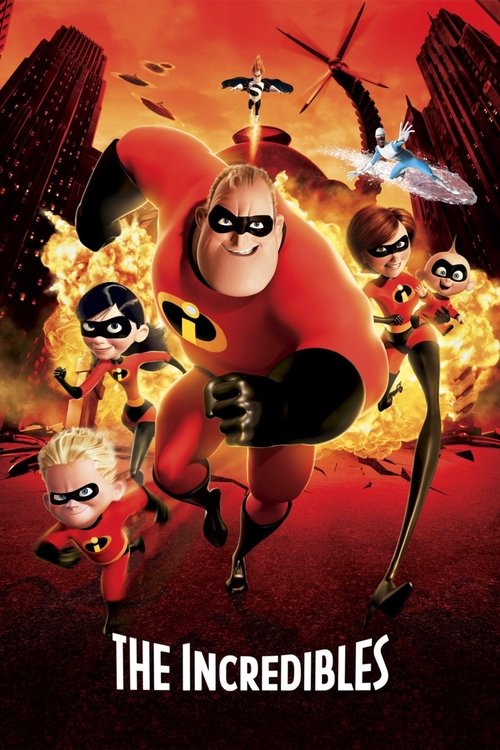
When Helen pilots the plane, she tells the kids to put on their masks, signaling the transition from hiding to action. The matching red suits visually unify them as a team for the first time.
Nomanisan Island
A play on the phrase 'No man is an island.' It symbolizes the isolation of Syndrome (who rejects connection) and the initial isolation of Bob (who tries to solve everything alone), contrasting with the family's eventual unity.
The setting for the film's second act, where Bob is imprisoned and must be rescued by his family, proving he cannot succeed as a solitary 'island'.
The Dinner Table
Represents the state of the family unit. Initially chaotic and disconnected, it becomes a place of shared understanding and cooperation by the end.
Early scenes show the family arguing and using powers destructively at the table; the final scene shows them working in tandem, even if just to eat dinner.
Philosophical Questions
Does society celebrate mediocrity at the expense of greatness?
The film asks if 'participation trophy' culture (Dash's graduation) and laws forcing special people to hide their gifts harmful to society's progress.
What is the nature of true heroism?
It contrasts Syndrome's manufactured, fame-seeking heroism with the Supers' innate drive to help others, asking if heroism is defined by ability or intent.
Core Meaning
At its heart, The Incredibles is a critique of forced conformity and a celebration of individual excellence. Director Brad Bird explores the tension between society's demand for equality (often portrayed as mediocrity) and the natural human drive to excel. The film ultimately argues that true power comes not just from individual talent, but from the unity of family and the acceptance of one's unique self, rejecting the idea that suppressing one's gifts benefits the collective.