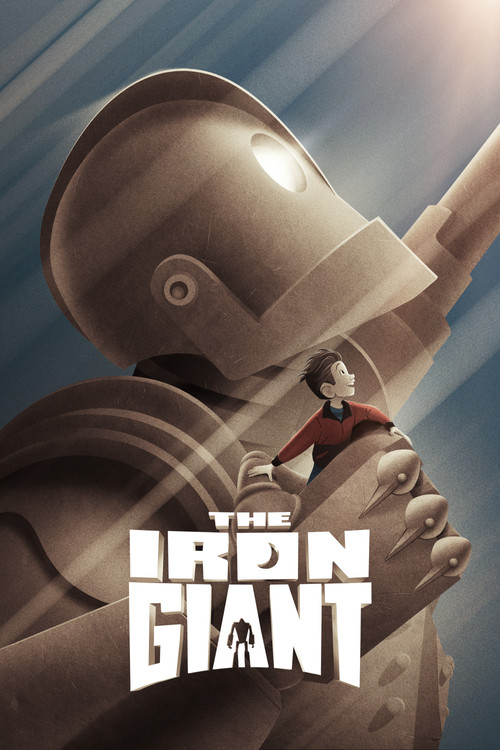
The central twist of "The Iron Giant" is the revelation of the robot's true purpose. Initially presented as a gentle, amnesiac being, its identity as a highly advanced, self-aware weapon is revealed when its defensive protocols are triggered. When Hogarth is knocked unconscious during a military attack, the Giant believes him to be dead. This emotional trauma fully awakens its latent programming, causing it to transform into a terrifying war machine capable of immense destruction. This reveal re-contextualizes the entire film: the Giant is not just a lost alien, but a being of immense destructive power actively fighting against its own nature.
The film's climax involves government agent Kent Mansley panicking and ordering a submarine to launch a nuclear missile directly at the Giant's location, which is the town of Rockwell. Realizing the missile will kill everyone, including Hogarth, the Giant makes a conscious decision to embrace the heroic ideal of Superman. He bids farewell to Hogarth, saying "You stay. I go," and flies to intercept the missile in mid-air. He sacrifices himself, colliding with the nuke high in the atmosphere and saving the town. The hidden meaning that becomes clear is that his entire journey with Hogarth was a preparation for this single moment of choice: to use his power not for destruction, as he was designed, but for salvation.
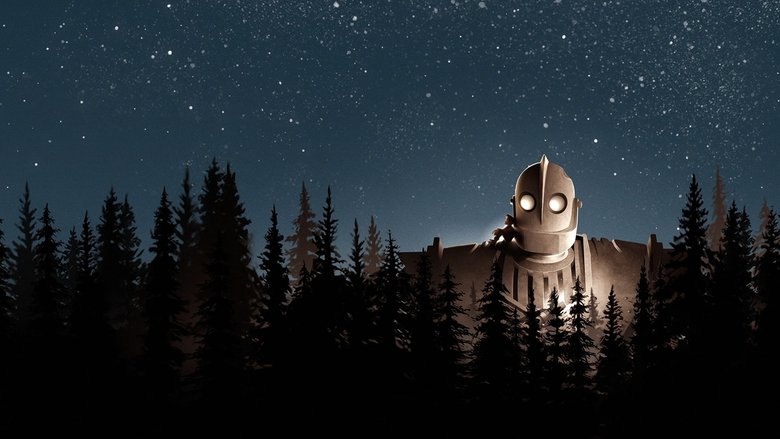
The ending provides a final, hopeful twist. Months later, Hogarth receives a package from General Rogard containing the only piece of the Giant that was found: a small screw. That night, the screw begins to move on its own. The final scene shows various parts of the Giant from all over the world converging on a glacier in Iceland, where his head lies, its eyes lighting up as it begins to reassemble itself. This reveals that the Giant is not truly dead, fulfilling the idea that "souls don't die" and suggesting that goodness and heroism are indestructible forces that can always piece themselves back together.