The Iron Giant
"It came from outer space!"
Overview
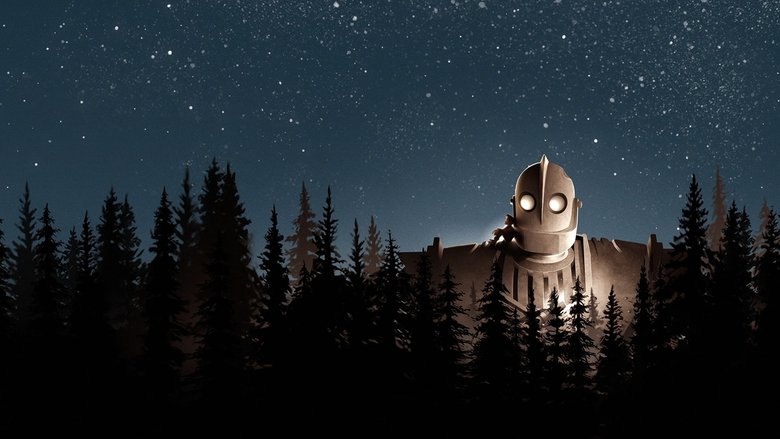
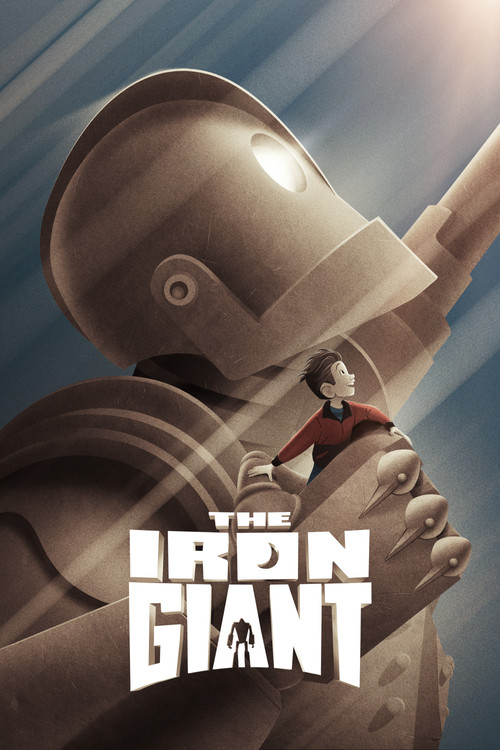
Set in October 1957, in the small town of Rockwell, Maine, "The Iron Giant" tells the story of Hogarth Hughes, a curious and imaginative nine-year-old boy. Amidst the paranoia of the Cold War and the launch of Sputnik, a massive, metal-eating robot from outer space crash-lands near the town. Hogarth discovers the 50-foot-tall Giant and, after saving it from electrocution, they form an unlikely and powerful friendship.
Hogarth, with the help of a beatnik artist named Dean McCoppin, tries to keep the Giant a secret. However, a paranoid government agent, Kent Mansley, becomes obsessed with finding and destroying the robot, viewing it as a hostile threat. As Mansley closes in, Hogarth must teach the Giant about life, death, and the choice between being a weapon of destruction and a hero. The story builds towards a tense confrontation between the town, the military, and the Giant, forcing the robot to make a decision that will define its existence.
Core Meaning
The central message of "The Iron Giant" is the profound idea that "You are who you choose to be." Director Brad Bird famously posed the question, "What if a gun had a soul and didn't want to be a gun?" to encapsulate the film's core concept. The film explores themes of identity, free will, and the conflict between one's inherent nature and the person one chooses to become. It argues that destiny is not predetermined and that even a being designed for destruction can choose a path of peace and self-sacrifice. The story serves as a powerful allegory against the paranoia and fear of the Cold War era, championing empathy and understanding over prejudice and violence.
Thematic DNA
Identity and Free Will (Nature vs. Nurture)
The film's most prominent theme is the power of choice in shaping one's identity. The Giant was built as a weapon, a fact revealed when its defensive systems are triggered. However, through his friendship with Hogarth, he learns about humanity, compassion, and heroism, particularly through the ideal of Superman. Hogarth's lesson, "You are who you choose to be," becomes the Giant's guiding principle, allowing him to overcome his programming and make the ultimate choice to be a savior, not a destroyer. This explores the classic 'nature versus nurture' debate, suggesting that nurture—in the form of friendship and guidance—can triumph over an inherently destructive nature.
Fear, Paranoia, and the Cold War
Set in 1957 at the height of the Cold War, the film is steeped in the era's atmosphere of fear and paranoia. The government agent, Kent Mansley, personifies this irrational fear of the unknown, immediately perceiving the Giant as a hostile invader that must be destroyed without question. The military's aggressive response is driven by this same paranoia. The film critiques the knee-jerk hostility and 'destroy first, ask questions later' mentality of the period, arguing that fear and prejudice are the true monsters.
Life, Death, and Sacrifice
Hogarth is forced to explain the concept of death to the Giant after they witness hunters kill a deer. In a pivotal scene, Hogarth explains that while killing is wrong, dying itself is a natural part of life, and introduces the idea of a soul that lives on. This conversation lays the groundwork for the Giant's climactic decision. He chooses to sacrifice himself to save Rockwell from a nuclear missile, understanding that this act gives his life meaning. His final word, "Superman," signifies his full embrace of heroism over his intended function as a weapon. This theme was deeply personal for both the original author, Ted Hughes, who wrote the book to comfort his children after their mother Sylvia Plath's suicide, and director Brad Bird, who made the film in memory of his sister who was a victim of gun violence.
Friendship and Humanity
The emotional core of the film is the pure and unlikely friendship between Hogarth and the Giant. Hogarth sees past the Giant's intimidating exterior and connects with the curious, child-like being within. It is this bond that teaches the Giant what it means to be human—to feel, to care, and to protect others. The friendship is a testament to empathy's power to bridge any divide, whether it's size, origin, or intended purpose, and ultimately inspires the Giant's transformation.
Character Analysis
Hogarth Hughes
Eli Marienthal
Motivation
Initially driven by childhood curiosity and a desire for friendship, Hogarth's motivation quickly evolves into a deep, compassionate need to protect the Giant from a fearful and hostile world. He sees the good in the Giant and is determined to help him realize that goodness within himself.
Character Arc
Hogarth begins as a curious, intelligent, but somewhat lonely and socially awkward nine-year-old. His discovery of the Giant thrusts him into a position of immense responsibility. He evolves from a child seeking a friend into a brave protector and a moral guide. He confronts his fears, stands up to authority figures like Kent Mansley, and ultimately teaches a being of immense power the value of life and choice. His journey is one of maturation, as he becomes the moral compass for the entire story.
The Iron Giant
Vin Diesel
Motivation
The Giant's primary motivation is to understand the world and his place in it. He is driven by his bond with Hogarth, seeking his approval and friendship. He is also driven by a growing, innate desire to protect life, a desire that ultimately clashes with his latent programming and leads to his heroic choice.
Character Arc
The Giant begins as a tabula rasa, an amnesiac with no memory of his destructive purpose. He is child-like, curious, and gentle. Through his relationship with Hogarth, he learns about the world, developing a personality and a moral code. His arc is a profound journey of self-discovery, from a mysterious, potentially dangerous machine to a sentient being who consciously rejects his intended function as a weapon. He ultimately embraces the heroic ideal of Superman, choosing self-sacrifice to protect the innocent.
Dean McCoppin
Harry Connick Jr.
Motivation
Initially, his motivation is simply to get Hogarth to leave him alone. This shifts as he comes to care for Hogarth and understand the Giant. He becomes motivated by a sense of justice and a desire to protect these innocent beings from the destructive forces of paranoia and government overreach.
Character Arc
Dean is introduced as a beatnik artist and junkyard owner, initially cynical, aloof, and reluctant to get involved. He wants to be left alone to create his art. However, Hogarth's persistence and the Giant's presence force him out of his isolation. He evolves into a protective, father-like figure for Hogarth and an ally for the Giant, using his creativity to hide him and eventually standing up to the military to defend him. His arc is about moving from detached individualism to community and responsibility.
Kent Mansley
Christopher McDonald
Motivation
Mansley is driven by a combination of rabid paranoia, characteristic of the Cold War era, and selfish career ambition. He sees the Giant not as a being to be understood, but as a threat that, if neutralized, will advance his government career.
Character Arc
Kent Mansley does not have a significant arc; he is a static character who represents the film's antagonistic forces. He begins and ends as a paranoid, ambitious, and ruthless government agent. His paranoia and fear only escalate throughout the film, leading him to make increasingly reckless decisions, culminating in him ordering a nuclear strike on his own country's soil out of pure, selfish terror. He serves as a catalyst, forcing the film's climax and embodying the irrational fear the film critiques.
Annie Hughes
Jennifer Aniston
Motivation
Her primary motivation is the well-being and happiness of her son, Hogarth. She works long hours to provide for him and is concerned about his social life and overactive imagination.
Character Arc
Annie is Hogarth's widowed mother, working hard as a waitress to support them. Her arc is subtle but important. Initially, she is understandably worried about Hogarth's solitary nature and his talk of a giant robot. As the events unfold, she moves from skepticism to belief and stands by her son. Her relationship with Dean also blossoms, suggesting a hopeful future for her small family. She represents the loving, stable home life that grounds Hogarth's extraordinary adventure.
Symbols & Motifs
Superman
Superman symbolizes the ultimate ideal of heroism, self-sacrifice, and using great power for good. He represents the choice to be a savior, an alien who embraces humanity and becomes its greatest protector.
Hogarth introduces the Giant to his Superman comic books, presenting the character as a role model. He tells the Giant, "...he started off just like you. Crash-landed on Earth. Didn't know what he was doing." This comparison provides the Giant with a moral compass and a heroic identity to aspire to. In the film's climax, as he flies to intercept the missile, the Giant says "Superman" before impact, signifying his conscious choice to embody that heroic ideal and sacrifice himself for others.
The Gun
The gun is a powerful symbol of violence, destruction, and the loss of choice. It represents a tool that only has one purpose: to kill. The film posits that being a gun is the antithesis of having a soul or the freedom to choose one's path.
After the Giant's defensive systems are activated by Hogarth's toy gun, Dean yells at him, and the Giant flees in shame. Hogarth later sees the Giant's internal conflict after witnessing a deer being killed by hunters. The most crucial use of this symbol is in Hogarth's plea to the Giant during the military confrontation: "You don't have to be a gun. You are what you choose to be." This line encapsulates the film's central message, directly contrasting the Giant's potential for destruction with his capacity for choice.
Scrap Metal and Art
Scrap metal symbolizes potential and transformation. What is discarded and seen as junk can be reassembled and given new meaning and purpose. It represents the idea that something can be repurposed from its original, often destructive, function into something beautiful or meaningful.
The Giant is hidden in Dean McCoppin's scrapyard, a place filled with discarded metal. Dean, a sculptor, takes this "junk" and turns it into art. This mirrors the film's central theme: just as Dean transforms scrap into art, Hogarth helps the Giant transform himself from a potential weapon into a hero. The Giant himself is literally made of metal and is able to reassemble his own broken parts, reinforcing the theme of rebuilding and choosing a new form.
Memorable Quotes
You are who you choose to be.
— Hogarth Hughes
Context:
Hogarth says this to the Giant during the climactic confrontation with the army. The Giant's defensive systems have taken over, and he is acting like the weapon he was built to be. Hogarth's words reach him, reminding him of their friendship and the lessons he's learned, allowing him to regain control and choose his own path.
Meaning:
This is the thematic core of the entire film. It's a powerful statement about identity, free will, and the ability to transcend one's origins or programming. It asserts that our choices, not our nature or the expectations of others, define who we truly are.
Souls don't die.
— The Iron Giant
Context:
After witnessing hunters kill a deer, a distraught Giant is comforted by Hogarth. Hogarth explains that because the Giant has feelings and can think, he has a soul, and "souls don't die." The Giant later repeats this phrase while looking at the stars, showing he has internalized this profound idea.
Meaning:
This line signifies the Giant's understanding of life, death, and something greater than mere physical existence. It reflects his developing consciousness and his grasp of a concept that separates him from being a simple machine. It provides the moral and philosophical foundation for his eventual self-sacrifice.
Superman.
— The Iron Giant
Context:
As the Giant flies into the path of the nuclear missile to save Rockwell, he smiles peacefully and utters this word just before impact. It is his last word, a poignant and powerful confirmation of his choice to sacrifice himself for humanity.
Meaning:
This single word is the culmination of the Giant's entire character arc. It is his final acknowledgment of the heroic ideal he has chosen to embody. It's a declaration that he is no longer a weapon, but a savior, consciously fulfilling the role model Hogarth showed him.
You stay. I go. No following.
— The Iron Giant
Context:
Earlier in the film, Hogarth tells the Giant, "You stay. I go. No following" when he has to leave him. In the climax, the Giant tenderly repeats these exact words back to a devastated Hogarth before flying off to intercept the missile, showing he understands the finality of his decision and wants to protect Hogarth from it.
Meaning:
This quote demonstrates the Giant's growth and his deep love for Hogarth. He is repeating words Hogarth once said to him, but now imbued with the gravity of his own self-sacrifice. It is a moment of role reversal, where the 'child' has become the protector, making a difficult, adult decision to save his friend.
Philosophical Questions
Are we defined by our nature or our choices?
This is the central question of the film. The Iron Giant is designed to be a weapon of mass destruction; its very nature is to destroy. However, due to amnesia and the nurturing friendship of Hogarth, it is given the opportunity to choose a different path. The film explores this by showing the Giant's internal conflict—his programming urges him toward violence when threatened, but his learned morality and love for Hogarth pull him toward peace. His ultimate sacrifice is the definitive answer the film provides: our choices, specifically the choice to love and protect, are what truly define our soul and identity, regardless of our origins or inherent nature.
What is the nature of a soul?
The film explores this question through the conversation between Hogarth and the Giant after a deer is killed. Hogarth, in a child's simple yet profound way, defines a soul not by biology but by consciousness and morality. He tells the Giant, "You're made of metal... but you have feelings. And you think about things. And that means you have a soul, and souls don't die." The film suggests that a soul is the capacity for empathy, thought, and moral choice. The Giant's journey is the process of discovering his own soul, proving that it is not the material one is made of, but the choices one makes, that matter.
How should we respond to the unknown?
The film presents two starkly different responses to the unknown. The first, embodied by Kent Mansley and the military, is fear, paranoia, and aggression. They see the alien Giant and their immediate instinct is to treat it as a threat and destroy it. The second, embodied by Hogarth and later Dean, is curiosity, empathy, and a desire to understand. They approach the Giant not as an 'it' but as a 'he,' a being worthy of friendship. The film strongly advocates for the second approach, showing that fear leads to destruction (almost of their own town), while empathy leads to heroism, friendship, and salvation.
Alternative Interpretations
While the film's primary message about choice and anti-violence is quite direct, some alternative interpretations have been discussed by critics and audiences:
- Cold War Allegory: Beyond the surface-level setting, the film can be read as a deeper allegory for Cold War international relations. The Giant represents a foreign power (like the Soviet Union) that is immediately feared and demonized by the US government (Mansley) without any attempt at understanding or diplomacy. Hogarth represents the potential for peaceful coexistence and communication, showing that friendship and empathy can overcome politically-fueled paranoia.
- A Christian Allegory: Some viewers interpret the Giant's story through a Christian lens. He is a being from "the heavens" who comes to Earth and learns about humanity. He is misunderstood and persecuted by earthly authorities but ultimately performs an act of supreme self-sacrifice—giving his life to save humanity from its own destructive tendencies. The film's ending, which shows his parts reassembling, can be seen as a parallel to resurrection, promising a return.
- Commentary on Gun Culture: The director's question, "What if a gun had a soul?" positions the film as a commentary on gun violence and the nature of weaponry. The Giant is the ultimate weapon, but he develops a conscience. This interpretation views the film as a plea for humanity to look past the intended function of weapons and people, and to consider the moral choices behind their use. The Giant's internal struggle reflects society's struggle with the tools of violence it creates.
Cultural Impact
Upon its release in 1999, "The Iron Giant" was a commercial failure, largely due to a botched marketing campaign by Warner Bros., which had lost faith in its animation department after the poor performance of a previous film, "Quest for Camelot". Despite this, the film received widespread critical acclaim, with critics praising its story, emotional depth, and sophisticated themes, often comparing it favorably to the works of Hayao Miyazaki.
In the years following its release, "The Iron Giant" found the audience it deserved through home video and television broadcasts, gradually building a passionate following and achieving the status of a cult classic. It is now widely regarded as one of the greatest animated films ever made, lauded for its powerful anti-war message and its profound exploration of identity and humanity. The film served as the feature directorial debut for Brad Bird, who would go on to direct acclaimed Pixar films like "The Incredibles" and "Ratatouille," bringing his unique storytelling sensibilities to a wider audience.
Its influence can be seen in its intelligent, emotionally mature approach to family-friendly storytelling, proving that animated films could tackle complex subjects like death, paranoia, and the morality of violence without sacrificing entertainment value. The central message, "You are who you choose to be," has resonated deeply with audiences and become an iconic cinematic quote. The film stands as a testament to how a movie's ultimate success is not always measured by its initial box office, but by its lasting emotional and cultural legacy.
Audience Reception
Audience reception for "The Iron Giant" has been overwhelmingly positive, particularly in the years since its initial release. On review aggregation sites, it holds exceptionally high user scores; for example, audiences polled by CinemaScore gave the film an average grade of "A". Viewers consistently praise the film for its powerful emotional depth, with many citing the tear-jerking climax as one of the most moving moments in animation history. The heartfelt story of friendship between Hogarth and the Giant is a universally lauded aspect.
The main points of praise from audiences focus on its mature and timeless themes of identity, sacrifice, and anti-violence, which resonate with both children and adults. The characters are beloved for being relatable and well-developed, and the film's 1950s setting and unique animation style are also frequently commended. Criticism is very rare, but some viewers have noted that the survival of the Giant at the end slightly diminishes the impact of his sacrifice, though others argue it reinforces the film's message of hope and healing. The overall verdict from audiences is that "The Iron Giant" is an underrated masterpiece and a timeless classic that was unfairly overlooked during its theatrical run.
Interesting Facts
- The film is loosely based on the 1968 novel "The Iron Man" by British poet Ted Hughes. Hughes wrote the story to comfort his children after the suicide of their mother, Sylvia Plath.
- Director Brad Bird conceived of the film's central theme with the question: "What if a gun had a soul and didn't want to be a gun?" This was partly inspired by the death of his own sister from gun violence, to whom the film is dedicated.
- The Iron Giant's voice actor, Vin Diesel, uttered a total of only 53 words in the entire film.
- The character of the Giant was animated using computer-generated imagery (CGI), while the rest of the film was traditionally hand-drawn. A special computer program was developed to add a slight "wobble" to the Giant's lines to help him blend in with the hand-drawn world.
- The film was a significant box office failure upon its release, grossing only $31.3 million worldwide against a $50 million budget. This was largely attributed to a poor marketing campaign by Warner Bros., who had low confidence in their animation division after the failure of "Quest for Camelot".
- Despite its initial box office performance, the film received universal critical acclaim and has since become a beloved cult classic.
- The original development of the film began as a musical project with the involvement of Pete Townshend of The Who.
- The two train engineers who appear after the train crash are caricatures of, and voiced by, two of Disney's legendary "Nine Old Men" of animation, Frank Thomas and Ollie Johnston, who were mentors to Brad Bird.
Easter Eggs
During the final battle, when the Giant transforms, one of its weapons is a chest laser that resembles the iconic 'S' shield of Superman.
This is a direct visual homage to Superman, the character who serves as the Giant's moral compass and heroic ideal throughout the film. It visually reinforces the Giant's internal struggle and ultimate choice to become a hero like his idol.
The train engineers, Frank and Ollie, are voiced by and designed to look like legendary Disney animators Frank Thomas and Ollie Johnston.
This was a tribute by director Brad Bird to his mentors from his early days at Disney. Thomas and Johnston were two of Disney's "Nine Old Men," the core animators who worked on classics from "Snow White" to "The Jungle Book."
In one of the classrooms, a poster for a "Duck and Cover" civil defense film is visible, featuring a cartoon turtle named Bert.
This is a direct reference to the actual 1952 civil defense film "Duck and Cover," which was shown to schoolchildren during the Cold War to teach them how to react to a nuclear attack. It helps ground the film firmly in the paranoia and atmosphere of the 1950s.
The fictional town is named Rockwell, Maine.
The name is a nod to two things: the famous American painter Norman Rockwell, known for his idealized depictions of small-town American life, which the film's visual style evokes; and Roswell, New Mexico, the site of the infamous alleged UFO crash of 1947, hinting at the film's sci-fi elements.
⚠️ Spoiler Analysis
Click to reveal detailed analysis with spoilers
Frequently Asked Questions
Explore More About This Movie
Dive deeper into specific aspects of the movie with our detailed analysis pages
Comments (0)
No comments yet. Be the first to share your thoughts!