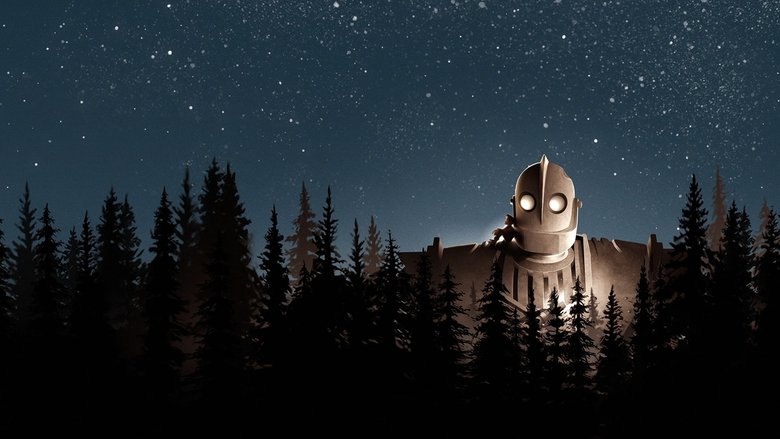
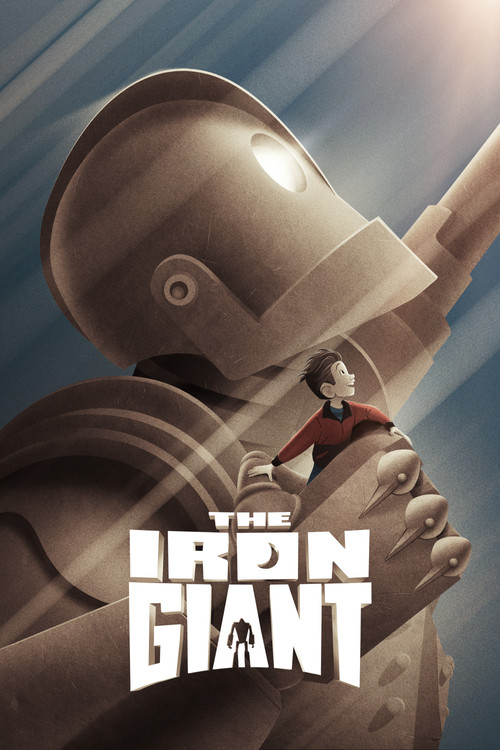
"It came from outer space!"
The Iron Giant - Symbolism & Philosophy
Symbols & Motifs
Superman
Superman symbolizes the ultimate ideal of heroism, self-sacrifice, and using great power for good. He represents the choice to be a savior, an alien who embraces humanity and becomes its greatest protector.
Hogarth introduces the Giant to his Superman comic books, presenting the character as a role model. He tells the Giant, "...he started off just like you. Crash-landed on Earth. Didn't know what he was doing." This comparison provides the Giant with a moral compass and a heroic identity to aspire to. In the film's climax, as he flies to intercept the missile, the Giant says "Superman" before impact, signifying his conscious choice to embody that heroic ideal and sacrifice himself for others.
The Gun
The gun is a powerful symbol of violence, destruction, and the loss of choice. It represents a tool that only has one purpose: to kill. The film posits that being a gun is the antithesis of having a soul or the freedom to choose one's path.
After the Giant's defensive systems are activated by Hogarth's toy gun, Dean yells at him, and the Giant flees in shame. Hogarth later sees the Giant's internal conflict after witnessing a deer being killed by hunters. The most crucial use of this symbol is in Hogarth's plea to the Giant during the military confrontation: "You don't have to be a gun. You are what you choose to be." This line encapsulates the film's central message, directly contrasting the Giant's potential for destruction with his capacity for choice.
Scrap Metal and Art
Scrap metal symbolizes potential and transformation. What is discarded and seen as junk can be reassembled and given new meaning and purpose. It represents the idea that something can be repurposed from its original, often destructive, function into something beautiful or meaningful.
The Giant is hidden in Dean McCoppin's scrapyard, a place filled with discarded metal. Dean, a sculptor, takes this "junk" and turns it into art. This mirrors the film's central theme: just as Dean transforms scrap into art, Hogarth helps the Giant transform himself from a potential weapon into a hero. The Giant himself is literally made of metal and is able to reassemble his own broken parts, reinforcing the theme of rebuilding and choosing a new form.
Philosophical Questions
Are we defined by our nature or our choices?
This is the central question of the film. The Iron Giant is designed to be a weapon of mass destruction; its very nature is to destroy. However, due to amnesia and the nurturing friendship of Hogarth, it is given the opportunity to choose a different path. The film explores this by showing the Giant's internal conflict—his programming urges him toward violence when threatened, but his learned morality and love for Hogarth pull him toward peace. His ultimate sacrifice is the definitive answer the film provides: our choices, specifically the choice to love and protect, are what truly define our soul and identity, regardless of our origins or inherent nature.
What is the nature of a soul?
The film explores this question through the conversation between Hogarth and the Giant after a deer is killed. Hogarth, in a child's simple yet profound way, defines a soul not by biology but by consciousness and morality. He tells the Giant, "You're made of metal... but you have feelings. And you think about things. And that means you have a soul, and souls don't die." The film suggests that a soul is the capacity for empathy, thought, and moral choice. The Giant's journey is the process of discovering his own soul, proving that it is not the material one is made of, but the choices one makes, that matter.
How should we respond to the unknown?
The film presents two starkly different responses to the unknown. The first, embodied by Kent Mansley and the military, is fear, paranoia, and aggression. They see the alien Giant and their immediate instinct is to treat it as a threat and destroy it. The second, embodied by Hogarth and later Dean, is curiosity, empathy, and a desire to understand. They approach the Giant not as an 'it' but as a 'he,' a being worthy of friendship. The film strongly advocates for the second approach, showing that fear leads to destruction (almost of their own town), while empathy leads to heroism, friendship, and salvation.
Core Meaning
The central message of "The Iron Giant" is the profound idea that "You are who you choose to be." Director Brad Bird famously posed the question, "What if a gun had a soul and didn't want to be a gun?" to encapsulate the film's core concept. The film explores themes of identity, free will, and the conflict between one's inherent nature and the person one chooses to become. It argues that destiny is not predetermined and that even a being designed for destruction can choose a path of peace and self-sacrifice. The story serves as a powerful allegory against the paranoia and fear of the Cold War era, championing empathy and understanding over prejudice and violence.