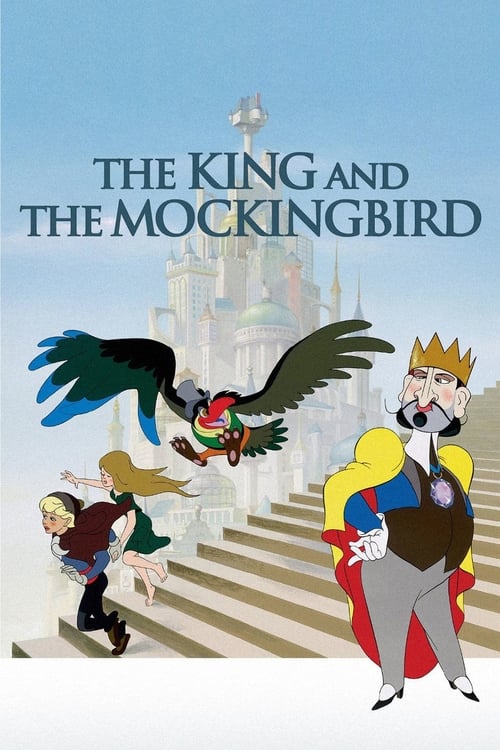
The King and the Mockingbird
A poetic and surreal masterpiece blending dystopian grandeur with fairy tale innocence. In a vertically stratified kingdom, a tyrant king is defied by love and a loquacious bird, culminating in a melancholic, awe-inspiring ode to freedom.
The King and the Mockingbird

Le Roi et l'Oiseau

19 March 1980 France 83 min ⭐ 7.8 (403)
Director: Paul Grimault
Cast: Jean Martin, Renaud Marx, Agnès Viala, Pascal Mazzotti, Albert Médina
Animation Family Fantasy
Tyranny vs. Freedom Vertical Social Stratification The Nature of Art and Reality Industrialization and Dehumanization

The King and the Mockingbird - Ending Explained

⚠️ Spoiler Analysis

The Twist: The bumbling cross-eyed King is disposed of early on by his own vanity. His Portrait, which he had painted to correct his squint, comes to life, tosses the real King into the void, and takes over. This 'Portrait King' is the competent, terrifying villain of the film.

The Ending: The Bird pilots the Giant Robot to completely destroy the King's castle, reducing the vertical city to a pile of rubble. In the final scene, dawn breaks over the ruins. The Robot sits silently. A bird (one of the Mockingbird's chicks) is trapped in a small cage. The Robot gently lifts the cage, opens the door to free the bird, and then smashes the empty cage with its massive fist. This final image serves as a definitive rejection of captivity and a solemn vow to protect freedom.

Alternative Interpretations

The Identity of the King: Some critics view the replacement of the 'real' King by his Portrait not just as a plot twist, but as a commentary on propaganda. The image of the leader becomes more powerful and dangerous than the man himself.

The Ambiguous Ending: The finale is often debated. Is the Robot's destruction of the castle a victory, or does it leave a post-apocalyptic void? The Robot sits on the ruins in a pose resembling Rodin's The Thinker, suggesting a new consciousness born from destruction—perhaps implying that true humanity starts only after the systems of oppression are completely leveled.