The King and the Mockingbird
A poetic and surreal masterpiece blending dystopian grandeur with fairy tale innocence. In a vertically stratified kingdom, a tyrant king is defied by love and a loquacious bird, culminating in a melancholic, awe-inspiring ode to freedom.
The King and the Mockingbird

The King and the Mockingbird

Le Roi et l'Oiseau

19 March 1980 France 83 min ⭐ 7.8 (403)
Director: Paul Grimault
Cast: Jean Martin, Renaud Marx, Agnès Viala, Pascal Mazzotti, Albert Médina
Animation Family Fantasy
Tyranny vs. Freedom Vertical Social Stratification The Nature of Art and Reality Industrialization and Dehumanization

Overview

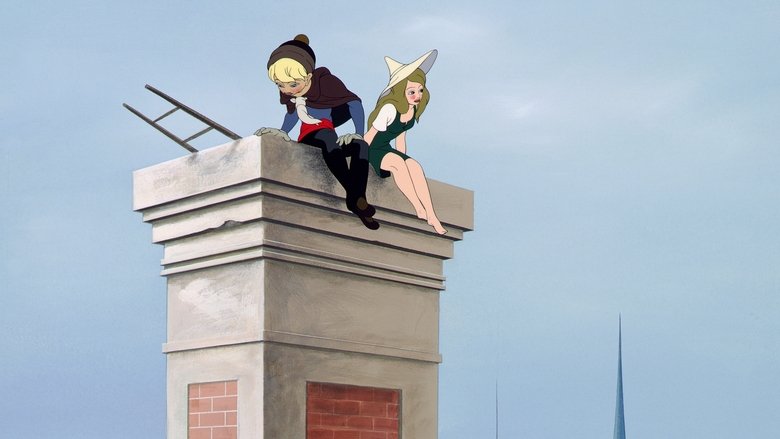
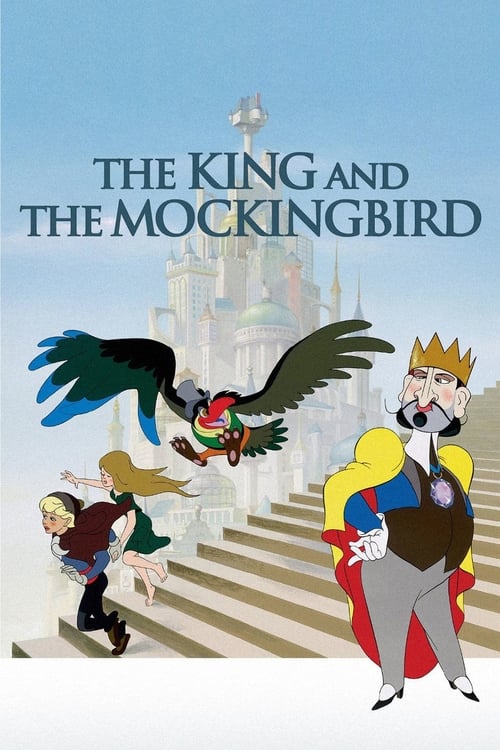
In the kingdom of Takicardia, the cross-eyed and tyrannical King Charles V + III = VIII + VIII = XVI rules from his colossal, sky-scraping palace. He is fond of hunting and hated by his people. His only nemesis is a colorful, sharp-tongued Mockingbird who mocks him from a nest high above the royal apartments. The King is secretly in love with a painting of a beautiful Shepherdess, but she loves the painted Chimney Sweep on the adjacent wall.

One night, the paintings come to life. The Shepherdess and Chimney Sweep escape into the labyrinthine castle, pursued by a painting of the King—who has disposed of the real King and taken his place. The usurper portrait, devoid of the real King's squint but even more ruthless, unleashes his secret police and a giant automaton to capture the lovers, leading to a spectacular chase through the vertical city.

The film balances whimsical humor with dark political satire. As the Bird helps the lovers navigate the surreal, industrial depths of the lower city and the luxurious heights of the palace, the story builds toward a cataclysmic finale where the oppressive structures of power are literally dismantled by their own machines.
Core Meaning

The King and the Mockingbird is a profound allegory about the fragility of tyranny and the enduring power of art and freedom. Grimault and Prévert illustrate that authoritarian regimes, no matter how imposing or mechanically advanced, are ultimately hollow and self-destructive.

The film posits that true power lies not in control or technology (represented by the robot and the factory), but in the spontaneous, organic force of love and nature (the Bird and the lovers). The ending serves as a warning: while the instruments of oppression can be turned against their masters, the aftermath leaves a quiet, somber world where freedom must be carefully preserved.

Thematic DNA

Tyranny vs. Freedom 30%
Vertical Social Stratification 25%
The Nature of Art and Reality 25%
Industrialization and Dehumanization 20%

Tyranny vs. Freedom

The central conflict pits the absolute control of the King against the anarchic liberty of the Bird. The King's rule is defined by surveillance, trapdoors, and forced conformity, while the Bird represents free speech and the refusal to be caged.

Vertical Social Stratification

The architecture of the castle visualizes class struggle. The King lives in the clouds, bathed in light, while the oppressed masses toil in the dark, sunless 'Lower City,' unaware of the sky until the Bird exposes the truth.

The Nature of Art and Reality

The film blurs the line between representation and reality. The 'real' King is incompetent, but his idealized portrait is terrifyingly efficient. The painted lovers possess more humanity than the living ruler, suggesting art captures the soul that tyranny lacks.

Industrialization and Dehumanization

The film critiques the mechanized age through the King's factory, which mass-produces busts of himself, and the giant Robot. These elements depict a world where individuality is crushed by automated uniformity.

Character Analysis

The Mockingbird (L'Oiseau)

Jean Martin

Archetype: Trickster / Mentor
Key Trait: Eloquence

Motivation

To protect his family, humiliate the King, and champion the cause of freedom for all creatures.

Character Arc

He starts as a pestering antagonist to the King, protecting his family. He becomes the narrator and guide for the lovers, eventually leading the revolution that topples the kingdom.

King Charles V + III = VIII + VIII = XVI

Pascal Mazzotti

Archetype: Tyrant
Key Trait: Narcissism

Motivation

Vanity and the possessive desire to own the Shepherdess, whom he views as an object.

Character Arc

The 'real' King is quickly disposed of by his own Portrait. The Portrait King acts as the true villain, obsessively hunting the Shepherdess until he is literally blown away by the Robot.

The Shepherdess and the Chimney Sweep

Agnès Viala / Renaud Marx

Archetype: The Lovers
Key Trait: Innocence

Motivation

To be together and escape the King's control.

Character Arc

They flee the frame of their paintings to be together. Their journey is one of survival; they are the innocent motivation that drives the Bird and the plot forward.

The Robot

N/A

Archetype: The Golem
Key Trait: Destructive Power

Motivation

Initially programmed obedience, followed by a final act of liberation.

Character Arc

Initially a mindless weapon of the King, it is commandeered by the Bird to destroy the city. In the final scene, it gains a spark of independent soul by choosing to free a bird.

Symbols & Motifs

The Bird (L'Oiseau)

Meaning:

Symbolizes anarchy, free thought, and nature. He is the only colorful element in a gray world and the only voice brave enough to speak truth to power.

Context:

He constantly taunts the King, rescues the lovers, and eventually controls the giant robot, serving as the catalyst for the revolution.

The Giant Robot

Meaning:

Represents the ultimate power of the state—destructive and mindless. It is a neutral tool that destroys whoever controls it dictates.

Context:

Built to enforce the King's will, it is hijacked by the Bird to destroy the castle, turning the regime's own weapon into the instrument of its downfall.

The Cage

Meaning:

A recurring motif for imprisonment and the suppression of freedom.

Context:

Used literally to trap the Bird and his chicks, and symbolically in the final scene where the Robot smashes a cage, delivering the film's final, silent message.

The Trapdoors

Meaning:

The arbitrary nature of totalitarian justice and the silencing of dissent.

Context:

The King pushes buttons to drop anyone who displeases him—courtiers, artists, even his own police—into the void, showing how dispensable human life is to a tyrant.

Memorable Quotes

Le travail, c'est la liberté.

— The Portrait King

Context:

Spoken by the usurper King when he sends the 'real' King and the heroes to the factory to mass-produce statues.

Meaning:

Literally 'Work is liberty.' This is a chilling reference to the Nazi slogan 'Arbeit macht frei' on the gates of concentration camps, highlighting the totalitarian nature of the King's regime.

Le monde est une merveille. Il y a le jour, il y a la nuit. Le soleil, la lune et les étoiles.

— The Blind Organ Grinder

Context:

Spoken in the dark lower city, inspiring the downtrodden inhabitants who have never seen the sky.

Meaning:

A poetic affirmation of the beauty of the natural world, which exists outside the King's artificial and gloomy kingdom.

Je suis le roi, tout le monde m'aime !

— The King

Context:

The King says this while his subjects are clearly terrified of him.

Meaning:

Demonstrates the King's delusion and the echo chamber of dictatorship where fear is mistaken for love.

Philosophical Questions

Can art be more 'real' than reality?

The film suggests that the painted characters (the Shepherdess, Chimney Sweep, and Portrait King) have more agency and vitality than the living King, questioning the nature of existence and the power of representation.

Is destruction necessary for true freedom?

The total annihilation of the castle at the end raises the question of whether reform is possible under tyranny, or if the entire system must be razed to the ground to build something new.

Alternative Interpretations

The Identity of the King: Some critics view the replacement of the 'real' King by his Portrait not just as a plot twist, but as a commentary on propaganda. The image of the leader becomes more powerful and dangerous than the man himself.

The Ambiguous Ending: The finale is often debated. Is the Robot's destruction of the castle a victory, or does it leave a post-apocalyptic void? The Robot sits on the ruins in a pose resembling Rodin's The Thinker, suggesting a new consciousness born from destruction—perhaps implying that true humanity starts only after the systems of oppression are completely leveled.

Cultural Impact

The King and the Mockingbird is a landmark in French animation history. Created by Paul Grimault and the legendary poet Jacques Prévert, it bridged the gap between literature and animation, proving the medium could handle complex political satire and surrealist poetry. Its release in 1980 was a cultural event in France, winning the Louis Delluc Prize.

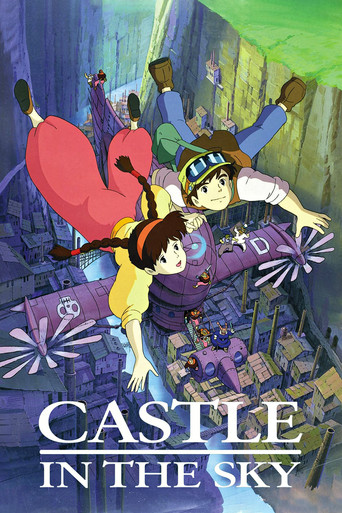
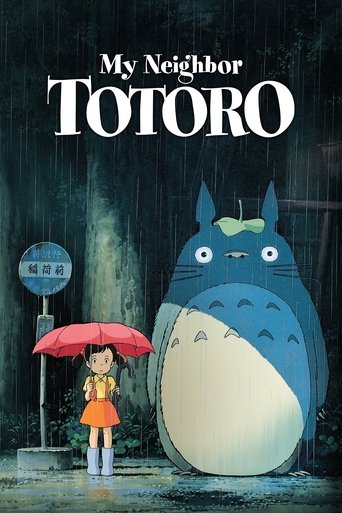
Internationally, its greatest legacy is its profound influence on Studio Ghibli. Founders Hayao Miyazaki and Isao Takahata have repeatedly cited it as a masterwork that taught them how to use vertical space in animation. The robot in Castle in the Sky and the castle design in The Castle of Cagliostro are direct homages to Grimault's work. It remains a cult classic, celebrated for refusing to talk down to children while mesmerizing adults.

Audience Reception

The film is universally acclaimed by critics and audiences alike, holding a high rating on review aggregators. Viewers praise its timeless animation style, the haunting score by Wojciech Kilar, and the poetic script.

Some modern audiences find the pacing slower than contemporary animation, and the animation style varies noticeably between the 1950s footage and the 1980s additions. However, these are generally viewed as charming historical quirks rather than flaws. The dark, melancholic ending is frequently cited as a bold and memorable departure from the 'Disney formula.'

Interesting Facts

  • The film had a notorious 'production hell,' starting in 1948 and only finishing in 1980.
  • The 1952 version was released unfinished against the director's will and was titled 'The Shepherdess and the Chimney Sweep'.
  • Paul Grimault disowned the 1952 version and spent decades regaining the rights to complete his vision.
  • It is cited by Hayao Miyazaki and Isao Takahata as a foundational influence on Studio Ghibli.
  • The English dub was titled 'The King and Mister Bird' and at one point featured Peter Ustinov as the Bird.
  • The character of the Bird was inspired by the actor Pierre Brasseur, who voiced the role in the original 1952 incomplete version.
  • The film's castle design inspired the Castle of Cagliostro in Miyazaki's 'Lupin III' movie.

Easter Eggs

Police Officers' Design

The bowler-hatted, mustachioed police officers are a direct visual reference to Thomson and Thompson (Dupond et Dupont) from Hergé's The Adventures of Tintin.

Metropolis Architecture

The dark, industrial Lower City where workers toil without sunlight is a visual homage to Fritz Lang's 1927 film Metropolis.

Factory Scene

The scene where the heroes are forced to work on a conveyor belt references Charlie Chaplin's Modern Times, critiquing industrial dehumanization.

⚠️ Spoiler Analysis

Click to reveal detailed analysis with spoilers

Frequently Asked Questions

Explore More About This Movie

Dive deeper into specific aspects of the movie with our detailed analysis pages

Comments (0)

Leave a comment

No comments yet. Be the first to share your thoughts!