The film reaches its climax when Rupert successfully kidnaps Jerry Langford and forces the network to air his stand-up routine. In a shocking twist of tone, Rupert's routine is actually somewhat effective, yet its content is a bleak, autobiographical account of his own misery. He openly confesses to the kidnapping on air, but the audience laughs, assuming it is a 'bit.' The final scene shows Rupert in prison, followed by a montage of his massive success upon release. The ambiguity of this success—whether it is a real-world reward for his infamy or a total hallucination—is the film's ultimate punchline. The ending reveals that for someone like Rupert, the perception of victory is identical to victory itself, making the truth of the events irrelevant.
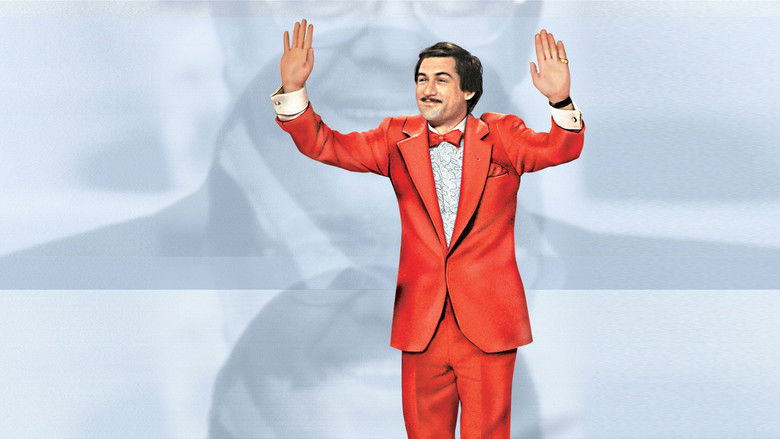
A chilling satirical vacuum where desperate neon dreams collide with the cold stone of rejection. It is a celluloid scream of loneliness, capturing the plastic hollow of a cardboard-cutout spotlight.
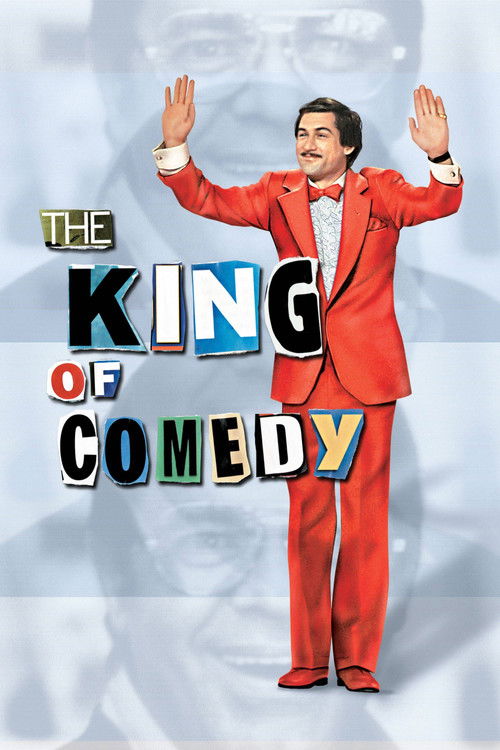
The King of Comedy
"It's no laughing matter."
18 December 1982
United States of America
109 min
7.8
(2,480)
Director: Martin Scorsese
Cast: Robert De Niro, Jerry Lewis, Diahnne Abbott, Sandra Bernhard, Shelley Hack
Drama
Comedy
Celebrity Worship and Fandom
Reality vs. Delusion
The Price of Fame
Entitlement and Ambition
Isolation
Budget:
$19,000,000
Box Office:
$2,536,000
The King of Comedy — Ending Explained
⚠️ Spoiler Analysis
Alternative Interpretations
The most widely discussed interpretation involves the film's ending: Is Rupert's success real, or a psychotic break?
- The Fantasy Reading: Many critics, including Scorsese himself at times, suggest that the final sequence—where Rupert is released from prison to a hero's welcome and a best-selling book—is a final, total delusion taking place in Rupert's mind while he is still in jail. The static, repetitive introductions and the sudden change in tone support this.
- The Satirical Reality Reading: This perspective argues that the ending is real and serves as a scathing indictment of American society. It suggests that a culture obsessed with scandal would indeed reward a criminal with fame, making Rupert a literal 'King of Comedy' because he successfully manipulated the media machine.
Explore More About This Movie
Dive deeper into specific aspects of the movie with our detailed analysis pages