The King of Comedy
A chilling satirical vacuum where desperate neon dreams collide with the cold stone of rejection. It is a celluloid scream of loneliness, capturing the plastic hollow of a cardboard-cutout spotlight.
The King of Comedy

The King of Comedy

"It's no laughing matter."

18 December 1982 United States of America 109 min ⭐ 7.8 (2,480)
Director: Martin Scorsese
Cast: Robert De Niro, Jerry Lewis, Diahnne Abbott, Sandra Bernhard, Shelley Hack
Drama Comedy
Celebrity Worship and Fandom Reality vs. Delusion The Price of Fame Entitlement and Ambition Isolation
Budget: $19,000,000
Box Office: $2,536,000

Overview

The King of Comedy is a sharp, unsettling descent into the psyche of Rupert Pupkin (Robert De Niro), a middle-aged, delusional aspiring comedian who lives in his mother's basement. Rupert is obsessed with late-night talk show host Jerry Langford (Jerry Lewis), whom he believes is his ticket to stardom. After a brief encounter, Rupert begins to weave an elaborate fantasy world where he and Jerry are close friends and professional equals, despite being repeatedly and coldly rebuffed by Langford's actual staff.

Driven by a toxic sense of entitlement and an inability to distinguish his daydreams from reality, Rupert enlists the help of Masha (Sandra Bernhard), an even more unstable socialite who is erotically obsessed with Langford. Together, they hatch a desperate plan to kidnap the host, demanding a single performance slot on national television as ransom. The film explores the terrifying intersection of celebrity worship, media-induced mania, and the high price of the American dream.
Core Meaning

The core meaning of the film lies in its prophetic critique of a culture that values visibility over substance. Scorsese explores the idea that in a media-saturated society, existence is only validated by being "seen" on a screen. The film suggests that the boundary between fan and stalker—and between ambition and psychosis—is dangerously thin. It argues that the American dream has morphed into a nightmare of entitlement, where individuals feel they are "owed" fame simply for existing, regardless of talent or effort.

Thematic DNA

Celebrity Worship and Fandom 30%
Reality vs. Delusion 25%
The Price of Fame 20%
Entitlement and Ambition 15%
Isolation 10%

Celebrity Worship and Fandom

The film illustrates how the audience-performer relationship can devolve into a dangerous parasocial obsession. Rupert and Masha do not see Jerry as a person, but as a commodity or a symbol of the life they feel entitled to lead.

Reality vs. Delusion

Scorsese blurs the lines between Pupkin’s elaborate basement fantasies and the harsh, static reality of his life. The film often transitions into Rupert's imagination without warning, making the audience question the validity of the final sequence.

The Price of Fame

The movie contrasts the pathetic desperation of the fan with the hollow, isolated life of the star. Jerry Langford is depicted as a man trapped by his own success, eating dinner alone and dodging the very public that made him a "King."

Entitlement and Ambition

Rupert embodies the "short-cut" mentality, believing he can bypass the hard work of the comedy circuit through a single act of shock or proximity to greatness. He believes he is a genius simply because he says he is.

Isolation

Every character is profoundly alone. Rupert lives in a basement, Jerry in a sterile mansion, and Masha in a world of manic obsession. The film portrays New York as a city of millions where no one truly connects.

Character Analysis

Rupert Pupkin

Robert De Niro

Archetype: Antihero / Delusional Dreamer
Key Trait: Relentless Persistence

Motivation

To be acknowledged as a "somebody" and to escape the crushing anonymity of his life. He is driven by the mantra: "Better to be king for a night than a schmuck for a lifetime."

Character Arc

Rupert moves from a nuisance autograph-seeker to a criminal kidnapper. His development is less about growth and more about the deepening of his psychosis until he achieves the "success" he craves by any means necessary.

Jerry Langford

Jerry Lewis

Archetype: The Reluctant Mentor / Victim
Key Trait: Emotional Austerity

Motivation

Maintaining his privacy and professional dignity in a world that feels entitled to his time and energy.

Character Arc

Jerry remains static and guarded, a "rock" in the face of Pupkin's chaos. He begins as a powerful icon and ends as a victim of the very fame that created him.

Masha

Sandra Bernhard

Archetype: The Zealot
Key Trait: Unpredictable Volatility

Motivation

Erotic and obsessive love for Jerry Langford; a desire for intense emotional connection that she cannot find in reality.

Character Arc

Masha descends into total madness, transitioning from a stalker to a captor who tries to live out a romantic fantasy with a kidnapped, terrified man.

Symbols & Motifs

Cardboard Cutouts

Meaning:

Symbolizes the one-dimensional nature of celebrity and the artificiality of Rupert's social world. He interacts with these flat images as if they are real people, highlighting his disconnect from human reality.

Context:

Rupert sets up a talk-show set in his basement with life-size cutouts of Liza Minnelli and Jerry Langford, conducting imaginary interviews with them.

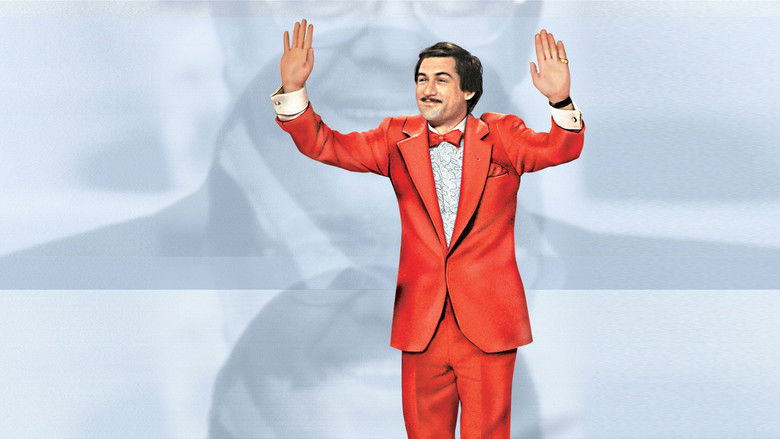
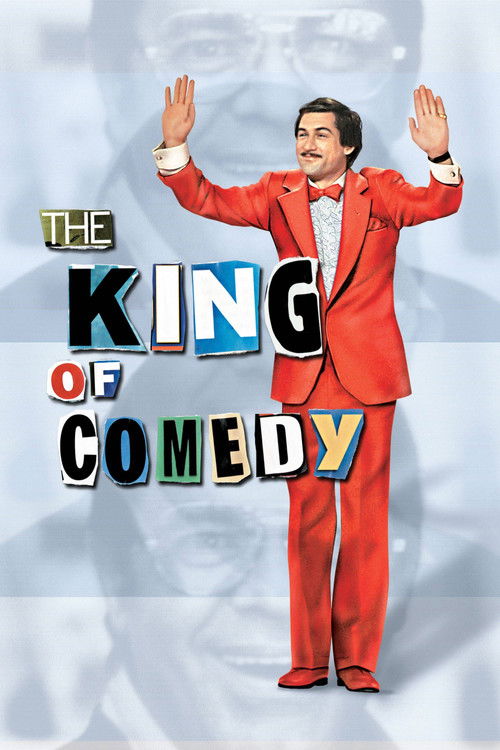
The Red Suit

Meaning:

Represents Rupert's idealized self-image and his eventual "coronation" in the comedy world. It stands out against the drab, realistic colors of the rest of the film, signaling his entry into his own fantasy.

Context:

Rupert wears the flashy red suit during his actual (or imagined) performance on the Jerry Langford Show and in the film's final moments.

The Autograph Book

Meaning:

A symbol of validation and transactional fame. To Rupert, an autograph isn't just a souvenir; it's proof of an encounter that moves him closer to the "inner circle."

Context:

Rupert is seen obsessively collecting autographs and later signs his own book, symbolizing his self-appointment as a celebrity.

Duct Tape

Meaning:

Symbolizes the violent imposition of the fan's will onto the star. It is the literal tool used to force the "gatekeeper" to finally listen.

Context:

Used by Rupert and Masha to bind Jerry Langford during the kidnapping sequence.

Memorable Quotes

Better to be king for a night than a schmuck for a lifetime.

— Rupert Pupkin

Context:

The final line of Rupert's monologue during his television debut.

Meaning:

The film's thesis statement. It suggests that transient fame is more valuable than a stable, unremarkable life, regardless of the ethical or personal cost.

I hate you but I envy you because you're you.

— Jerry Langford (Fantasy)

Context:

A dream sequence where Jerry begs Rupert to take over his show.

Meaning:

Reveals Rupert's deep insecurity. He imagines his idol is jealous of his "purity" as an unknown, which is a classic narcissistic projection.

I'm not kidding... but I figure it this way: better to be king for a night...

— Rupert Pupkin

Context:

The closing of Rupert's stand-up routine on national TV.

Meaning:

Highlights the chilling reality that the audience laughs at his admission of a real crime, mistaking sociopathy for performance art.

Philosophical Questions

Is visibility a prerequisite for existence in a media-centric world?

The film explores the existential dread of being a 'nobody.' Rupert's actions suggest that he would rather be a criminal celebrity than a virtuous ghost, implying that modern identity is tied strictly to public recognition.

Does the audience bear responsibility for the monsters it creates?

By laughing at Rupert's routine—which contains a literal confession—the studio audience validates his pathology. The film asks if our hunger for entertainment makes us complicit in the breakdown of those who provide it.

Alternative Interpretations

The most widely discussed interpretation involves the film's ending: Is Rupert's success real, or a psychotic break?

  • The Fantasy Reading: Many critics, including Scorsese himself at times, suggest that the final sequence—where Rupert is released from prison to a hero's welcome and a best-selling book—is a final, total delusion taking place in Rupert's mind while he is still in jail. The static, repetitive introductions and the sudden change in tone support this.
  • The Satirical Reality Reading: This perspective argues that the ending is real and serves as a scathing indictment of American society. It suggests that a culture obsessed with scandal would indeed reward a criminal with fame, making Rupert a literal 'King of Comedy' because he successfully manipulated the media machine.

Cultural Impact

The King of Comedy is now considered one of Scorsese's most prescient works. Initially a failure, it has gained cult status for its early diagnosis of toxic fandom and the rise of reality television culture. Its influence is most notably seen in Todd Phillips' 2019 film Joker, which heavily homages its plot and themes, even casting De Niro in the 'Jerry Langford' role. It pioneered the 'cringe comedy' genre, influencing works like The Larry Sanders Show and the career of Sacha Baron Cohen. Critically, it marked a shift in Scorsese's style toward a more static, 'televisual' aesthetic, moving away from the fluid camerawork of his 1970s classics.

Audience Reception

At the time of its release, audiences were largely repulsed by the film's 'arid' and 'unpleasant' tone. Critics like Roger Ebert initially found it difficult to watch, describing it as an 'emotional desert' without the release or catharsis typical of Scorsese's work. However, over time, the verdict has shifted dramatically. Today, it holds an 89% rating on Rotten Tomatoes, praised for De Niro's 'cringeworthy' yet brilliant performance and its eerie accuracy in predicting the 'famous for being famous' era. It is now frequently cited as one of the best films of the 1980s.

Interesting Facts

  • The film was inspired by a real-life fan who kept a detailed diary of Johnny Carson's talk show performances.
  • Robert De Niro prepared for the role by stalking his own real-life autograph hunters and asking them probing questions.
  • The members of the punk band The Clash (Joe Strummer, Mick Jones, and Paul Simonon) appear as extras credited as 'street scum.'
  • Jerry Lewis directed the scene where a woman yells 'I hope you get cancer' at his character after he refuses to speak to her nephew on the phone.
  • The film was a massive box office flop upon release, grossing only $2.5 million against a $19 million budget.
  • Martin Scorsese's mother, Catherine Scorsese, provides the off-screen voice of Rupert's mother.
  • The film was first released in Iceland in December 1982, two months before its US premiere.

Easter Eggs

The Clash Cameo

Joe Strummer, Mick Jones, and Paul Simonon appear as a group of 'street scum' during a scene where Rupert and Masha argue. This reflects the gritty, urban New York atmosphere Scorsese cultivated.

The 'Taxi Driver' Mirror

Rupert Pupkin is often viewed as a spiritual, non-violent (or differently violent) successor to Travis Bickle. Both are isolated New Yorkers seeking purpose through a grand, public gesture.

Scorsese Family Cameos

In addition to his mother's voice, Martin Scorsese's father Charles appears as a man at a bar, and Martin himself has a cameo as a TV director.

⚠️ Spoiler Analysis

Click to reveal detailed analysis with spoilers

Frequently Asked Questions

Explore More About This Movie

Dive deeper into specific aspects of the movie with our detailed analysis pages

Comments (0)

Leave a comment

No comments yet. Be the first to share your thoughts!