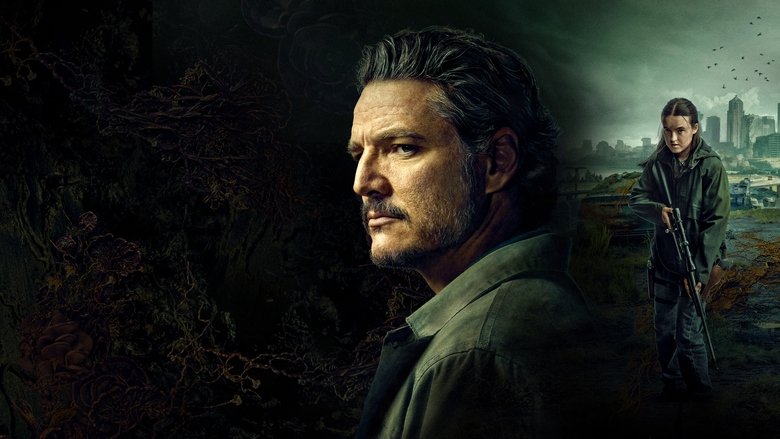
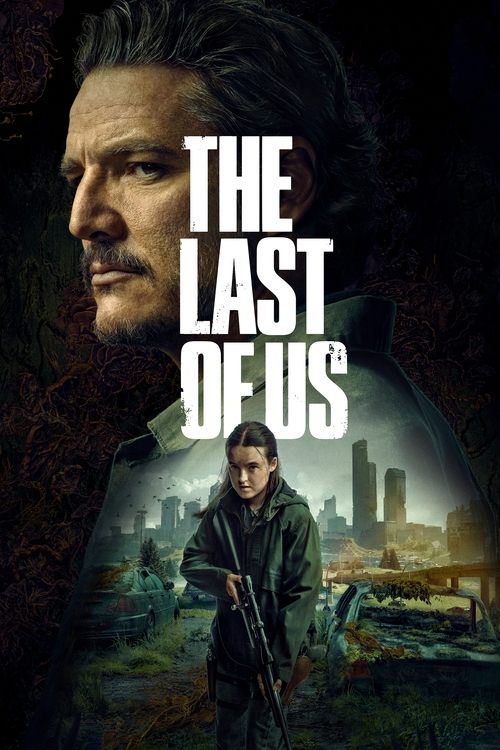
"Every path has a price."
The Last of Us - Symbolism & Philosophy
Symbols & Motifs
Joel's Broken Watch
It symbolizes Joel's arrested emotional state and the trauma of his daughter Sarah's death. The watch, a final gift from her, is broken at the moment she dies, signifying that for Joel, time stopped in that instant. His continued wearing of it represents the burden of his past that he carries for two decades.
Sarah gives Joel the repaired watch for his birthday on the day of the outbreak. It breaks during the chaos of her death. Twenty years later, in 2023, Ellie points out that the watch is still broken. The watch is a constant visual reminder on Joel's wrist of his past loss and his inability to move on until his journey with Ellie begins to heal him.
The Giraffes
The giraffes represent a moment of pure, untainted hope, wonder, and the enduring beauty of the natural world. In a world defined by violence and decay, their serene presence offers a glimpse of a peaceful life that could still exist, reminding Joel and Ellie of what they are fighting for. It symbolizes that life continues, and beauty can be found in the most unexpected places.
In the Season 1 finale, as Joel and Ellie arrive in Salt Lake City, they encounter a herd of giraffes calmly eating from trees in the overgrown ruins of the city. This quiet, awe-inspiring moment solidifies their bond and gives Ellie a moment of childlike joy, briefly lifting the immense weight of their journey.
The Firefly Pendant/Logo
The Firefly symbol represents the duality of hope. As a light in the darkness, it symbolizes resistance, the search for a cure, and the struggle to restore civilization. However, it also embodies the moral compromises and fanaticism that can come with such a righteous cause. The Fireflies are willing to sacrifice a child for their idea of the greater good, subverting the simple idea of them being purely heroic.
The symbol is seen painted on walls throughout the series, guiding people towards the Fireflies. Marlene, the leader, wears a pendant. The motto associated with it, "When you're lost in the darkness, look for the light," is a recurring phrase that encapsulates the series' central themes of hope and desperation.
Endure and Survive
A mantra for resilience and the sheer will to live. It is the motto from Ellie's beloved "Savage Starlight" comic books and becomes a personal philosophy for her. It represents her determination to keep going, no matter the physical or emotional cost, and her refusal to give up in the face of overwhelming odds.
Ellie first shares the phrase with Sam in Kansas City, using it to bolster his spirits. The phrase becomes a touchstone for her character, encapsulating the grim reality of their world while also serving as a small piece of personal strength and identity she holds onto throughout her journey.
Philosophical Questions
Does the survival of the human species outweigh the life of an individual?
This is the central ethical dilemma of the series, crystallized in the finale. The Fireflies operate on a utilitarian principle: sacrificing one (Ellie) to potentially save the many is a logical and necessary choice. Joel's actions are a direct refutation of this philosophy. He chooses the value of one specific life, which has meaning to him, over the abstract value of a species. The series doesn't provide a clear answer, instead forcing the audience to grapple with whether there is a moral absolute or if morality is situational, dictated by personal loyalties and love.
What is the true nature of humanity when civilization collapses?
The series explores a Hobbesian-like world where life is often "nasty, brutish, and short." It repeatedly demonstrates that the greatest threat is not the Infected, but other humans who have devolved into violent tribalism (Kathleen's revolutionaries), authoritarian control (FEDRA), or monstrous survivalism (David's cannibals). However, it also presents counterpoints through Bill and Frank's loving sanctuary, the functional commune in Jackson, and the central bond between Joel and Ellie. The show suggests that humanity is capable of both profound brutality and profound love, and the apocalypse merely strips away the veneer of society, revealing these competing instincts in their rawest forms.
Can love be a destructive and selfish force?
While love is often portrayed as a redemptive power (healing Joel, giving Bill purpose), the series relentlessly explores its darker side. Joel's love for Ellie directly leads him to commit a mass murder and lie to her, arguably damning the world. Kathleen's love for her brother fuels a ruthless, city-wide vendetta. The series argues that love isn't inherently pure; it is a fierce, primal force that can drive people to protect their own at any cost, making them capable of horrific acts against an "out-group." It questions the romanticized notion of love, presenting it as a dangerous and morally complex motivator.
Core Meaning
The core meaning of "The Last of Us" is a profound exploration of love's duality: its capacity to be a source of immense hope, resilience, and humanity, but also a catalyst for tribalism, brutal violence, and morally devastating choices. The series, created by Craig Mazin and Neil Druckmann, argues that in a world devoid of societal structures, the powerful, personal bonds of love—particularly parental love—become the ultimate driving force. However, it doesn't romanticize this notion. Instead, it meticulously examines how this fierce, protective love can lead to horrific acts, questioning whether sacrificing the few for the many is justifiable and what the true cost of survival is. Ultimately, the series posits that there are no easy heroes or villains, only people trying to save who they can save, often at a terrible cost to others and their own souls.