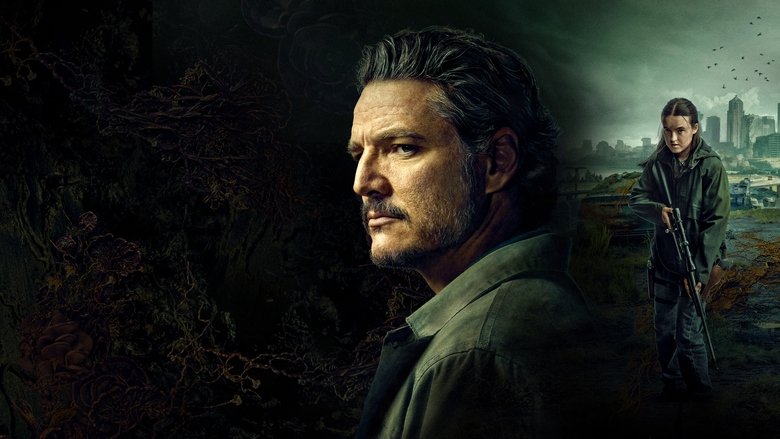
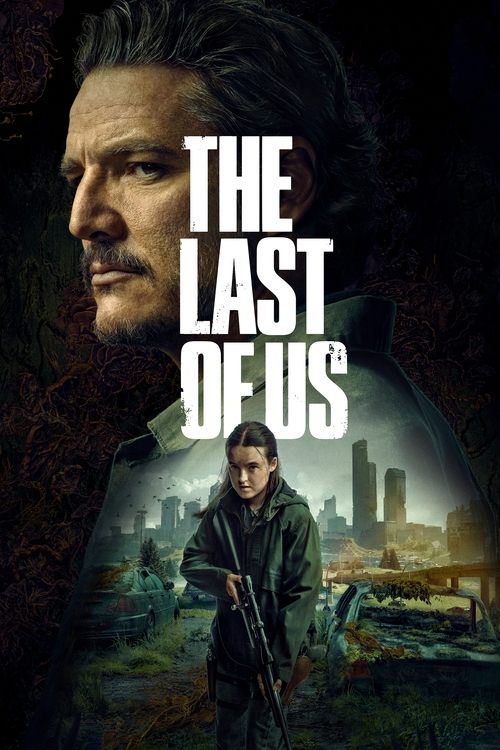
The Last of Us
A haunting, character-driven odyssey through a collapsed America, where the deadliest threat isn't the infected, but the desperate love and brutal choices of survivors.
The Last of Us

The Last of Us

"Every path has a price."

15 January 2023 — 25 May 2025 United States of America 2 season 16 episode Returning Series ⭐ 8.5 (6,495)
Cast: Bella Ramsey, Pedro Pascal, Gabriel Luna, Isabela Merced, Young Mazino
Drama
The Duality of Love and Loss Survival and Moral Ambiguity Found Family and Human Connection Hope in a Desolate World

Overview

Set two decades after a parasitic fungal outbreak collapses modern civilization, "The Last of Us" follows Joel, a hardened and cynical smuggler living in a militarized quarantine zone. He is tasked with escorting Ellie, a tenacious 14-year-old girl, across the dangerous, dilapidated United States to a resistance group known as the Fireflies. Ellie is immune to the Cordyceps infection, and the Fireflies believe she holds the key to creating a vaccine.

Their journey is a brutal cross-country trek fraught with peril from the monstrous Infected and, more often, from desperate and violent human survivors. As they navigate the remnants of cities and the unforgiving wilderness, what begins as a simple job for Joel transforms into a profound and complex relationship. He, still grieving the loss of his own daughter at the start of the pandemic, begins to see Ellie as a surrogate daughter, while she comes to rely on him as the only stable figure in her life. Their bond is tested by unimaginable loss and morally ambiguous choices that challenge their understanding of right, wrong, and what it means to be human in a world stripped of its humanity.
Core Meaning

The core meaning of "The Last of Us" is a profound exploration of love's duality: its capacity to be a source of immense hope, resilience, and humanity, but also a catalyst for tribalism, brutal violence, and morally devastating choices. The series, created by Craig Mazin and Neil Druckmann, argues that in a world devoid of societal structures, the powerful, personal bonds of love—particularly parental love—become the ultimate driving force. However, it doesn't romanticize this notion. Instead, it meticulously examines how this fierce, protective love can lead to horrific acts, questioning whether sacrificing the few for the many is justifiable and what the true cost of survival is. Ultimately, the series posits that there are no easy heroes or villains, only people trying to save who they can save, often at a terrible cost to others and their own souls.

Thematic DNA

The Duality of Love and Loss 35%
Survival and Moral Ambiguity 30%
Found Family and Human Connection 25%
Hope in a Desolate World 10%

The Duality of Love and Loss

The series' central theme is the exploration of love as both a redemptive and destructive force. Joel's journey is defined by the loss of his daughter, Sarah, which leaves him emotionally barren for twenty years. His growing paternal love for Ellie slowly reawakens his humanity, giving him a purpose beyond mere survival. This is contrasted with other forms of love, like the decades-long, nurturing relationship between Bill and Frank, which creates a sanctuary of beauty amidst the decay. However, the series consistently shows the dark side of this powerful emotion. Love fuels Joel's climactic, violent decision to save Ellie at the potential cost of humanity's future, demonstrating that the same force that can save one's soul can also lead to devastating moral compromises.

Survival and Moral Ambiguity

"The Last of Us" relentlessly examines the moral compromises required to survive in its brutal world. The line between right and wrong is constantly blurred. The series questions whether humanity's worst traits are a product of the apocalypse or were always latent. Characters like Kathleen are driven to horrific acts of vengeance for the love of her brother. David's community turns to cannibalism to endure the winter. The series posits that the infected are a predictable threat, whereas the true danger lies with other humans who are capable of calculated cruelty. Joel's own actions throughout the series, culminating in his massacre of the Fireflies, force the audience to confront uncomfortable questions about the justifications for violence and whether the ends ever truly justify the means.

Found Family and Human Connection

In a world where biological families have been torn apart, the series emphasizes the power of forming new, chosen families. The central relationship between Joel and Ellie is the prime example, evolving from a reluctant partnership into a deep, father-daughter bond. This theme is also explored through the tragic story of brothers Henry and Sam, who find a brief, parallel connection with Joel and Ellie. The expanded story of Bill and Frank in the show provides a powerful, self-contained narrative about finding love and creating a meaningful life in isolation. These relationships suggest that even in the bleakest of circumstances, human connection is the most vital resource for maintaining one's humanity.

Hope in a Desolate World

Despite the overwhelming darkness, glimmers of hope persist. Ellie herself embodies this theme; her immunity represents a potential, albeit complicated, future for humanity. Moments of natural beauty, like the encounter with the giraffes, serve as powerful symbols of life's endurance and the possibility of peace and wonder, even amidst urban decay. The Fireflies, with their motto "When you're lost in the darkness, look for the light," represent a more organized, albeit flawed, form of hope for societal restoration. The series suggests that hope is not about finding a perfect cure, but about finding personal reasons to keep going, whether it's a person, a purpose, or a fleeting moment of beauty.

Character Analysis

Joel Miller

Pedro Pascal

Archetype: Antihero / The Protector
Key Trait: Grizzled Protector

Motivation

Initially, his motivation is pure survival and self-interest. After losing Sarah, he is driven by a desire to simply keep breathing and avoid any emotional attachments. This evolves as he travels with Ellie. His motivation shifts from a transactional goal (delivering her for a reward) to a deeply personal one: protecting Ellie at all costs, as he could not protect Sarah. This becomes his sole, all-consuming purpose.

Character Arc

In the beginning, Joel is a broken man, emotionally shut down by the traumatic death of his daughter Sarah. For 20 years, he operates as a ruthless smuggler, defined by cynicism and a brutal survivalist instinct. His journey with Ellie forces him to confront his buried trauma. Initially viewing her as cargo, he gradually, and reluctantly, allows himself to care for her. Through protecting her, he rediscovers his capacity for love and finds a new purpose. This culminates in his decision to save her from the Fireflies, an act of profound love that is also monstrously selfish. He completes his arc not by becoming a traditional hero, but by fully embracing his role as a father figure, choosing the love for his one 'daughter' over the potential salvation of the world.

Ellie Williams

Bella Ramsey

Archetype: The Hopeful Survivor / The Catalyst
Key Trait: Resilient Spirit

Motivation

Her primary motivation is to make her immunity mean something. She believes that by reaching the Fireflies and helping create a cure, her life—and the deaths of those she's cared about, like Riley—will have had a purpose. She is driven by a desire to matter. As her bond with Joel deepens, a secondary motivation emerges: to maintain that connection and protect the found family she has with him.

Character Arc

Ellie begins the series as a defiant, witty, and somewhat naive teenager, born into the post-apocalyptic world and hardened by life in an oppressive military orphanage. Her immunity gives her a unique blend of survivor's guilt and a sense of purpose. Her journey with Joel strips away her innocence as she is forced to commit acts of extreme violence to survive, most notably her traumatic encounter with David. She develops a deep dependency and love for Joel, who becomes the father figure she never had. However, Joel's final lie about the Fireflies creates a fracture in their relationship, leaving her with a sense of unease and unresolved purpose, setting the stage for her future transformation.

Bill

Nick Offerman

Archetype: The Survivalist
Key Trait: Paranoid but Capable

Motivation

Bill's initial motivation is to survive the apocalypse completely on his own terms, free from government interference and the chaos of other people. After Frank arrives, his motivation shifts entirely to protecting Frank and building a safe, happy life for him. Frank becomes his reason for living, not just surviving.

Character Arc

Bill is introduced as a paranoid, misanthropic survivalist who has successfully isolated himself from the dangers of the outside world. He believes in self-reliance above all and trusts no one. His arc is a self-contained story of transformation through love. When Frank stumbles into his life, Bill's fortified walls—both literal and emotional—begin to break down. Over two decades, he experiences a full, loving partnership that brings joy, connection, and purpose to his existence. His final letter to Joel reveals his ultimate realization: that his true purpose was not just surviving, but protecting the person he loved. His journey reframes the show's concept of survival from a solitary act to one made meaningful through connection.

Tess Servopoulos

Anna Torv

Archetype: The Pragmatist
Key Trait: Pragmatic Leader

Motivation

Like Joel, Tess is initially motivated by survival and the desire to settle a score to get their car battery back. This quickly changes when she learns Ellie is immune. Her motivation then becomes a powerful, desperate hope that this child could be the key to redeeming humanity and finding a cure. This hope fuels her final, sacrificial act.

Character Arc

Tess is a hardened and pragmatic smuggler, Joel's partner in business and life. She is as ruthless as Joel but possesses a flicker of hope that he has long extinguished. Her character arc is short but pivotal. She is the initial driving force behind the mission to transport Ellie, recognizing the world-changing significance of the girl's immunity. When she becomes infected, she doesn't succumb to despair but instead uses her final moments to ensure Joel and Ellie can escape. Her arc is one of sacrifice, where her last act is a desperate bid to make her death—and her life—mean something by pushing Joel to complete the mission.

Symbols & Motifs

Joel's Broken Watch

Meaning:

It symbolizes Joel's arrested emotional state and the trauma of his daughter Sarah's death. The watch, a final gift from her, is broken at the moment she dies, signifying that for Joel, time stopped in that instant. His continued wearing of it represents the burden of his past that he carries for two decades.

Context:

Sarah gives Joel the repaired watch for his birthday on the day of the outbreak. It breaks during the chaos of her death. Twenty years later, in 2023, Ellie points out that the watch is still broken. The watch is a constant visual reminder on Joel's wrist of his past loss and his inability to move on until his journey with Ellie begins to heal him.

The Giraffes

Meaning:

The giraffes represent a moment of pure, untainted hope, wonder, and the enduring beauty of the natural world. In a world defined by violence and decay, their serene presence offers a glimpse of a peaceful life that could still exist, reminding Joel and Ellie of what they are fighting for. It symbolizes that life continues, and beauty can be found in the most unexpected places.

Context:

In the Season 1 finale, as Joel and Ellie arrive in Salt Lake City, they encounter a herd of giraffes calmly eating from trees in the overgrown ruins of the city. This quiet, awe-inspiring moment solidifies their bond and gives Ellie a moment of childlike joy, briefly lifting the immense weight of their journey.

The Firefly Pendant/Logo

Meaning:

The Firefly symbol represents the duality of hope. As a light in the darkness, it symbolizes resistance, the search for a cure, and the struggle to restore civilization. However, it also embodies the moral compromises and fanaticism that can come with such a righteous cause. The Fireflies are willing to sacrifice a child for their idea of the greater good, subverting the simple idea of them being purely heroic.

Context:

The symbol is seen painted on walls throughout the series, guiding people towards the Fireflies. Marlene, the leader, wears a pendant. The motto associated with it, "When you're lost in the darkness, look for the light," is a recurring phrase that encapsulates the series' central themes of hope and desperation.

Endure and Survive

Meaning:

A mantra for resilience and the sheer will to live. It is the motto from Ellie's beloved "Savage Starlight" comic books and becomes a personal philosophy for her. It represents her determination to keep going, no matter the physical or emotional cost, and her refusal to give up in the face of overwhelming odds.

Context:

Ellie first shares the phrase with Sam in Kansas City, using it to bolster his spirits. The phrase becomes a touchstone for her character, encapsulating the grim reality of their world while also serving as a small piece of personal strength and identity she holds onto throughout her journey.

Memorable Quotes

I swear.

— Joel Miller

Context:

In the final scene of Season 1, Episode 9 ("Look for the Light"), after Joel has rescued an unconscious Ellie from the Firefly hospital, she asks him to swear that his story about the Fireflies having given up on a cure is true. He looks her in the eye and swears, cementing his lie.

Meaning:

This is the definitive, devastating lie that concludes the first season. It represents Joel's ultimate choice: to save Ellie from the truth of what he did at the hospital and preserve their relationship, at the cost of her agency and a potential cure for humanity. It is a moment heavy with the weight of his love and his immense selfishness.

When you're lost in the darkness, look for the light.

— The Fireflies (Marlene)

Context:

The phrase is seen written on walls and is spoken by Firefly leader Marlene. It serves as both a beacon of hope for survivors and the ideological justification for the group's extreme actions. The first episode is also titled "When You're Lost in the Darkness."

Meaning:

This is the motto of the Fireflies and a central recurring motif of the series. It represents the core theme of finding hope in a desolate world. However, the series complicates this simple message, showing how the pursuit of that "light" can lead to morally dark actions, such as the Fireflies' willingness to kill Ellie for a potential cure.

I was never afraid before you showed up.

— Bill

Context:

In Season 1, Episode 3 ("Long, Long Time"), Joel reads a letter Bill left behind after he and Frank have died. Bill explains that for years he was content and safe on his own, but meeting Frank gave him something precious to lose, and therefore, something to truly fear.

Meaning:

This line, from Bill's final letter to Joel, encapsulates the central theme of his episode and the series as a whole. It signifies that true fear isn't about the monsters outside, but about the prospect of losing someone you love. It redefines strength, not as solitary survivalism, but as the vulnerability that comes with deep connection.

You're right. You're not my daughter. And I sure as hell ain't your dad.

— Joel Miller

Context:

In Season 1, Episode 6 ("Kin"), after arriving at his brother Tommy's settlement, Joel tries to hand off responsibility for Ellie. During a heated argument, Ellie confronts him about his plan, and he lashes out with this line to create emotional distance.

Meaning:

A deeply painful moment where Joel, terrified by his growing emotional attachment to Ellie and the fear of failing her as he failed Sarah, tries to push her away. The line is cruel, but it comes from a place of fear and love, highlighting his internal conflict and the depth of the bond he is trying to deny.

Endure and survive.

— Ellie Williams

Context:

Ellie shares this phrase with Sam in Season 1, Episode 5 ("Endure and Survive") after they bond over the "Savage Starlight" comic books. The phrase becomes synonymous with her character's fighting spirit.

Meaning:

This phrase, taken from a comic book, becomes Ellie's personal mantra. It symbolizes her resilience and her youthful attempt to make sense of the brutal world she inhabits. It's a simple but powerful expression of the grim determination required to keep going when all seems lost.

Episode Highlights

When You're Lost in the Darkness

S1E1

This feature-length premiere masterfully establishes the world and its stakes. It dedicates significant time to pre-outbreak life, building an emotional connection between Joel and his daughter Sarah, which makes her subsequent death during the chaotic initial hours of the pandemic utterly heartbreaking. The episode then jumps 20 years to introduce the hardened Joel and the world of the Boston QZ before setting him on his path with Ellie.

Significance:

The episode's powerful prologue provides the emotional bedrock for Joel's entire character arc. Sarah's death is the trauma that defines him, and understanding that loss is crucial to understanding his later actions, especially his final choice in the finale. It perfectly sets the tone and emotional depth of the series.

Long, Long Time

S1E3

Largely departing from Joel and Ellie's main journey, this episode tells the self-contained, decades-spanning love story of Bill, a paranoid survivalist, and Frank, a survivor who stumbles into his life. It beautifully chronicles their relationship from a tense first meeting to a life built together, culminating in a joint, dignified suicide after Frank becomes terminally ill.

Significance:

This episode is widely regarded as a masterpiece of television. It powerfully reinforces the series' core themes of finding love and meaning in a hopeless world. It serves as both a hopeful and tragic counterpoint to Joel's own story, showing him—and the audience—what a life of love can look like in this world, profoundly influencing his perspective on his mission with Ellie.

Endure and Survive

S1E5

The culmination of the Kansas City arc, this episode sees Joel and Ellie team up with brothers Henry and Sam to escape the revolutionary forces led by Kathleen. The episode features a spectacular action sequence involving an overwhelming horde of Infected, including a terrifying Bloater, emerging from the ground. It ends in tragedy when Sam, having been secretly bitten, turns and attacks Ellie, forcing his brother Henry to kill him before taking his own life.

Significance:

This episode is a brutal turning point for Ellie. The shocking and tragic deaths of Henry and Sam shatter her innocence and mark a significant step in her emotional hardening. The bond she forms with Sam, and its horrific end, deeply impacts her and strengthens her resolve, while also reinforcing the constant, devastating threat of loss in their world.

When We Are in Need

S1E8

While Joel is incapacitated from a severe wound, Ellie is forced to fend for herself. She encounters a seemingly benevolent preacher named David, the leader of a starving community. His sinister nature is gradually revealed, culminating in the discovery that his group are cannibals. Ellie is captured, and the episode climaxes with her brutally killing David in a desperate fight for her life just as Joel arrives to find her.

Significance:

This is a pivotal episode for Ellie's character development, forcing her into a position of extreme trauma and violence. Her confrontation with David represents a profound loss of innocence and showcases her own capacity for brutality when pushed to the edge. The raw, emotional reunion with Joel, where he comforts her, solidifies their father-daughter bond in a deeply moving way.

Look for the Light

S1E9

Joel and Ellie finally reach the Fireflies in Salt Lake City. However, Joel discovers that the procedure to create a cure from Ellie's immunity will kill her. Unwilling to lose another daughter, Joel goes on a murderous rampage through the hospital, killing the Firefly soldiers, the lead surgeon, and Marlene. He carries an unconscious Ellie to safety and, when she later awakens, lies to her about what happened, claiming the Fireflies found others who were immune and have stopped looking for a cure.

Significance:

The finale is the dramatic and morally complex culmination of the entire season. Joel's choice is one of the most debated actions in modern storytelling, perfectly encapsulating the series' themes of love, loss, and moral ambiguity. His lie sets up a complex and fractured foundation for his and Ellie's future relationship, ending the season on a note of profound tension and emotional weight.

Philosophical Questions

Does the survival of the human species outweigh the life of an individual?

This is the central ethical dilemma of the series, crystallized in the finale. The Fireflies operate on a utilitarian principle: sacrificing one (Ellie) to potentially save the many is a logical and necessary choice. Joel's actions are a direct refutation of this philosophy. He chooses the value of one specific life, which has meaning to him, over the abstract value of a species. The series doesn't provide a clear answer, instead forcing the audience to grapple with whether there is a moral absolute or if morality is situational, dictated by personal loyalties and love.

What is the true nature of humanity when civilization collapses?

The series explores a Hobbesian-like world where life is often "nasty, brutish, and short." It repeatedly demonstrates that the greatest threat is not the Infected, but other humans who have devolved into violent tribalism (Kathleen's revolutionaries), authoritarian control (FEDRA), or monstrous survivalism (David's cannibals). However, it also presents counterpoints through Bill and Frank's loving sanctuary, the functional commune in Jackson, and the central bond between Joel and Ellie. The show suggests that humanity is capable of both profound brutality and profound love, and the apocalypse merely strips away the veneer of society, revealing these competing instincts in their rawest forms.

Can love be a destructive and selfish force?

While love is often portrayed as a redemptive power (healing Joel, giving Bill purpose), the series relentlessly explores its darker side. Joel's love for Ellie directly leads him to commit a mass murder and lie to her, arguably damning the world. Kathleen's love for her brother fuels a ruthless, city-wide vendetta. The series argues that love isn't inherently pure; it is a fierce, primal force that can drive people to protect their own at any cost, making them capable of horrific acts against an "out-group." It questions the romanticized notion of love, presenting it as a dangerous and morally complex motivator.

Alternative Interpretations

The most significant area for alternative interpretations is Joel's decision in the finale. One perspective holds that Joel is a tragic hero. From this viewpoint, his actions are an understandable, even justifiable, response to his trauma. Having already lost one daughter, the prospect of losing Ellie is unbearable, and his violent rampage is an extreme act of paternal love in a world that has taken everything from him. This interpretation emphasizes the emotional core of their relationship, arguing that in a dead world, saving the one person who gives your life meaning is the only rational choice.

A contrasting interpretation casts Joel as a villain or, at best, a selfish antihero. This view argues that his choice is monstrously egotistical, dooming humanity to eternal suffering for his own emotional salvation. By denying Ellie her agency—she was never given the choice to sacrifice herself—and lying to her, he prioritizes his own need to be a father over the potential good of the entire world and Ellie's own stated purpose. This reading critiques the narrative's focus on individual love over communal good, highlighting the destructive potential of unchecked personal attachment.

Cultural Impact

"The Last of Us" premiered to widespread critical acclaim and massive viewership, definitively breaking the so-called "video game adaptation curse." It proved that a video game narrative, when treated with respect and adapted by skilled storytellers like Craig Mazin and Neil Druckmann, could produce prestigious, character-driven television on par with HBO's most celebrated dramas. The series was lauded for its faithful yet expansive adaptation, particularly for its willingness to delve deeper into side characters, as exemplified by the universally praised third episode, "Long, Long Time," which told a poignant LGBTQ+ love story that became a cultural moment in itself.

The show's success has had a significant impact on the television landscape, setting a new, higher standard for future video game adaptations and cementing the genre's legitimacy in mainstream entertainment. It sparked broad cultural conversations about its mature themes of morality, love, and survival, with the finale's ethical dilemma becoming a subject of intense debate online and in media. The performances of Pedro Pascal and Bella Ramsey were highly praised, further launching them into stardom and making them synonymous with their characters. The series not only satisfied the massive, built-in fanbase of the game but also captured a huge new audience, making it a rare crossover success and one of the defining television events of 2023.

Audience Reception

"The Last of Us" received overwhelmingly positive reactions from both critics and audiences for its first season, with many hailing it as the greatest video game adaptation ever made. Season 1 holds a 96% critic score on Rotten Tomatoes. Audiences praised its faithful adherence to the source material's emotional core, the powerful performances by Pedro Pascal and Bella Ramsey, and the high production value. The premiere drew 4.7 million viewers, and viewership grew throughout the season, indicating strong word-of-mouth. The third episode, "Long, Long Time," was singled out for near-universal acclaim as a beautiful and heartbreaking standalone story. While a small subset of viewers criticized the perceived lack of action compared to the game, the vast majority celebrated the show's focus on character-driven drama. The season finale was highly polarizing, sparking intense online debate about the morality of Joel's actions, which mirrored the discussions that have surrounded the game for a decade.

Interesting Facts

  • The series was co-created by Craig Mazin, the creator of the acclaimed HBO miniseries "Chernobyl", and Neil Druckmann, the writer and creative director of the original video game.
  • Merle Dandridge, who voices the character Marlene in the video games, was cast to reprise her role in the live-action series, a rare occurrence for voice actor-to-live action transitions.
  • Pedro Pascal and Bella Ramsey, who both had prominent roles in HBO's "Game of Thrones", were cast as the leads but did not share any scenes in that series.
  • To achieve authenticity, the show's creators drew inspiration from the book "The World Without Us" to visualize how nature would reclaim cities after 20 years of human abandonment.
  • The haunting sounds of the Clickers were performed by voice actors Misty Lee and Phillip Kovats, who reprised their roles from the video game.
  • The critically acclaimed giraffe scene in the finale used a real giraffe named Nabo from a local zoo in Alberta, Canada, interacting with the actors on a set built around its enclosure.
  • Initially, the story of "The Last of Us" was considered for a film adaptation, with Sam Raimi attached to direct, but it languished in development hell before being reimagined as a television series.
  • During the game's early development, Tess was originally conceived as a villain who would hunt Joel across the country for revenge before the idea was scrapped.
  • Several actors who provided voices in the game appear in the show in different roles: Troy Baker (game Joel) plays James, Ashley Johnson (game Ellie) plays Ellie's mother Anna, and Jeffrey Pierce (game Tommy) plays the rebel Perry.
  • The premiere episode in 2023 garnered 4.7 million viewers, making it HBO's second-largest debut since 2010, behind only "House of the Dragon".

Easter Eggs

Many voice actors from the original game make cameo appearances in the show.

This serves as a respectful tribute to the source material. Troy Baker (the original Joel) appears as James, a member of David's cannibal group. Ashley Johnson (the original Ellie) has a pivotal role as Ellie's mother, Anna, in a flashback. Jeffrey Pierce (the original Tommy) plays Perry, Kathleen's second-in-command in Kansas City. Laura Bailey (Abby in Part II) also appears as one of the nurses in the operating room.

Ellie and Joel's outfits are nearly identical to their video game counterparts.

This is a direct visual nod to the game for fans. After they leave Bill and Frank's, Ellie changes into her iconic red t-shirt with a palm tree graphic, worn over a long-sleeved shirt. Joel also dons his signature green plaid button-down shirt, both of which are the primary outfits for the characters throughout the first game.

A giraffe plush toy is visible in an early episode.

In Episode 2, a dusty giraffe plushie can be seen under a car tire. This is a subtle piece of foreshadowing for the iconic and hopeful live giraffe encounter that Joel and Ellie have in the Season 1 finale, one of the most beloved moments from the game.

Tess's lighter is a reference to another Naughty Dog game.

The lighter Tess uses in Episode 2 is modeled after one used by the character Sam Drake in "Uncharted 4: A Thief's End," another blockbuster video game franchise developed by Naughty Dog, the creators of "The Last of Us."

The fictional movie "Curtis and the Viper 2" is mentioned.

In the first episode, Sarah picks up a DVD of this fictional movie. In the video game "The Last of Us Part II," this movie holds emotional significance for Joel and Ellie, and its inclusion here is a deep-cut reference for fans that hints at their future relationship.

⚠️ Spoiler Analysis

Click to reveal detailed analysis with spoilers

Frequently Asked Questions

Explore More About This Movie

Dive deeper into specific aspects of the movie with our detailed analysis pages

Comments (0)

Leave a comment

No comments yet. Be the first to share your thoughts!