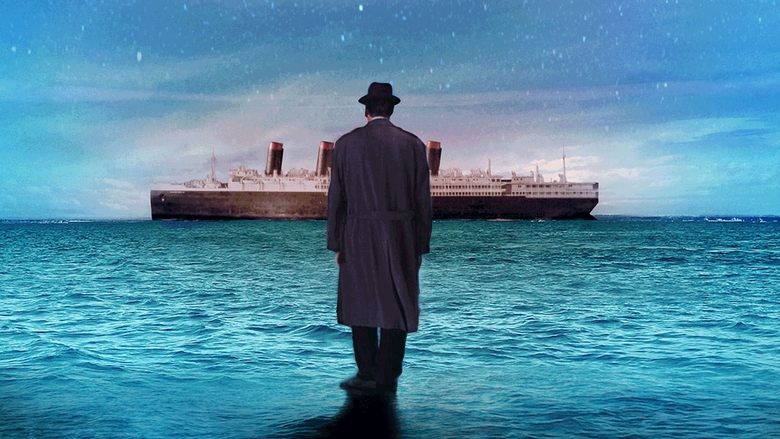
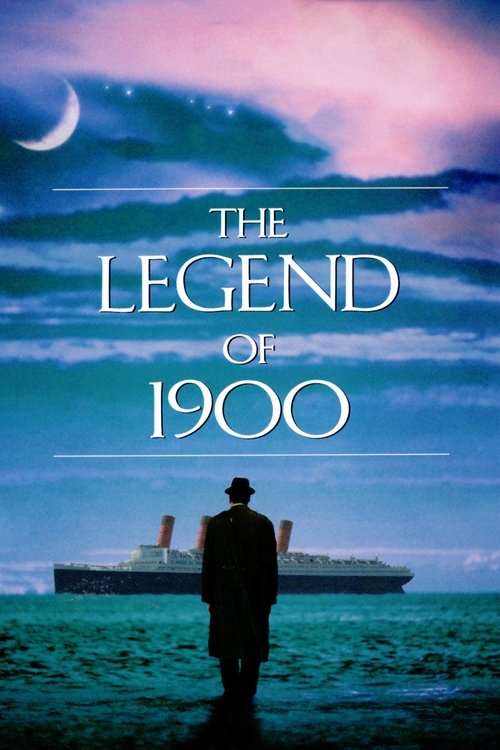
La leggenda del pianista sull'oceano
"An epic story of a man who could do anything... except be ordinary"
Director: Giuseppe Tornatore
Cast: Tim Roth, Pruitt Taylor Vince, Mélanie Thierry, Bill Nunn, Gabriele Lavia
The Legend of 1900 — Movie Quotes
Memorable Quotes
Take a piano. The keys begin, the keys end. You know there are eighty-eight of them. Nobody can tell you any different. They are not infinite. You are infinite. And on those keys the music that you can make is infinite. I like that. That I can live by.
Context
Spoken to Max during their final conversation on the derelict Virginian. 1900 is explaining his decision to die with the ship rather than face the overwhelming boundlessness of the land.
Meaning
This is the core of 1900's philosophy. It explains his fear of the world and his love for the piano. The piano's finite structure provides the safety and boundaries he needs to unleash his infinite creativity. He contrasts this with the world, which he sees as an instrument with too many keys to be played.
It wasn't what I saw that stopped me, Max. It was what I didn't see.
Context
Also from his final conversation with Max, this line is 1900's explanation for why he turned back after walking halfway down the gangplank, in what was his only attempt to leave the ship.
Meaning
This quote encapsulates 1900's existential dread. He is not afraid of the physical city he can see, but the abstract, endless possibilities it represents: the countless streets, the infinite choices, the lack of a discernible end. It is the infinity of life on land that paralyzes him.
Land? Land is a ship too big for me. It's a woman too beautiful. It's a voyage too long, a perfume too strong. It's music I don't know how to make.
Context
Part of his final monologue to Max, justifying his decision to remain on the ship. Each metaphor highlights a different aspect of the world's overwhelming scale.
Meaning
Using a series of powerful metaphors, 1900 expresses his profound sense of alienation from the world on land. It is a place that is too overwhelming for his senses and his understanding. He cannot comprehend it, and therefore, he cannot 'play' it as he does his piano.
You're never really done for, as long as you've got a good story and someone to tell it to.
Context
Spoken by Max in the music shop. It is the philosophical justification for the film itself, which is Max telling 1900's story.
Meaning
This quote frames the entire film. It underscores the power of narrative and memory. Even though 1900 dies in obscurity, his legend lives on through Max's storytelling. It suggests that a life's meaning can be found in the story it leaves behind, giving a hopeful conclusion to a tragic tale.
Explore More About This Movie
Dive deeper into specific aspects of the movie with our detailed analysis pages