The Legend of 1900
A melancholic and visually stunning fable about a musical prodigy confined to an ocean liner, exploring the infinite world within finite boundaries.
The Legend of 1900

The Legend of 1900

La leggenda del pianista sull'oceano

"An epic story of a man who could do anything... except be ordinary"

28 October 1998 Italy 170 min ⭐ 8.2 (2,353)
Director: Giuseppe Tornatore
Cast: Tim Roth, Pruitt Taylor Vince, Mélanie Thierry, Bill Nunn, Gabriele Lavia
Drama Music
The Infinite vs. The Finite Art and Genius Home and Belonging Fear of the Unknown
Budget: $9,000,000
Box Office: $21,057,208

Overview

"The Legend of 1900" tells the fantastical story of a baby boy, discovered in the year 1900 on the transatlantic ocean liner, the SS Virginian. The coal worker who finds him, Danny Boodmann, names him Danny Boodmann T.D. Lemon 1900 and raises him in the ship's engine room. After Danny's death in a work accident, the orphaned 1900 reveals an astonishing, innate talent for the piano, eventually becoming the ship's resident pianist.

The story is narrated by 1900's best friend, a trumpet player named Max Tooney, who joins the ship's orchestra and is immediately captivated by 1900's genius. 1900 spends his entire life on the Virginian, experiencing the world through the passengers he meets and the music he creates, but he never sets foot on land. His fame grows, even leading to a legendary piano duel with the self-proclaimed inventor of jazz, Jelly Roll Morton. A fleeting encounter with a beautiful immigrant girl inspires him to record a deeply personal piece of music and briefly tempts him to leave his only home.

Years later, as the old ship is set to be demolished, Max fears that 1900 is still aboard. He returns to the derelict vessel to find his friend and persuade him to finally step into the world, leading to a poignant and philosophical final confrontation with 1900's choices.
Core Meaning

The core meaning of "The Legend of 1900" revolves around the profound and often paralyzing relationship between the infinite and the finite. Director Giuseppe Tornatore explores the idea that true freedom and creativity can be found within self-imposed limits. 1900's decision to never leave the ship, his 'finite' world, is not presented simply as a weakness or fear, but as a conscious choice to inhabit a space where he can comprehend and master his reality. The world outside, with its endless streets, choices, and possibilities, represents an overwhelming and terrifying infinity that he believes would dilute his art and his very being.

The film posits that a meaningful life does not necessarily require experiencing everything the world has to offer. Instead, it suggests that depth of experience and a profound connection to one's passion can create a universe of its own. 1900's life, though physically confined, is rich with emotion, observation, and artistic expression. His story becomes a fable about the nature of home, the fear of the unknown, and the tension between the artist's inner world and the vastness of external reality. It is a meditation on the idea that sometimes, the greatest art and the truest self are nurtured in isolation from the world's 'big scream'.

Thematic DNA

The Infinite vs. The Finite 35%
Art and Genius 25%
Home and Belonging 20%
Fear of the Unknown 20%

The Infinite vs. The Finite

This is the central theme of the film. 1900's entire philosophy is built on this dichotomy. He explicitly contrasts the 88 keys of a piano—a finite set from which infinite music can be created—with the 'infinite keyboard' of the city streets. The ship is his finite, manageable world, a microcosm where he can create and understand. The land, with its endless possibilities, represents a terrifying infinity that he believes would stifle his creativity and his ability to live a meaningful life. His choice to die with the ship is the ultimate affirmation of his belief in the power of the finite.

Art and Genius

The film is a celebration of artistic genius in its purest form. 1900's talent is innate and untaught, flowing directly from his experiences and observations of the people on the ship. His music is not for fame or fortune but is an extension of his soul. This is highlighted when he records a piece of music inspired by a girl he sees; he is appalled at the idea of his music being a commercial product and tries to give the master recording to her, the sole intended audience. His duel with Jelly Roll Morton contrasts his pure, emotional artistry with Morton's technical, ego-driven performance.

Home and Belonging

For 1900, the SS Virginian is not a vessel or a prison; it is his entire world. It is the place of his birth, his upbringing, and ultimately, his death. He has no official identity on land—no birth certificate, no passport. His identity is inextricably linked to the ship. The film explores the idea of what 'home' truly means. Is it a plot of land, a house, or is it a state of being, a place where one feels a complete sense of belonging and understanding? For 1900, the ship is the latter, and leaving it would be akin to leaving himself.

Fear of the Unknown

1900's refusal to disembark is driven by a profound agoraphobia, not of open spaces, but of infinite choice. He is paralyzed by 'what he didn't see'—the endless paths, the overwhelming scale of the world. The film portrays this not as cowardice, but as a deeply philosophical stance. It questions the modern assumption that one must constantly seek new experiences and expand one's horizons. 1900's fear is an existential dread of being lost in a world too vast to comprehend, a fear of losing his unique identity in the face of limitless options.

Character Analysis

Danny Boodmann T.D. Lemon 1900

Tim Roth

Archetype: The Innocent Genius / The Recluse
Key Trait: Innocent Sophistication

Motivation

1900 is motivated by a desire to live within a world he can understand and master. His primary drive is to create music, which is his way of processing the world and connecting with humanity on his own terms. His motivation for staying on the ship is to preserve the finite conditions that he feels are necessary for his art and his sanity.

Character Arc

1900's arc is internal and philosophical rather than a traditional journey of change. He begins as a mysterious, isolated prodigy and ends as a man who has fully embraced and articulated his reasons for that isolation. He doesn't overcome his fear of the world; instead, he comes to understand it as a core part of his identity and artistic integrity. His journey is one of self-affirmation, choosing to remain true to his nature even in the face of death. He remains unchanged in his core beliefs from beginning to end.

Max Tooney

Pruitt Taylor Vince

Archetype: The Loyal Friend / The Narrator
Key Trait: Loyalty

Motivation

Max's motivation is driven by his deep friendship with and admiration for 1900. He wants to see his friend's genius recognized by the world and for him to experience a 'normal' life. After leaving the ship, his motivation shifts to preserving the memory of 1900, believing that 'a good story is worth more than an old trumpet'.

Character Arc

Max begins as a down-on-his-luck musician who is simply looking for a job. Through his friendship with 1900, he is exposed to a form of genius and a way of life that he initially doesn't understand. His arc is one of growing appreciation and eventual acceptance of 1900's worldview. While he spends years trying to convince 1900 to join the 'real world', he ultimately respects his friend's final, tragic decision, becoming the keeper of his legend. He is the bridge between 1900's world and the audience's.

Jelly Roll Morton

Clarence Williams III

Archetype: The Rival / The Hubristic Genius
Key Trait: Arrogance

Motivation

Morton is motivated by ego and a desire to prove he is the greatest pianist in the world. Hearing tales of 1900's talent, he boards the Virginian with the sole purpose of challenging and defeating him in a public duel to cement his own reputation.

Character Arc

Jelly Roll Morton is a static character who serves as a foil to 1900. He arrives on the ship full of arrogance, confident in his status as the 'inventor of jazz'. His arc is a short, sharp fall from grace. He is humbled and defeated by 1900's pure, otherworldly talent, leaving the ship in stunned silence. He represents the worldly, commercial, and ego-driven side of musical genius, which is ultimately shown to be inferior to 1900's innocent artistry.

The Girl

Mélanie Thierry

Archetype: The Muse / The Unattainable Love
Key Trait: Innocence

Motivation

Her motivation is that of countless immigrants of the era: to seek a new beginning in America. She is looking for her father and hoping for a better life. Her interaction with 1900 is fleeting and she is unaware of the profound impact she has on him.

Character Arc

She is more of a symbol than a fully developed character. Her arc is simply that of a passenger traveling to a new life in America. For 1900, however, she represents the strongest temptation to leave the ship. She is the catalyst for the creation of his most beautiful music and his one serious attempt to step into the world. Her departure solidifies his connection to the ship and his inability to follow love onto the land.

Symbols & Motifs

The Ocean Liner (SS Virginian)

Meaning:

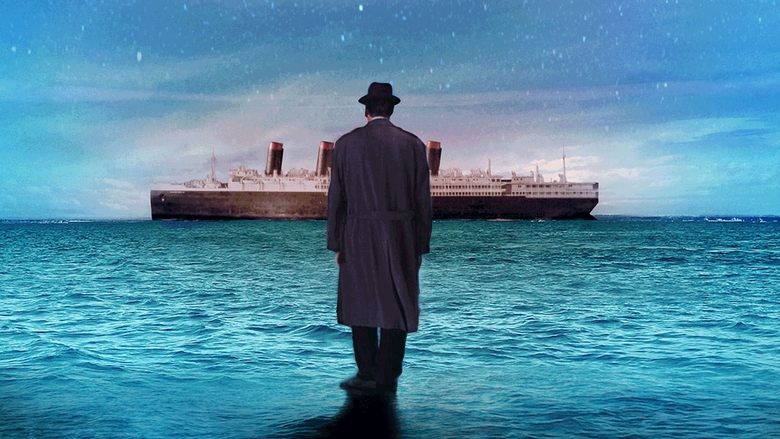
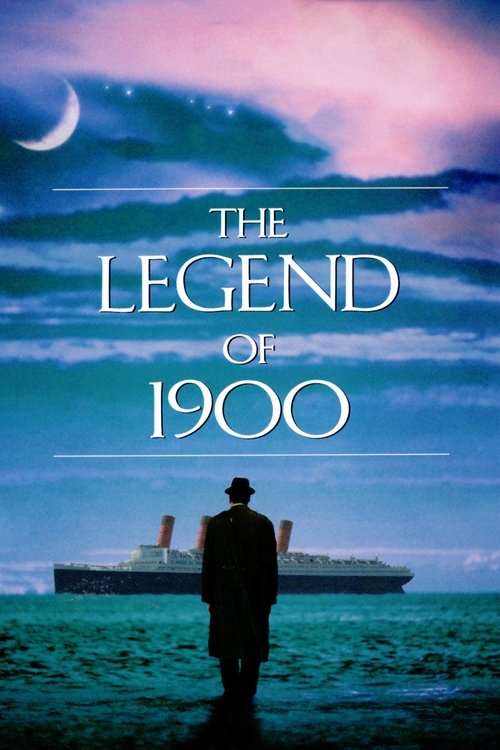
The ship symbolizes a self-contained world, a microcosm of society, and a floating cradle. It is both 1900's sanctuary and his prison. It represents a finite, comprehensible universe in contrast to the overwhelming infinity of the land. It's the only home and identity 1900 has ever known.

Context:

The entire film is set on or in relation to the SS Virginian. It is where 1900 is born, lives, creates his music, and ultimately chooses to die. Its constant movement—always traveling but never arriving for 1900—reflects his unique state of being.

The Piano

Meaning:

The piano is 1900's voice and his means of connection to the world. Critically, its 88 keys represent the finite boundaries within which infinite creativity is possible. It is the central metaphor for his entire worldview: that life and art are not about boundless options, but about creating endless beauty within a defined structure.

Context:

The piano is present in all of the film's key moments: 1900's discovery of music, his 'dance' with Max during a storm, his duel with Jelly Roll Morton, the recording of his masterpiece, and his final moments where he plays an imaginary keyboard before the ship explodes.

The Land/The City

Meaning:

The land, and specifically the sprawling city of New York, symbolizes the overwhelming, frightening infinity of life. It represents endless choices, a lack of clear boundaries, and a scale that is too vast for 1900 to comprehend. It's 'a ship too big for me'.

Context:

The land is always seen from the ship, a distant promise for immigrants but a source of anxiety for 1900. The most crucial scene involving the land is when 1900 stands halfway down the gangplank, looking at the city, before turning back, unable to face its 'infinite keyboard'.

The Broken Record

Meaning:

The fragmented record of 1900's only recording symbolizes his ephemeral genius and the pure, non-commercial nature of his art. It is a tangible piece of his soul, created for a single person out of pure emotion. By breaking it, he rejects the idea of his music being a commodity. Its eventual rediscovery by Max is what allows 1900's story to be told and his legend to survive, even in pieces.

Context:

1900 records a beautiful piece inspired by a girl, but smashes the master disc when he fails to give it to her. Max saves the pieces. Years later, Max playing the pieced-together recording on the derelict ship is the only way to lure 1900 from his hiding place.

Memorable Quotes

Take a piano. The keys begin, the keys end. You know there are eighty-eight of them. Nobody can tell you any different. They are not infinite. You are infinite. And on those keys the music that you can make is infinite. I like that. That I can live by.

— 1900

Context:

Spoken to Max during their final conversation on the derelict Virginian. 1900 is explaining his decision to die with the ship rather than face the overwhelming boundlessness of the land.

Meaning:

This is the core of 1900's philosophy. It explains his fear of the world and his love for the piano. The piano's finite structure provides the safety and boundaries he needs to unleash his infinite creativity. He contrasts this with the world, which he sees as an instrument with too many keys to be played.

It wasn't what I saw that stopped me, Max. It was what I didn't see.

— 1900

Context:

Also from his final conversation with Max, this line is 1900's explanation for why he turned back after walking halfway down the gangplank, in what was his only attempt to leave the ship.

Meaning:

This quote encapsulates 1900's existential dread. He is not afraid of the physical city he can see, but the abstract, endless possibilities it represents: the countless streets, the infinite choices, the lack of a discernible end. It is the infinity of life on land that paralyzes him.

Land? Land is a ship too big for me. It's a woman too beautiful. It's a voyage too long, a perfume too strong. It's music I don't know how to make.

— 1900

Context:

Part of his final monologue to Max, justifying his decision to remain on the ship. Each metaphor highlights a different aspect of the world's overwhelming scale.

Meaning:

Using a series of powerful metaphors, 1900 expresses his profound sense of alienation from the world on land. It is a place that is too overwhelming for his senses and his understanding. He cannot comprehend it, and therefore, he cannot 'play' it as he does his piano.

You're never really done for, as long as you've got a good story and someone to tell it to.

— Max Tooney

Context:

Spoken by Max in the music shop. It is the philosophical justification for the film itself, which is Max telling 1900's story.

Meaning:

This quote frames the entire film. It underscores the power of narrative and memory. Even though 1900 dies in obscurity, his legend lives on through Max's storytelling. It suggests that a life's meaning can be found in the story it leaves behind, giving a hopeful conclusion to a tragic tale.

Philosophical Questions

Does true freedom come from infinite choice or from mastering a finite world?

The film's central conflict explores this question through 1900's existential dilemma. The modern world often equates freedom with endless opportunity and the ability to go anywhere and do anything. 1900 rejects this notion, arguing that the 'infinite keyboard' of the world is paralyzing. He finds his freedom and his infinite artistic potential within the strict, finite confines of the 88 piano keys and the limited decks of his ship. The film forces the viewer to question whether the constant pursuit of 'more' leads to a richer life than one dedicated to achieving profound depth within a smaller, more focused existence.

What is the purpose of art if it is not shared with the world?

1900's genius is largely ephemeral, experienced only by those who happen to be on the ship at the same time as him. He has no interest in fame, fortune, or legacy. When he creates his masterpiece, he intends it for an audience of one and destroys the recording when that becomes impossible. This challenges the viewer's conventional understanding of art as something to be preserved and disseminated. The film suggests that perhaps the act of creation itself, as a pure expression of emotion, is the art's ultimate purpose, regardless of its audience or longevity.

Can a life lived in isolation still be a full life?

1900 never experiences many of the things we consider essential to a full life: romantic love, family, travel (in the conventional sense), or a home on solid ground. Yet, the film argues that his life is intensely rich. He experiences the entire spectrum of human emotion through the thousands of passengers he observes and translates into music. He has a deep and meaningful friendship with Max. The film asks what constitutes a 'full' life, suggesting it is not the breadth of experiences, but the depth of feeling and understanding one achieves.

Alternative Interpretations

Several alternative interpretations of the film exist, challenging the literal reading of the narrative. One prominent theory suggests that 1900 is an alter ego or a complete fabrication by the narrator, Max Tooney. In this reading, Max, a struggling musician, invents the story of the untainted genius 1900 to give his own life meaning and to cope with his own failures or traumas (perhaps from the war). This interpretation reframes the film as a story about the power of storytelling itself to create legends and make life bearable.

Another interpretation views the film through a more supernatural or allegorical lens, where 1900 is not entirely human but a spirit of the ocean or of music itself, born of the sea and unable to exist apart from it. His magical, untaught abilities and his deep, almost mystical connection to the ship support this reading. His 'death' is not a suicide but a return to the source from which he came.

Finally, some viewers interpret the entire story as a farce or a tall tale, in the vein of the Coen Brothers, not meant to be taken realistically. The exaggerated characters, the impossible piano-sliding scene, and the sheer improbability of 1900's existence are seen as indicators that the audience is watching a fable where emotional and philosophical truth is prioritized over literal accuracy.

Cultural Impact

"The Legend of 1900" was released to mixed reviews in the United States but was well-received in Europe, winning several awards for its score. While not a blockbuster, it has cultivated a significant and passionate cult following over the years, admired for its romanticism, stunning visuals, and Ennio Morricone's Golden Globe-winning score. The film's philosophical exploration of artistic purity versus commercialism, and its central theme of finding the infinite within the finite, has resonated deeply with audiences.

Its influence can be seen in its contribution to the 'magical realism' genre in cinema, blending historical settings with fantastical, larger-than-life characters and events. The piano duel scene, in particular, is frequently cited as a masterful piece of filmmaking, a perfect synthesis of music, performance, and narrative tension. The film serves as a poignant fable about the 20th century, with 1900 himself seen by some as a symbol for the loss of self in the face of overwhelming modernity. Though overshadowed by its contemporary, "Titanic," Tornatore's film offers a more introspective and philosophical reflection on life at sea, focusing not on disaster, but on the universe contained within a single artistic soul.

Audience Reception

Audience reception for "The Legend of 1900" has been significantly more positive than its initial critical reception, particularly in the US. The film holds a high user rating on sites like IMDb. Audiences frequently praise the film's originality, the emotional depth of the story, Tim Roth's compelling performance, and above all, Ennio Morricone's beautiful and evocative score. Many viewers describe it as a moving, unforgettable, and unique piece of cinema, often calling it an underrated masterpiece.

The main points of criticism from some viewers echo the initial critical reviews: the film can feel overly sentimental, romanticized, and at times, slow-paced. The fantastical premise is a hurdle for some, who find it difficult to suspend their disbelief. However, the overwhelming sentiment in audience reviews is one of deep emotional connection to the character of 1900 and his poignant story. The ending, while tragic, is often cited as being powerful and philosophically resonant.

Interesting Facts

  • The film was director Giuseppe Tornatore's first English-language film.
  • The story is based on the monologue 'Novecento' by Italian writer Alessandro Baricco.
  • The role of 1900 was originally offered to a number of prominent actors, including Leonardo DiCaprio and Brad Pitt, before Tim Roth was cast.
  • The iconic 'piano duel' scene features real jazz compositions. Jelly Roll Morton plays 'The Crave', and 1900's final, blistering piece is 'Enduring Movement', composed by Ennio Morricone.
  • While a critical and commercial disappointment in the US upon its initial release, the film gained a cult following over the years and was a massive box office success when it was re-released in China in 2019, grossing over $20 million.
  • The ship in the film, the SS Virginian, is fictional, but was inspired by real transatlantic liners of the era, such as the RMS Lusitania and RMS Mauretania.
  • The different running times of the film (165 minutes for the original cut, 125 for the international version) have been a point of discussion among fans, with the longer cut offering more character development.

⚠️ Spoiler Analysis

Click to reveal detailed analysis with spoilers

Frequently Asked Questions

Explore More About This Movie

Dive deeper into specific aspects of the movie with our detailed analysis pages

Comments (0)

Leave a comment

No comments yet. Be the first to share your thoughts!