罗小黑战记
"One Small Spirit Will Determine the Fate of the World."
The Legend of Hei - Symbolism & Philosophy
Symbols & Motifs
The Forest
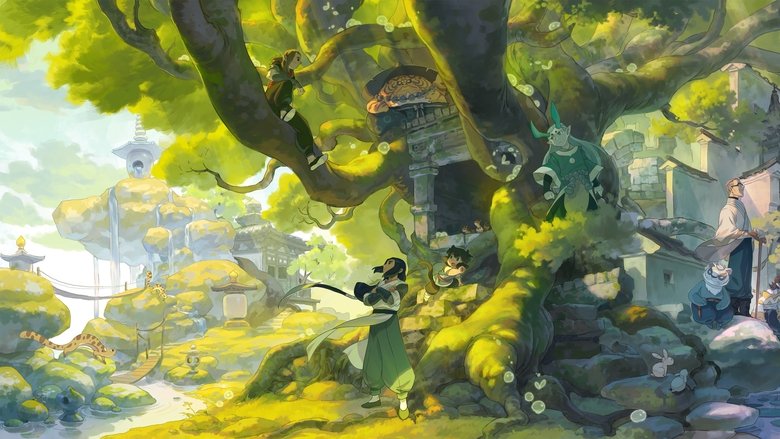
The forest symbolizes an idyllic past, a natural harmony, and the concept of 'home' that was lost. It represents a world untainted by human expansion and the peaceful existence the spirits once knew.
The film opens with the destruction of Xiaohei's forest home, which is the inciting incident for his entire journey. The memory and longing for this lost home fuel his initial distrust of humans and his desire to connect with other spirits.
The City
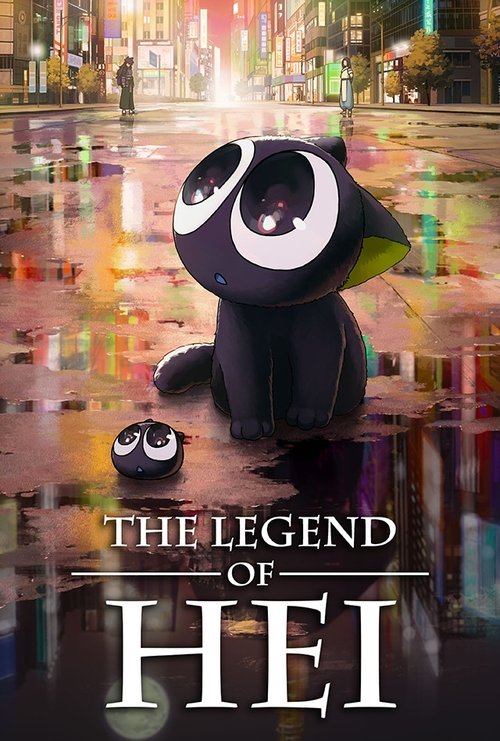
The city represents the complex reality of the modern world. It is not depicted as purely evil but as a place of both destruction and wonder, conflict and coexistence. It symbolizes the challenge and the necessity of adaptation for the spirits.
After losing his home, Xiaohei is forced to navigate the alien environment of the city. His journey with Wuxian takes them through various urban landscapes, from bustling downtowns to subways, where Hei learns that many spirits have successfully integrated into human society, challenging his black-and-white worldview.
Spiritual/Domain Power
The unique ability of powerful spirits to create their own 'domain' or spiritual space symbolizes ultimate power and control over one's environment. Fengxi's desire to seize this power for himself reflects his goal of total domination and the creation of a world exclusively for spirits, while Wuxian's use of it demonstrates control and the maintenance of balance.
Xiaohei is revealed to have an exceptionally rare and powerful version of this ability. Fengxi's ultimate plan hinges on stealing this power from Hei to create a massive domain that would expel all humans. The climax of the film is a battle fought within these metaphysical spaces.
Philosophical Questions
Is peaceful coexistence between a dominant, expansive culture and a displaced, traditional one truly possible?
The film explores this question through the central conflict. Fengxi believes it is impossible, arguing that humanity's nature is to expand and consume, leaving no room for spirits. Wuxian and the Spirit Guild represent the opposing view, working to create a society where both can live together, albeit with rules largely dictated by the new reality of human dominance. The film doesn't offer an easy answer, showing the immense difficulty and sacrifice required to maintain this fragile peace, leaving the audience to ponder whether the Guild's solution is a true partnership or merely a managed decline for the spirits.
When does fighting for a just cause cross the line into villainy?
This is explored through the character of Fengxi. His cause is just: he and his people were violently displaced from their homes. His desire to reclaim their land is sympathetic. However, his methods become increasingly extreme. He manipulates Xiaohei, sacrifices his followers, and is willing to cause mass destruction to achieve his aims. The film uses his arc to question the 'ends justify the means' philosophy, asking the audience to consider at what point a righteous grievance becomes a justification for terrorism and whether his tragedy absolves him of his villainous actions.
Core Meaning
The core meaning of "The Legend of Hei" revolves around the complex and often difficult idea of coexistence and balance. The director, MTJJ, avoids a simple black-and-white portrayal of the conflict between spirits and humans. Instead, the film explores the morally gray areas, suggesting that neither side is entirely right or wrong. It posits that true harmony doesn't come from segregation or domination, but from mutual understanding, empathy, and the willingness to see individuals beyond their group identity. The film carries a message of finding one's own path and making judgments based on experience rather than inherited prejudice, as seen through Hei's journey from a displaced victim to an individual who must choose his own moral stance.