The Legend of Hei
罗小黑战记
"One Small Spirit Will Determine the Fate of the World."
Overview
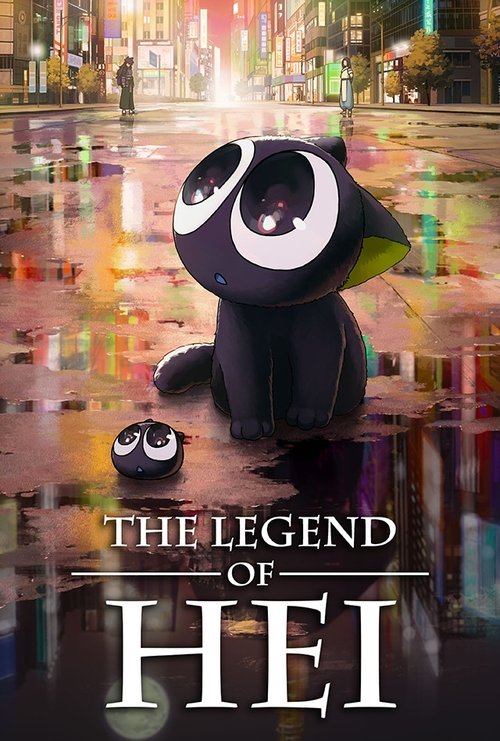
"The Legend of Hei" (罗小黑战记) is a 2019 Chinese animated film that serves as a prequel to the popular flash-animated web series "The Legend of Luo Xiaohei". The story begins when the forest home of a young cat spirit, Luo Xiaohei, is destroyed by human deforestation. Forced to wander the city, he is taken in by a group of fellow spirits led by the charismatic Fengxi, who harbors a deep resentment towards humans and dreams of reclaiming their land.
Xiaohei's newfound sense of belonging is shattered when he is forcibly separated from the group by a powerful human enforcer named Wuxian (Infinity). As Wuxian travels with the captive Xiaohei, a reluctant journey begins. Wuxian, part of a guild that maintains balance between the human and spirit worlds, starts to train Xiaohei, helping him understand and control his immense latent abilities. Through their travels and interactions, Xiaohei is exposed to both the good and bad of the human world, forcing him to question Fengxi's extremist views and forge his own understanding of right and wrong, and where he truly belongs.

Core Meaning
The core meaning of "The Legend of Hei" revolves around the complex and often difficult idea of coexistence and balance. The director, MTJJ, avoids a simple black-and-white portrayal of the conflict between spirits and humans. Instead, the film explores the morally gray areas, suggesting that neither side is entirely right or wrong. It posits that true harmony doesn't come from segregation or domination, but from mutual understanding, empathy, and the willingness to see individuals beyond their group identity. The film carries a message of finding one's own path and making judgments based on experience rather than inherited prejudice, as seen through Hei's journey from a displaced victim to an individual who must choose his own moral stance.
Thematic DNA
Environmentalism and Modernization
The film's central conflict is triggered by deforestation, immediately establishing environmentalism as a key theme. It explores the tension between human progress and the preservation of nature. Unlike some narratives that portray all modernization as evil, "The Legend of Hei" presents a more nuanced view, showing cities that are vibrant and full of life, while still acknowledging the destructive impact of unchecked development. The film examines humanity's relationship with nature through the eyes of the spirits who have been displaced by it.
Prejudice and Moral Ambiguity
"The Legend of Hei" deliberately subverts clear-cut notions of good and evil. Initially, humans seem to be the villains, but the film quickly introduces complexity. Fengxi's faction, while fighting for a just cause (reclaiming their homes), resorts to extremist methods. Conversely, Wuxian, the initial antagonist to Hei, is revealed to be a peacekeeper. The narrative forces both Hei and the audience to look beyond initial prejudices and understand the motivations behind each character's actions, highlighting that righteousness and villainy are matters of perspective and choice.
The Search for Home and Belonging
At its heart, the film is a coming-of-age story centered on Xiaohei's quest for a place to belong. Having lost his physical home in the forest, his journey becomes an emotional one to find a community and a sense of identity. He first finds a potential home with Fengxi's group, which is bound by a shared hatred of humans. Later, his journey with Wuxian challenges this notion, suggesting that home is not just a place or a group of similar beings, but a connection built on understanding and mutual respect, even with those who are different.
Power and Responsibility
Xiaohei possesses a rare and powerful ability to manipulate space, a power he doesn't understand. Both Wuxian and Fengxi seek to influence him, representing two different philosophies on how power should be used. Fengxi wants to use Hei's power as a weapon to achieve his goals, while Wuxian teaches Hei control and restraint, emphasizing the responsibility that comes with great strength. Hei's character arc is defined by his journey to master his abilities and, more importantly, to decide for himself the right way to use them.
Character Analysis
Luo Xiaohei (Hei)
Shan Xin
Motivation
Xiaohei's primary motivation is to find a new home and a sense of belonging after being displaced. This simple, relatable desire drives all of his actions and makes him vulnerable to the influence of others who promise him a community.
Character Arc
Xiaohei begins as a displaced and naive cat spirit with a simple, justifiable hatred for humans who destroyed his home. His journey is one of moral awakening. Initially swayed by Fengxi's seemingly righteous cause, his travels with Wuxian force him to confront the complexities of the world. He evolves from a passive character tossed about by events to an active agent who makes a conscious choice not based on hatred, but on his own experiences and understanding of balance. He learns to control his immense power and decides where he stands in the conflict.
Wuxian (Infinity)
Liu Mingyue
Motivation
Wuxian is motivated by a deep-seated belief in maintaining balance and peace between the human and spirit worlds. He captures law-breaking spirits not out of malice, but to prevent wider conflict and uphold the rules that allow both societies to coexist.
Character Arc
Wuxian is introduced as a cold, powerful, and seemingly antagonistic human who kidnaps Xiaohei. He is the strongest human enforcer of the Spirit Guild. His character arc is one of gradual softening and revelation. As he travels with and trains Xiaohei, his stern exterior gives way to a caring, mentor-like figure. He is not just an enforcer but a true believer in coexistence, acting as a bridge between the two worlds. His journey with Hei solidifies his role as a protector and teacher.
Fengxi (Stormend)
Hao Xianghai
Motivation
Fengxi is driven by a powerful desire to reclaim a homeland for spirits, a sanctuary free from human influence. This motivation is rooted in trauma and a belief that coexistence is impossible and that the only solution is to forcibly take back what was lost.
Character Arc
Fengxi is the charismatic leader of a group of displaced spirits. He is not a one-dimensional villain; his motivations are born from genuine suffering and the loss of his home and people at the hands of humans. His arc is a tragic one, moving from a sympathetic freedom fighter to an extremist willing to sacrifice anything, including his followers and Xiaohei, for his goal. He represents a valid grievance taken to a destructive conclusion.
Symbols & Motifs
The Forest
The forest symbolizes an idyllic past, a natural harmony, and the concept of 'home' that was lost. It represents a world untainted by human expansion and the peaceful existence the spirits once knew.
The film opens with the destruction of Xiaohei's forest home, which is the inciting incident for his entire journey. The memory and longing for this lost home fuel his initial distrust of humans and his desire to connect with other spirits.
The City
The city represents the complex reality of the modern world. It is not depicted as purely evil but as a place of both destruction and wonder, conflict and coexistence. It symbolizes the challenge and the necessity of adaptation for the spirits.
After losing his home, Xiaohei is forced to navigate the alien environment of the city. His journey with Wuxian takes them through various urban landscapes, from bustling downtowns to subways, where Hei learns that many spirits have successfully integrated into human society, challenging his black-and-white worldview.
Spiritual/Domain Power
The unique ability of powerful spirits to create their own 'domain' or spiritual space symbolizes ultimate power and control over one's environment. Fengxi's desire to seize this power for himself reflects his goal of total domination and the creation of a world exclusively for spirits, while Wuxian's use of it demonstrates control and the maintenance of balance.
Xiaohei is revealed to have an exceptionally rare and powerful version of this ability. Fengxi's ultimate plan hinges on stealing this power from Hei to create a massive domain that would expel all humans. The climax of the film is a battle fought within these metaphysical spaces.
Philosophical Questions
Is peaceful coexistence between a dominant, expansive culture and a displaced, traditional one truly possible?
The film explores this question through the central conflict. Fengxi believes it is impossible, arguing that humanity's nature is to expand and consume, leaving no room for spirits. Wuxian and the Spirit Guild represent the opposing view, working to create a society where both can live together, albeit with rules largely dictated by the new reality of human dominance. The film doesn't offer an easy answer, showing the immense difficulty and sacrifice required to maintain this fragile peace, leaving the audience to ponder whether the Guild's solution is a true partnership or merely a managed decline for the spirits.
When does fighting for a just cause cross the line into villainy?
This is explored through the character of Fengxi. His cause is just: he and his people were violently displaced from their homes. His desire to reclaim their land is sympathetic. However, his methods become increasingly extreme. He manipulates Xiaohei, sacrifices his followers, and is willing to cause mass destruction to achieve his aims. The film uses his arc to question the 'ends justify the means' philosophy, asking the audience to consider at what point a righteous grievance becomes a justification for terrorism and whether his tragedy absolves him of his villainous actions.
Alternative Interpretations
While the film's main message is about coexistence, an alternative interpretation could focus on the inevitability of assimilation. Fengxi's radical plan fails, and the "successful" spirits are those who have integrated into human society, living in cities and abiding by the rules of the human-led Spirit Guild. From this perspective, the film could be read as a melancholic allegory for the loss of cultural identity, where the 'wild' and independent nature of the spirits must be tamed and absorbed into the dominant human culture to survive. Wuxian, a human, is the ultimate enforcer of this new world order, teaching Xiaohei how to fit in rather than how to reclaim his old world. The ending, with Xiaohei joining Wuxian, can be seen not just as a choice for balance, but as an acceptance of this assimilation.
Cultural Impact
"The Legend of Hei" is a significant film within the modern landscape of Chinese animation (donghua). Created as a prequel to a beloved indie web series, its feature film debut marked a successful transition from online cult favorite to mainstream cinematic hit. The movie was released in 2019, a landmark year for Chinese animation that also saw the release of the cultural phenomenon "Ne Zha." Together, these films signaled a new era of high-quality, commercially successful, and culturally specific animated features from China.
Critics and audiences praised the film for its sophisticated, morally ambiguous storytelling, which avoids simple good-versus-evil dichotomies, often drawing comparisons to the thematic depth of Studio Ghibli films like "Princess Mononoke". However, it also maintains a unique identity with its fluid action choreography, inspired by wuxia and shonen anime, and its blend of modern urban settings with traditional mythology. The film's success both domestically and in its limited international releases helped to elevate the global perception of donghua, showcasing its potential for compelling narratives and stunning visual artistry.
Audience Reception
Audience reception for "The Legend of Hei" was overwhelmingly positive, both in its native China and among international animation fans. Viewers widely praised the film's stunningly fluid 2D animation, especially during the fast-paced action sequences, which were described as creative and dynamic. The emotional depth and the endearing design of the protagonist, Xiaohei, were also major points of acclaim, with many finding the character's journey touching and relatable.
The film's morally complex narrative was another frequently lauded aspect. Audiences appreciated that the story didn't present a simple 'humans vs. nature' conflict, instead offering sympathetic motivations for the antagonist and portraying a world of gray morality. The main points of minor criticism were occasional pacing issues, with some viewers finding the middle section of the journey a bit slow. Some also felt the plot was somewhat predictable, following familiar tropes of environmental fables. Overall, however, the verdict was that "The Legend of Hei" is a charming, beautifully animated, and surprisingly thoughtful film that stands as a high point for Chinese animation.
Interesting Facts
- The film is a prequel to a popular Flash-animated web series called "The Legend of Luo Xiaohei", which began in 2011.
- The director, Zhang Ping, is known online by the pseudonym MTJJ.
- Despite its origins as a web animation, the film features high-quality, fluid 2D animation that was widely praised by critics.
- The film was a box office success in China upon its release in 2019.
- A sequel, "The Legend of Hei II", was announced and is slated for release.
- The character of Nezha, a famous figure from Chinese mythology, makes a cameo appearance in the film.
Easter Eggs
Appearance of Nezha
Towards the end of the film, the powerful mythological figure Nezha appears, depicted as a modern, punk-dressed teenager. This is a nod to a hugely popular character in the Chinese mythological canon, who also starred in his own blockbuster animated film, "Ne Zha," released in the same year (2019). His presence connects the world of "The Legend of Hei" to a broader cinematic and mythological universe.
⚠️ Spoiler Analysis
Click to reveal detailed analysis with spoilers
Frequently Asked Questions
Explore More About This Movie
Dive deeper into specific aspects of the movie with our detailed analysis pages
Comments (0)
No comments yet. Be the first to share your thoughts!