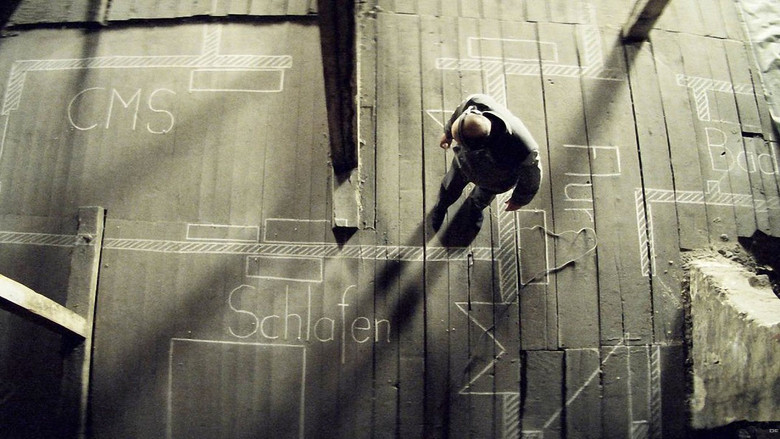

Das Leben der Anderen
"Before the Fall of the Berlin Wall, East Germany's Secret Police Listened to Your Secrets."
Director: Florian Henckel von Donnersmarck
Cast: Martina Gedeck, Ulrich Mühe, Sebastian Koch, Ulrich Tukur, Thomas Thieme
The Lives of Others — Characters & Cast
Character Analysis
Gerd Wiesler (HGW XX/7)
Ulrich Mühe
Motivation
Initially, his motivation is ideological purity and professional duty to the state. He believes he is protecting the Party from its enemies. This shifts as he witnesses the corruption of his superiors and, more importantly, is moved by the art and human connection he observes. His motivation becomes a deeply personal, moral, and empathetic need to preserve the goodness he finds in 'the lives of others.'
Character Arc
Wiesler begins as a cold, exemplary Stasi officer, a true believer in the socialist system and an expert in psychological interrogation. His arc is one of profound transformation. As he surveils Dreyman and Sieland, their lives—filled with love, art, and intellectual debate—expose the emptiness of his own. He moves from passive observer to active protector, subtly manipulating events, falsifying reports, and ultimately sacrificing his career to save Dreyman. After the fall of the Wall, he is a forgotten man delivering mail, but his redemption is complete when he sees Dreyman's novel dedicated to him, acknowledging his humanity. His final line, "No, it's for me," signifies his acceptance of his new identity.
Georg Dreyman
Sebastian Koch
Motivation
His primary motivation is his love for art, for Christa-Maria, and a fundamental belief in the goodness of people. This is initially channeled into his plays, but as the regime's brutality hits close to home, his motivation shifts to a need for justice and truth, using his artistic talents as a weapon against the state.
Character Arc
Dreyman starts as a successful playwright who is, to some extent, a model citizen of the GDR, believing he can work within the system. He is initially naive to the full extent of the state's cruelty. His transformation is spurred by the suicide of his blacklisted friend, director Albert Jerska. This tragedy awakens him to his own moral compromises and compels him to take a stand. He evolves from a state-approved artist to a courageous dissident, risking his life to write and publish an article exposing the state's hidden truths. After reunification, he seeks to understand his past and ultimately honors the man who saved him through his art.
Christa-Maria Sieland
Martina Gedeck
Motivation
Her motivation is a complex mix of artistic ambition, love for Dreyman, and overwhelming fear. She wants to continue acting, the core of her identity, but the price set by the regime is her integrity. Her actions are driven by the desperation to survive in a system that ruthlessly exploits her vulnerabilities.
Character Arc
Christa-Maria is a celebrated actress and the object of both Dreyman's love and Minister Hempf's coercive desires. Her arc is a tragic one of entrapment and compromise. She feels the pressure of the state more directly than Dreyman, forced into an affair with Hempf to protect her career and feed a prescription drug addiction. She is torn between her love for Dreyman and the instinct for self-preservation. Ultimately, she is broken by Stasi interrogation and becomes an informant, a betrayal that leads to her guilt-ridden death after she runs in front of a truck. She represents the fragility of the human spirit under immense, systematic pressure.
Anton Grubitz
Ulrich Tukur
Motivation
His sole motivation is career advancement and personal gain. He sees the surveillance of Dreyman as an opportunity to curry favor with Minister Hempf and climb the ranks of the Stasi. He is driven by ambition and a cynical understanding of how power works in the GDR, rather than any political conviction.
Character Arc
Grubitz is Wiesler's superior and former classmate. Unlike Wiesler, who is an ideologue, Grubitz is a cynical careerist. His character does not have a significant arc; he remains a self-serving opportunist throughout. He uses the system to advance his own career, showing little concern for justice or the principles of socialism. He is ambitious and perceptive, eventually suspecting Wiesler's change of heart and ultimately punishing him with a demeaning, career-ending transfer to steam-opening letters.
Cast
Explore More About This Movie
Dive deeper into specific aspects of the movie with our detailed analysis pages