"One ring to rule them all."
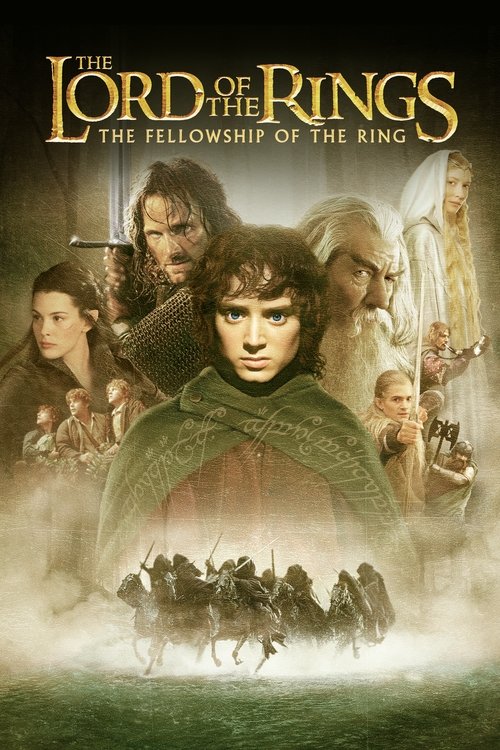
The Lord of the Rings: The Fellowship of the Ring - Symbolism & Philosophy
Symbols & Motifs
The One Ring
The One Ring is the ultimate symbol of power and corruption. It represents the lust for dominion over others and the way that absolute power inevitably corrupts absolutely, regardless of the user's initial intentions. It is a physical manifestation of Sauron's will and evil. Its circular shape can be seen to symbolize pride, ego, and the circular reasoning that leads to moral decay.
The Ring is the central object of the entire plot. Found by Bilbo, it is passed to Frodo. Its influence is felt throughout the film, tempting characters like Boromir and causing pain to its bearer. Its invisibility-granting power comes at the cost of drawing the wearer into the shadow world, slowly eroding their life force.
The Sword of Elendil (Narsil/Andúril)
Narsil, the sword that was broken, symbolizes the fractured and weakened line of kings in Gondor and the general decline of Men. Its reforging into Andúril, the "Flame of the West," represents hope, the renewal of a rightful kingship, and Aragorn's acceptance of his destiny to unite the world of Men against Sauron.
The shards of Narsil are kept in Rivendell. Aragorn is presented with the reforged sword when the Fellowship is formed, signifying the beginning of his journey from a wandering ranger to a future king.
The Light of Eärendil
A gift from Galadriel to Frodo, the Phial of Galadriel contains the light of the star of Eärendil. It symbolizes hope, guidance, and the power of good to shine even in the most profound darkness. It represents the idea that even when all other lights go out, there is still a source of goodness and courage to draw upon.
Galadriel gives the phial to Frodo in Lothlórien as the Fellowship prepares to depart. She instructs him that it will be a "light to you in dark places, when all other lights go out." It serves as a protective charm against the encroaching evil.
The Eye of Sauron
The Great Eye, lidless and wreathed in flame, is the primary symbol of Sauron's malevolent, watchful presence. It represents his insatiable desire for control, his paranoia, and his ability to see and influence events across Middle-earth. It is a symbol of pure, oppressive evil and constant surveillance.
The Eye is seen in visions when Frodo puts on the Ring, and its image appears in Galadriel's mirror. It is physically located atop the Dark Tower of Barad-dûr in Mordor, from where it constantly searches for the Ring.
Philosophical Questions
Does fate predestine our actions, or do we have free will?
The film constantly plays with the tension between fate and free will. Gandalf suggests to Frodo that Bilbo was "meant" to find the Ring, and that Frodo was "meant" to have it. This implies a higher purpose or destiny at play. However, the story places immense importance on individual choices. Frodo must choose to take the Ring to Mordor; the Fellowship must choose to help him. The Ring's temptation offers a constant choice between good and evil. The film seems to suggest that while fate may present the challenge, it is free will and individual courage that determine the outcome.
What is the true nature of heroism?
The Fellowship of the Ring challenges the traditional epic hero archetype. Instead of a mighty warrior, the central hero is a hobbit, a small creature who loves peace and comfort. The film explores heroism as an act of will and endurance rather than physical prowess. Characters like Frodo and Sam demonstrate that true courage lies in resisting despair, persevering through fear, and making selfless choices for the greater good. It posits that anyone, regardless of their stature, can be a hero.
Can power ever be wielded for good, or is it inherently corrupting?
The One Ring symbolizes absolute power, and the film presents a deeply skeptical view of its use. Characters who desire to wield the Ring for good, like Boromir, are ultimately corrupted by it. The wisest characters, like Gandalf and Galadriel, refuse the Ring, recognizing that its power would twist them into something evil, despite their intentions. The only solution presented is not to control the power, but to destroy it. This raises the question of whether certain forms of power are so absolute that they can never be safely used, making their destruction the only moral choice.
Core Meaning
The Lord of the Rings: The Fellowship of the Ring explores the profound idea that even the smallest and seemingly most insignificant individuals can alter the course of history and stand against overwhelming evil. Director Peter Jackson's core message is a meditation on the nature of good versus evil, the corrupting influence of power, and the strength found in unity and friendship. The film posits that true heroism lies not in physical strength or grand power, but in resilience, self-sacrifice, and the courage to do what is right, even when faced with insurmountable fear and doubt. It's a testament to the enduring power of hope and the idea that a collective of diverse individuals, united in purpose, can challenge the darkest of forces.