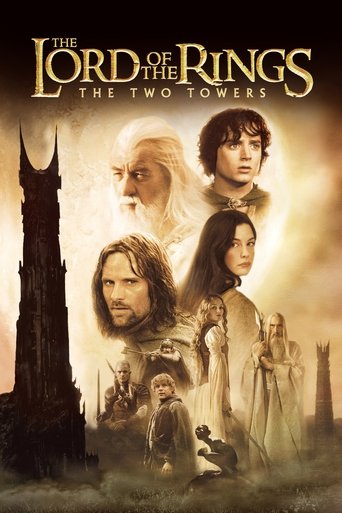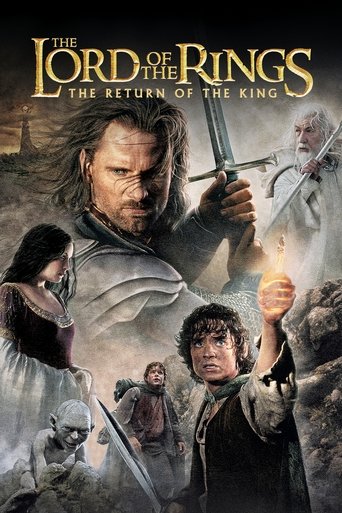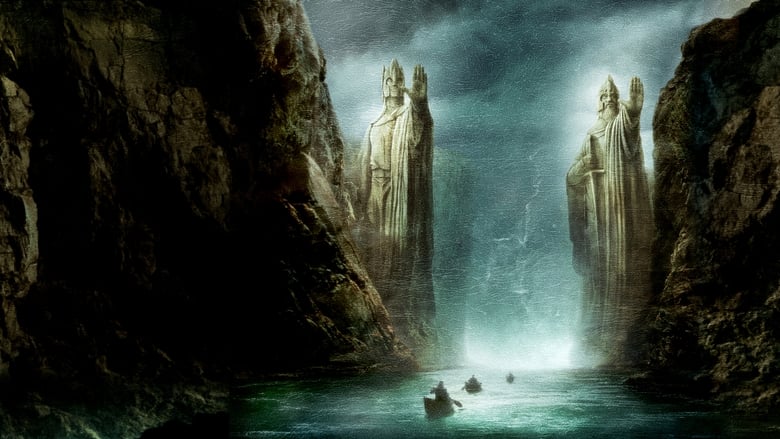
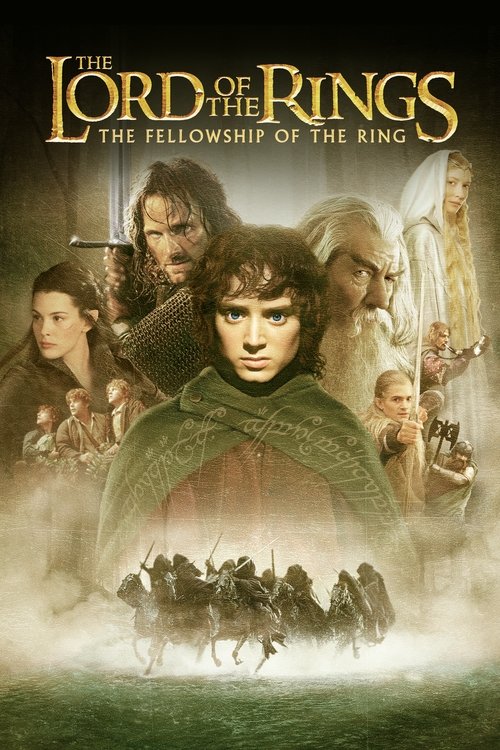
The Lord of the Rings: The Fellowship of the Ring
"One ring to rule them all."
Overview
In the idyllic, peaceful land of the Shire, a young hobbit named Frodo Baggins inherits a simple gold ring from his enigmatic uncle, Bilbo. This ring, however, is far from ordinary. It is the One Ring, a tool of immense power forged by the Dark Lord Sauron, who now seeks to reclaim it to enslave all of Middle-earth. Advised by the wise wizard Gandalf the Grey, Frodo must leave his home to keep the Ring from falling into the wrong hands.
Frodo's journey quickly escalates from a simple departure to an epic quest. He is joined by his loyal hobbit friends, Samwise Gamgee, Merry Brandybuck, and Pippin Took. Along the way, they are aided by the mysterious ranger Aragorn, the noble elf Legolas, the stout-hearted dwarf Gimli, and the valiant man Boromir. Together, they form the Fellowship of the Ring, a diverse group united by a single purpose: to guide Frodo to the fiery cracks of Mount Doom in the dark land of Mordor, the only place where the Ring can be destroyed.
Their path is fraught with peril, as they are relentlessly hunted by Sauron's dark servants, the Nazgûl, and face treacherous landscapes, from the snowy peaks of Caradhras to the dark, goblin-infested Mines of Moria. The film chronicles the beginning of this monumental journey, exploring themes of friendship, courage in the face of overwhelming odds, and the corrupting nature of power, as the weight of the Ring begins to take its toll on Frodo and the bonds of the Fellowship are tested.
Core Meaning
The Lord of the Rings: The Fellowship of the Ring explores the profound idea that even the smallest and seemingly most insignificant individuals can alter the course of history and stand against overwhelming evil. Director Peter Jackson's core message is a meditation on the nature of good versus evil, the corrupting influence of power, and the strength found in unity and friendship. The film posits that true heroism lies not in physical strength or grand power, but in resilience, self-sacrifice, and the courage to do what is right, even when faced with insurmountable fear and doubt. It's a testament to the enduring power of hope and the idea that a collective of diverse individuals, united in purpose, can challenge the darkest of forces.
Thematic DNA
The Corruption of Power
The central theme is the corrupting influence of power, embodied by the One Ring. The Ring promises great power but inevitably twists its bearer's intentions towards evil. This is shown through multiple characters: Isildur's refusal to destroy it, Bilbo's unnatural longevity and possessiveness, and Boromir's tragic descent into temptation as he tries to take the Ring from Frodo, believing he can use it to save his people. Gandalf's refusal to even touch the Ring underscores its immense danger.
The Courage of the Small
A significant theme is that heroism is not limited to the mighty. The hobbits, particularly Frodo, are small, peaceful folk with no desire for adventure or power. Yet, it is Frodo who is entrusted with the monumental task of destroying the Ring. Galadriel's words, "even the smallest person can change the course of the future," encapsulate this idea. The film champions the strength of ordinary individuals to rise to extraordinary challenges.
Friendship and Fellowship
The film emphasizes the power of unity and loyalty. The Fellowship itself is a diverse group of races—Elves, Dwarves, Men, and Hobbits—who put aside their differences to face a common enemy. The unwavering loyalty of Samwise Gamgee to Frodo is a cornerstone of the narrative, highlighting how friendship provides strength and hope in the darkest of times. The support of the Fellowship is crucial for Frodo to withstand the Ring's influence.
The Decline of Magic and the Natural World
There is an underlying sense of a world in decline, where magic is fading and nature is under threat from industrial-like evil. The pristine beauty of the Shire and the ethereal forests of Lothlórien are contrasted with Saruman's destruction of the forest around Isengard to fuel his war machine. This theme reflects a lament for a passing, more enchanted age and serves as a powerful environmental allegory.
Character Analysis
Frodo Baggins
Elijah Wood
Motivation
Frodo's primary motivation is to protect his home, the Shire, and the people he loves. He does not seek power or glory; his quest is born out of a sense of duty and the understanding that he is the one who must bear this burden. He is driven by a desire to see good triumph over evil, even at great personal cost.
Character Arc
Frodo begins as a simple, good-natured hobbit living a peaceful life in the Shire. The inheritance of the Ring forces him out of his comfortable world and onto a path of immense burden and suffering. Throughout the film, he demonstrates remarkable courage and resilience, but also begins to feel the corrupting weight of the Ring. His arc in this first installment is about accepting his daunting task and realizing the journey's true peril, culminating in his decision to continue to Mordor alone to protect his friends from the Ring's influence.
Gandalf the Grey
Ian McKellen
Motivation
Gandalf's motivation is the preservation of the free peoples of Middle-earth and the defeat of Sauron. He understands the catastrophic potential of the One Ring and is dedicated to its destruction. He works to unite the different races and guide them against the coming darkness, acting as a catalyst for the forces of good.
Character Arc
Gandalf is introduced as a wise and powerful wizard, a friend to the hobbits and a guardian of Middle-earth. His arc in the film is one of guidance and sacrifice. He acts as the leader and protector of the Fellowship, using his wisdom to navigate their path. His journey takes a dramatic turn in the Mines of Moria, where he confronts the Balrog. In a selfless act to save the others, he falls into shadow, completing his role as the sacrificial mentor who ensures the quest can continue without him.
Aragorn (Strider)
Viggo Mortensen
Motivation
Aragorn is motivated by a deep sense of honor and duty, though he is burdened by the failures of his ancestors (specifically Isildur's failure to destroy the Ring). His primary drive is to protect the innocent, especially Frodo, and to fight against the shadow of Sauron. He is also motivated by his love for the elf Arwen, which ties him to the fate of the world.
Character Arc
Aragorn is introduced as Strider, a mysterious and grim ranger. His arc is about embracing his destiny. Initially, he is reluctant to claim his birthright as the heir to the throne of Gondor, living in self-imposed exile. Throughout the film, he proves himself a skilled warrior and a natural leader, protecting the hobbits and guiding the Fellowship after Gandalf's fall. By the end, he has begun to accept his role and his responsibility, vowing to protect Frodo and see the quest through.
Samwise Gamgee
Sean Astin
Motivation
Sam's motivation is simple and profound: his friendship with and love for Frodo. He is not concerned with the grand politics of Middle-earth or the nature of the Ring; his entire world is centered on protecting his master and ensuring he does not face his burden alone.
Character Arc
Sam starts as Frodo's simple gardener, bound by a promise to Gandalf to look after him. His character arc is one of burgeoning bravery and unwavering loyalty. Though often fearful and out of his depth, he never falters in his dedication to Frodo. His courage grows throughout the journey, and he becomes Frodo's emotional anchor. The film ends with his defining moment of loyalty, wading into a river, unable to swim, to follow Frodo, solidifying his role as the ultimate steadfast friend.
Symbols & Motifs
The One Ring
The One Ring is the ultimate symbol of power and corruption. It represents the lust for dominion over others and the way that absolute power inevitably corrupts absolutely, regardless of the user's initial intentions. It is a physical manifestation of Sauron's will and evil. Its circular shape can be seen to symbolize pride, ego, and the circular reasoning that leads to moral decay.
The Ring is the central object of the entire plot. Found by Bilbo, it is passed to Frodo. Its influence is felt throughout the film, tempting characters like Boromir and causing pain to its bearer. Its invisibility-granting power comes at the cost of drawing the wearer into the shadow world, slowly eroding their life force.
The Sword of Elendil (Narsil/Andúril)
Narsil, the sword that was broken, symbolizes the fractured and weakened line of kings in Gondor and the general decline of Men. Its reforging into Andúril, the "Flame of the West," represents hope, the renewal of a rightful kingship, and Aragorn's acceptance of his destiny to unite the world of Men against Sauron.
The shards of Narsil are kept in Rivendell. Aragorn is presented with the reforged sword when the Fellowship is formed, signifying the beginning of his journey from a wandering ranger to a future king.
The Light of Eärendil
A gift from Galadriel to Frodo, the Phial of Galadriel contains the light of the star of Eärendil. It symbolizes hope, guidance, and the power of good to shine even in the most profound darkness. It represents the idea that even when all other lights go out, there is still a source of goodness and courage to draw upon.
Galadriel gives the phial to Frodo in Lothlórien as the Fellowship prepares to depart. She instructs him that it will be a "light to you in dark places, when all other lights go out." It serves as a protective charm against the encroaching evil.
The Eye of Sauron
The Great Eye, lidless and wreathed in flame, is the primary symbol of Sauron's malevolent, watchful presence. It represents his insatiable desire for control, his paranoia, and his ability to see and influence events across Middle-earth. It is a symbol of pure, oppressive evil and constant surveillance.
The Eye is seen in visions when Frodo puts on the Ring, and its image appears in Galadriel's mirror. It is physically located atop the Dark Tower of Barad-dûr in Mordor, from where it constantly searches for the Ring.
Memorable Quotes
All we have to decide is what to do with the time that is given us.
— Gandalf
Context:
In the dark Mines of Moria, Frodo expresses his sorrow and fear, wishing the Ring had never come to him. Gandalf offers this piece of wisdom to comfort and empower him, reminding him that his choices matter more than the situation he finds himself in.
Meaning:
This quote is the philosophical core of the film. Spoken to Frodo as he laments the evil rising in his lifetime, it's a powerful statement about free will and responsibility in the face of fate. It suggests that while we cannot choose our circumstances, we have agency in how we respond to them, emphasizing the importance of courage and action in dark times.
If by my life or death I can protect you, I will. You have my sword.
— Aragorn
Context:
During the Council of Elrond, after Frodo bravely volunteers to take the Ring to Mordor, chaos erupts among the delegates. Aragorn is the first to step forward, kneeling before Frodo and pledging his allegiance, an act which inspires the others to join and form the nine-member Fellowship.
Meaning:
This declaration, followed by similar pledges from Legolas and Gimli, signifies the official formation of the Fellowship. It is a powerful oath of loyalty and self-sacrifice, showcasing Aragorn's commitment to the quest and his willingness to lay down his life for the Ring-bearer. It marks his step from a lone ranger to a dedicated protector.
I will take the Ring to Mordor. Though I do not know the way.
— Frodo Baggins
Context:
At the Council of Elrond, the leaders of the Free Peoples argue about what to do with the Ring, with many succumbing to its temptation. Seeing the discord, Frodo realizes the Ring will destroy them from within and quietly but firmly volunteers for the seemingly impossible task.
Meaning:
This line is the turning point of the first act and defines Frodo's character. It is an act of immense, selfless courage. Despite being the smallest and seemingly weakest person at the Council, he accepts a burden that powerful warriors and wizards fear. It perfectly illustrates the film's theme that true heroism comes from the heart, not from strength in arms.
You shall not pass!
— Gandalf
Context:
On the Bridge of Khazad-dûm in the Mines of Moria, the Fellowship is pursued by a fiery Balrog. Gandalf makes his stand alone on the narrow bridge, using his power to stop the creature and shatter the bridge, sacrificing himself to ensure the others can escape.
Meaning:
An iconic line of defiance and sacrifice, it represents the stand of good against an ancient and powerful evil. It is the moment Gandalf fully unleashes his power for the sake of his friends, demonstrating the ultimate commitment of a mentor and protector. It has become one of the most famous and quoted lines in fantasy cinema.
Even the smallest person can change the course of the future.
— Galadriel
Context:
In the elven forest of Lothlórien, a despairing Frodo offers the Ring to Galadriel. After she resists the temptation, she comforts the hobbit, assuring him that his role, though he feels small and afraid, is pivotal to the fate of the world.
Meaning:
This quote reinforces the central theme of the story. Galadriel speaks it to Frodo, validating his importance and giving him the encouragement needed to continue his quest. It is a profound statement on the nature of destiny and the unexpected sources of heroism, empowering not just Frodo but anyone who feels small or insignificant.
Philosophical Questions
Does fate predestine our actions, or do we have free will?
The film constantly plays with the tension between fate and free will. Gandalf suggests to Frodo that Bilbo was "meant" to find the Ring, and that Frodo was "meant" to have it. This implies a higher purpose or destiny at play. However, the story places immense importance on individual choices. Frodo must choose to take the Ring to Mordor; the Fellowship must choose to help him. The Ring's temptation offers a constant choice between good and evil. The film seems to suggest that while fate may present the challenge, it is free will and individual courage that determine the outcome.
What is the true nature of heroism?
The Fellowship of the Ring challenges the traditional epic hero archetype. Instead of a mighty warrior, the central hero is a hobbit, a small creature who loves peace and comfort. The film explores heroism as an act of will and endurance rather than physical prowess. Characters like Frodo and Sam demonstrate that true courage lies in resisting despair, persevering through fear, and making selfless choices for the greater good. It posits that anyone, regardless of their stature, can be a hero.
Can power ever be wielded for good, or is it inherently corrupting?
The One Ring symbolizes absolute power, and the film presents a deeply skeptical view of its use. Characters who desire to wield the Ring for good, like Boromir, are ultimately corrupted by it. The wisest characters, like Gandalf and Galadriel, refuse the Ring, recognizing that its power would twist them into something evil, despite their intentions. The only solution presented is not to control the power, but to destroy it. This raises the question of whether certain forms of power are so absolute that they can never be safely used, making their destruction the only moral choice.
Alternative Interpretations
While largely seen as a straightforward tale of good versus evil, The Fellowship of the Ring lends itself to several alternative interpretations. One common reading views the story through a post-World War I lens, reflecting Tolkien's own experiences. The industrial, destructive evil of Saruman and Mordor can be seen as an allegory for the dehumanizing nature of modern warfare and industrialization encroaching upon a simpler, pastoral England (represented by the Shire).
Another perspective interprets the One Ring not just as a magical artifact, but as a metaphor for addiction or the seductive nature of ultimate political or technological power. The struggle of its bearers reflects the internal battle against a corrupting influence that promises control but ultimately leads to self-destruction. This is supported by the physical and mental toll the Ring takes on Frodo and Gollum's pitiable state. Some analysts also explore the story as a religious allegory, despite Tolkien's stated aversion to it, with Frodo as a Christ-like figure bearing the sins (or in this case, the ultimate evil) of the world on a sacrificial journey, Gandalf's fall and eventual return mirroring a death and resurrection, and the Ring itself symbolizing Original Sin or the temptation of pride.
Cultural Impact
The Lord of the Rings: The Fellowship of the Ring, released in 2001, was a landmark cinematic event that profoundly reshaped the landscape of modern filmmaking. Its release marked the moment when the fantasy genre, often relegated to cult status or seen as childish, was legitimized as a vehicle for serious, epic storytelling with emotional depth. The film's critical and commercial success demonstrated that audiences were eager for complex, high-fantasy narratives, paving the way for blockbuster franchises like Game of Thrones and other epic series.
Peter Jackson's trilogy revolutionized visual effects. The use of the Weta Digital's groundbreaking CGI, particularly in creating creatures like the Cave Troll and the Balrog, set a new standard. Furthermore, its innovative use of forced perspective and motion capture technology became industry benchmarks. The film's impact extended beyond cinema; it caused a massive surge in tourism to New Zealand, where it was filmed, with the filming locations becoming popular tourist destinations. The movie reignited global interest in J.R.R. Tolkien's literature, introducing a new generation to Middle-earth and cementing its status as a cornerstone of popular culture. It remains a gold standard against which other fantasy and epic films are measured, celebrated for its masterful blend of spectacle, character, and heartfelt emotion.
Audience Reception
Upon its release, The Lord of the Rings: The Fellowship of the Ring was met with widespread acclaim from both audiences and critics. Viewers praised the film for its faithful yet dynamic adaptation of Tolkien's beloved novel, its breathtaking visuals, and its epic scale. The casting was widely lauded, particularly Ian McKellen's portrayal of Gandalf, which earned him an Oscar nomination, and the performances of Elijah Wood as Frodo and Viggo Mortensen as Aragorn. Audiences were captivated by the immersive world-building, feeling transported to Middle-earth through the stunning New Zealand landscapes and the detailed production design. Howard Shore's powerful musical score was also a frequent point of praise.
Criticism was minimal but occasionally pointed to the film's lengthy runtime and its somewhat meandering pace in the beginning, as it lays the groundwork for the larger story. A few die-hard fans of the books took issue with certain narrative changes and omissions, such as the exclusion of the character Tom Bombadil. However, the overwhelming verdict was positive. The action sequences, especially the Mines of Moria sequence culminating in the fight with the Balrog, were hailed as cinematic triumphs. Overall, the film was celebrated as a masterfully crafted adventure that respected its source material while succeeding as a thrilling piece of cinema.
Interesting Facts
- Viggo Mortensen, who played Aragorn, was a last-minute replacement for actor Stuart Townsend, who was deemed too young for the role after filming had already begun.
- Sean Bean, who played Boromir, has a fear of flying and would often hike up mountains in full costume to get to remote filming locations, while the rest of the cast took a helicopter.
- During the scene where Sam chases Frodo into the river, actor Sean Astin badly cut his foot on a piece of glass and had to be airlifted to a hospital.
- The chainmail armor used in the films was handmade by the Weta Workshop crew, who linked an estimated 12.5 million rings by hand and rubbed their fingerprints off in the process.
- Director Peter Jackson makes a cameo appearance in the town of Bree, seen chomping on a carrot as the hobbits arrive at the Prancing Pony inn.
- Ian McKellen based his performance and vocal patterns for Gandalf on recordings of J.R.R. Tolkien himself reading from his books.
- To create the illusion of the hobbits' small stature, the filmmakers used a combination of forced perspective, oversized props, and dwarf body doubles.
- Christopher Lee, who played Saruman, was a huge fan of the books and was the only member of the cast and crew to have actually met J.R.R. Tolkien.
- When Aragorn deflects a knife thrown at him by the Uruk-hai leader Lurtz, it was not a special effect. The actor playing Lurtz threw a real knife, and Viggo Mortensen genuinely deflected it on the first take.
- Magnets were placed under the floor of the Bag End set to make the One Ring drop with a heavy, unnatural thud, emphasizing its symbolic weight.
Easter Eggs
Peter Jackson's children, Billy and Katie, appear as young hobbit children listening intently to Bilbo Baggins's troll story during his birthday party.
This is a common practice for directors to include their family in their films in small, personal ways. It adds a layer of personal history to the creation of the film.
On the Special Extended Edition DVD, there are hidden bonus features. One is an MTV Movie Awards parody of the Council of Elrond scene, starring Jack Black and Sarah Michelle Gellar.
This hidden feature was a fun, comedic take on a pivotal and serious scene in the film, showing the production's sense of humor and its engagement with contemporary pop culture at the time of its release.
Another hidden feature on the Extended Edition DVD is the theatrical preview trailer for the next film, <i>The Two Towers</i>, which can be accessed through a hidden icon in the scene selection menu.
This allowed fans who purchased the DVD to get an early glimpse of the next installment of the trilogy, a common practice to build hype and reward dedicated viewers who explored the DVD's features thoroughly.
Legolas's eye color occasionally changes between blue and his actor Orlando Bloom's natural brown eyes in different scenes.
This was an unintentional continuity error. The blue contact lenses Bloom wore to portray the elf were uncomfortable and sometimes could not be worn, and the visual effects team occasionally missed correcting his eye color in post-production.
⚠️ Spoiler Analysis
Click to reveal detailed analysis with spoilers
Frequently Asked Questions
Explore More About This Movie
Dive deeper into specific aspects of the movie with our detailed analysis pages
Comments (0)
No comments yet. Be the first to share your thoughts!