
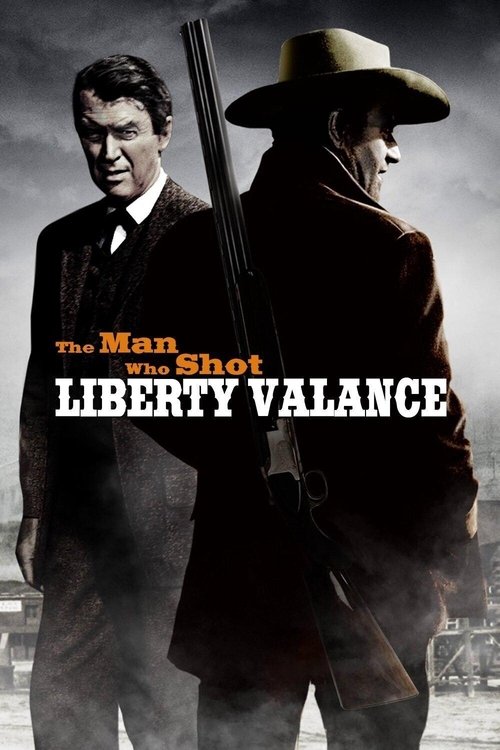
"Together for the first time"
The Man Who Shot Liberty Valance - Symbolism & Philosophy
Symbols & Motifs
The Cactus Rose
Symbolizes the wild beauty of the West being domesticized, as well as Tom Doniphon’s unrequited, enduring love for Hallie.
Doniphon gives a cactus rose to Hallie early in the film; years later, an aged Hallie places one on Tom’s plain pine coffin, signifying her true heart remained with him.
The Lawbook
Represents civilization, reason, and the future.
Liberty Valance tears up Stoddard's lawbooks when they first meet, signaling his rejection of the encroaching social order.
The Apron
Symbolizes domesticity and the loss of traditional masculinity.
Stoddard wears an apron while working in the kitchen to pay his board, a detail Valance uses to mock his lack of "manly" Western traits.
The Shinbone Star
Represents the voice of the community and the engine of myth-making.
The newspaper office serves as a hub for the town's growth, eventually becoming the place where the decision to "print the legend" is made.
Philosophical Questions
Can a just society be founded on an unjust act?
The film explores this through Stoddard’s career, which is based on a lie and a killing, yet leads to statehood, schools, and the rule of law. It asks if the 'ends' of civilization justify the 'means' of murder.
Is a useful myth more valuable than a destructive truth?
Through the 'Print the Legend' philosophy, the film challenges the viewer to consider if society needs heroic stories—even false ones—to function and maintain social cohesion.
Core Meaning
The core meaning of the film lies in the cost of civilization and the duality of history. John Ford suggests that the orderly, peaceful society represented by the modern United States was built upon foundations of violence that it subsequently had to disavow or mythologize. The director posits that the transition from "Wild West" to "Law and Order" required the sacrifice of the very men (like Tom Doniphon) who made that transition possible, and that the resulting "legends" we live by are often sanitized lies necessary to sustain national identity.