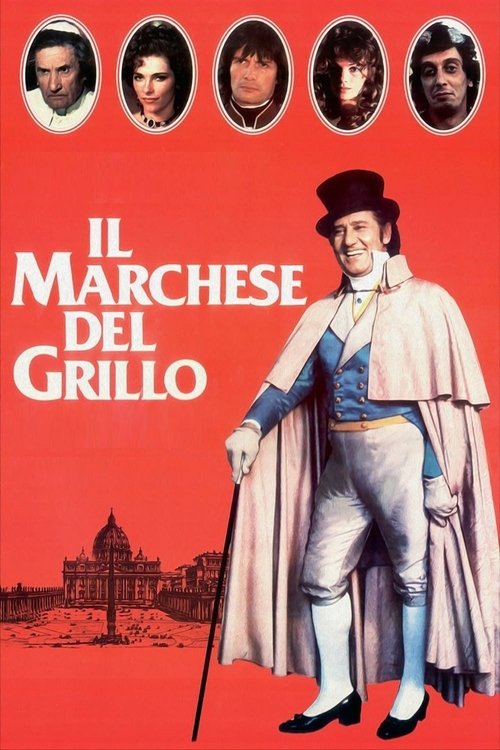
Il marchese del Grillo
Director: Mario Monicelli
Cast: Alberto Sordi, Paolo Stoppa, Caroline Berg, Riccardo Billi, Flavio Bucci
The Marquis of Grillo — Characters & Cast
Character Analysis
Marchese Onofrio del Grillo
Alberto Sordi
Motivation
His primary motivation is the flight from boredom (noia). Trapped in a rigid social structure and surrounded by what he perceives as fools, Onofrio uses pranks and debauchery as his escape. He is driven by a nihilistic desire to prove the absurdity of the world around him and to demonstrate his own superior intelligence and power by manipulating everyone, from his family to the Pope.
Character Arc
Onofrio del Grillo does not have a traditional character arc of growth or change. He begins and ends the film as a cynical, hedonistic nobleman who uses his intelligence and privilege for his own amusement. While his experiences impersonating a coalman and his interactions with the French offer him glimpses into other worlds and ideas (such as revolution and meritocracy), he ultimately rejects any notion of genuine change because the current system benefits him. His final restoration to his post at the Vatican signifies a return to the status quo, showing his fundamental immutability.
Gasperino
Alberto Sordi
Motivation
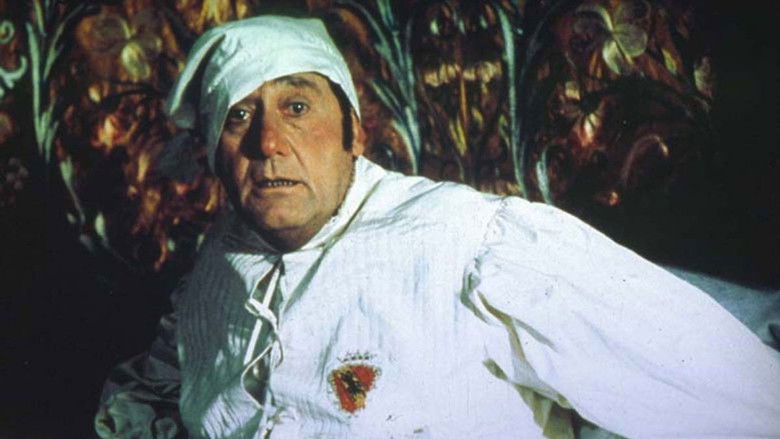
Initially, Gasperino has no motivation; he is an unconscious participant in the Marquis's scheme. Once he awakens in the palace, his motivation is pure survival as he tries to navigate the bizarre rules of high society. Over time, this evolves into a desire to enjoy his newfound comfort and status, leading him to confidently (and comically) inhabit the role of the Marquis.
Character Arc
Gasperino undergoes a significant, albeit temporary, transformation. Initially a simple, drunken charcoal burner, he is thrust into a world of unimaginable luxury and complexity. After the initial shock and confusion, he begins to adapt to his new role, enjoying the perks of nobility and even being preferred by some family members to the real Marquis. His journey exposes the superficiality of the aristocracy. However, his arc is ultimately tragic; he becomes a pawn who nearly pays for the Marquis's crimes with his life and is presumably returned to his poverty at the end, stripped of the status he briefly held.
Pope Pius VII
Paolo Stoppa
Motivation
The Pope is motivated by the desire to maintain the temporal and spiritual power of the Church in the face of the French invasion and internal decadence. On a personal level, he seems to have a soft spot for Onofrio, his 'favorite' but also his 'worst' nobleman, and is motivated to teach him a lesson without truly upsetting the aristocratic order that supports his rule.
Character Arc
Pope Pius VII is portrayed as a ruler who is both the head of a powerful, rigid institution and a man who possesses a certain weary indulgence towards the Marquis's antics. He represents the old world order, challenged by Napoleon. His arc culminates in him demonstrating that he is the ultimate authority, not just in spiritual matters but in the game of pranks as well. By staging a fake execution and then pardoning the Marquis, he reasserts his power in a way Onofrio can understand, effectively putting the nobleman back in his place while maintaining the hierarchical structure.
Don Bastiano
Flavio Bucci
Motivation
Don Bastiano is motivated by a revolutionary and spiritual fervor that places him in direct opposition to the established powers. He rejects the hypocrisy of the Church and the state, choosing a life of banditry. His final motivation is to face death on his own terms, delivering a damning indictment of the world and forgiving the common people, who he says "are masters of fucking nothing."
Character Arc
Don Bastiano is a brigand and a priest who represents a more genuine, albeit violent, form of rebellion than the Marquis. His character arc is short and tragic. He is a friend of Onofrio who lives outside the law and the Church's dogma. His capture and execution serve as a stark reminder of the brutal consequences of true defiance against the state. His powerful final speech from the scaffold is a moment of pure, unadulterated rebellion against all forms of authority—the Pope, Napoleon, and the executioner.
Cast
Explore More About This Movie
Dive deeper into specific aspects of the movie with our detailed analysis pages