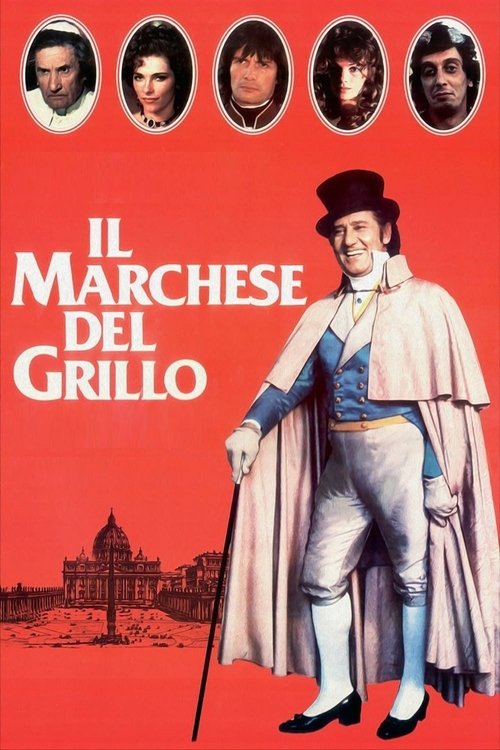
Il marchese del Grillo
The Marquis of Grillo - Symbolism & Philosophy
Symbols & Motifs
The Doppelgänger (The Coalman Gasperino)
Gasperino, the Marquis's perfect double, symbolizes the social construct of identity and class. He is a living representation of the idea that the only thing separating a nobleman from a pauper is circumstance, clothing, and language. His existence allows the film to physically manifest its central question about whether a person's worth is innate or assigned by society.
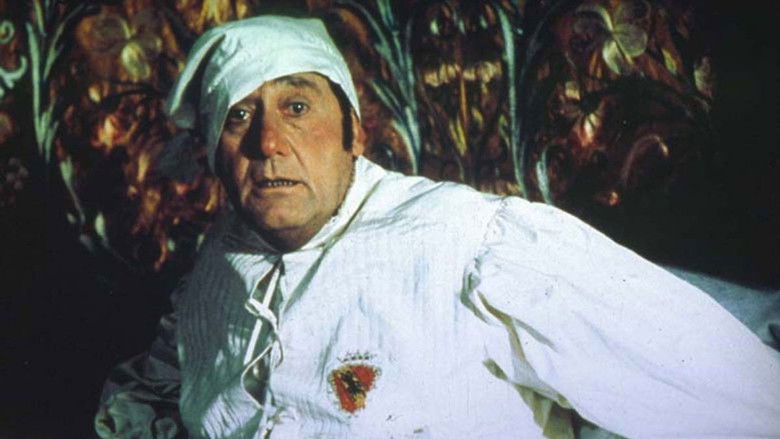
The Marquis discovers the drunken Gasperino in the Roman Forum and uses him for his grandest prank, switching their identities. The ensuing chaos, where Gasperino is mistaken for the Marquis by his own family, serves as the film's primary comedic and thematic engine.
The Guillotine
The guillotine, a 'gift' from the French, symbolizes the stark and brutal reality of a new, efficient, and impersonal form of justice, contrasting sharply with the arbitrary and corrupt justice of the Papal States. It represents a modernity that the Marquis finds both intriguing and threatening. It's the one consequence he cannot control with a simple prank, and it looms as the ultimate punishment for transgressing social boundaries, a fate his double nearly suffers.
The guillotine is used for the execution of the brigand Don Bastiano. Later, Gasperino, mistaken for the Marquis, is sentenced to be executed by the guillotine upon the Pope's return, bringing the film's central prank to a potentially fatal conclusion before a last-minute pardon.
Pranks (Scherzi)
The Marquis's continuous pranks are a symbol of his rebellion against the boredom and constraints of his social class. They are his only means of creative expression and asserting his individuality. However, they are also a manifestation of his power and cruelty, as they are often played on the powerless who cannot retaliate. The pranks symbolize the aristocracy's detached and contemptuous view of the lower classes, treating their lives and hardships as sources of amusement.
Throughout the film, the Marquis plays numerous pranks, from refusing to pay a Jewish carpenter and then corrupting the court against him, to tricking people with hot coins, to the ultimate prank of switching places with Gasperino. Even the Pope gets in on the act at the end, turning the tables on Onofrio.
Philosophical Questions
Is identity inherent or a social construct?
The film explores this question through the central plot device of the doppelgänger. When the coalman Gasperino is dressed in the Marquis's clothes, he is accepted as the Marquis, despite his radically different behavior. This suggests that identity, at least in the eyes of society, is overwhelmingly determined by external markers like wealth, title, and attire. The ease with which the two men swap roles implies that the 'self' is not a fixed essence but a performance shaped by societal expectations and class structures.
What is the nature of justice in a hierarchical society?
"The Marquis of Grillo" presents a deeply cynical view of justice. The Marquis explicitly states that justice is not of this world and demonstrates this by bribing judges and clergy to win a lawsuit against a poor Jewish carpenter. Justice is depicted not as a moral principle but as a tool of the powerful, used to maintain their status and oppress the weak. The film asks whether true justice can ever exist in a system where individuals are not equal before the law, a question epitomized by the line "I am who I am, and you are fucking nobody."
Can rebellion exist within a system without seeking to change it?
The Marquis is a rebel, but only on his own terms. He defies social norms, mocks the Pope, and flouts his duties. However, his rebellion is purely for personal amusement and never challenges the fundamental structure of the society that grants him his privilege. He is intrigued by the revolutionary ideas of the French but ultimately sides with the system that benefits him. The film forces the viewer to consider the difference between genuine revolutionary action (like Don Bastiano's) and the self-serving, aesthetic rebellion of a privileged individual who wants to break the rules without consequence.
Core Meaning
At its heart, "The Marquis of Grillo" is a cynical yet comical critique of power, class structure, and the immutability of the social order. Director Mario Monicelli uses the figure of the rebellious aristocrat to expose the decadence and hypocrisy of the ruling class, which acts with impunity, secure in its divinely ordained status. The film's famous line, "Io so' io, e voi non siete un cazzo" ("I am who I am, and you are fucking nobody"), encapsulates this worldview perfectly. However, the film is not a simple revolutionary tale. It ultimately suggests a pessimistic view that nothing ever truly changes; revolutions come and go, but the powerful always find a way to remain on top. The Marquis, despite his flirtations with French revolutionary ideas, is ultimately a beneficiary of the old system and has no real desire to dismantle it. Monicelli presents a society where justice is a commodity, and personal identity is less about innate worth and more about the role one is assigned by birth.