The Miracle Worker
A visceral black-and-white drama depicting a fierce, loving battle to unlock a child's mind from a dark, silent prison.
The Miracle Worker
The Miracle Worker

"An emotional earthquake!"

23 May 1962 United States of America 106 min ⭐ 7.9 (325)
Director: Arthur Penn
Cast: Anne Bancroft, Patty Duke, Victor Jory, Inga Swenson, Andrew Prine
Drama
The Importance of Communication Perseverance and Patience Pity vs. Love and Discipline Overcoming Adversity
Budget: $500,000
Box Office: $2,500,000

The Miracle Worker - Ending Explained

⚠️ Spoiler Analysis

The entire plot of "The Miracle Worker" builds towards its climactic, revelatory moment. After weeks of relentless and physically taxing struggle, Anne Sullivan has managed to teach Helen Keller discipline and a vocabulary of memorized finger-spelled signs, but Helen has not yet made the crucial connection that these signs represent actual things. The family, celebrating Helen's return to the main house after two weeks of isolation with Anne in the garden house, immediately begins to undermine the discipline Anne has instilled, allowing Helen to revert to her old behaviors at the dinner table. In a moment of defiance, Helen deliberately spills a pitcher of water.

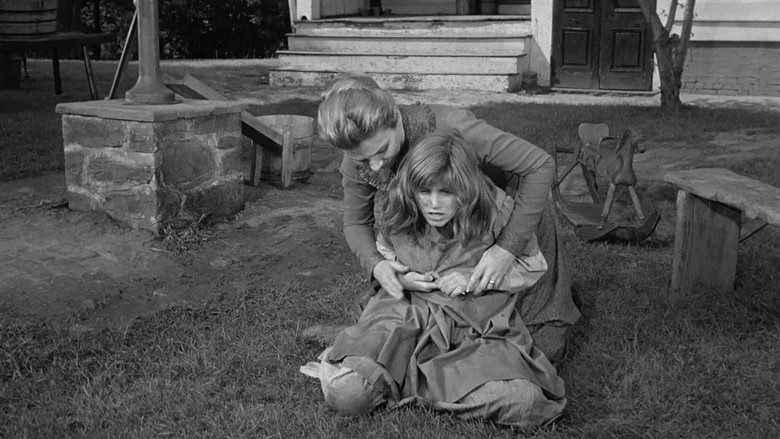
Furious that her work is being undone, Anne grabs Helen and the pitcher and drags her outside to the water pump, determined to make her refill it. As Anne forces Helen's hand under the gushing water, she instinctively spells "w-a-t-e-r" into Helen's other palm. Suddenly, Helen freezes. A look of astonishment crosses her face as she finally understands. The feeling of the water on her hand connects with the word spelled into her palm. This is the miracle. The abstract signs now have concrete meaning. Helen, overwhelmed with excitement, drops to the ground, patting it and demanding the word from Anne. She then rushes around the property, touching objects—the pump, the porch, her mother—eagerly demanding the name for each. The wall of darkness and silence has been shattered. In the final, poignant moments, Helen touches Anne and spells "teacher" into her hand. She then allows Anne to embrace her, and Anne, finally letting her own guard down, whispers "I love Helen" into her hair. The hidden meaning made clear is that the "miracle" was not just for Helen; it was also for Anne, who, by saving Helen from isolation, also saved herself from the ghosts of her past.

Alternative Interpretations

While the dominant interpretation of "The Miracle Worker" is one of inspiration and triumph, some modern critics and disability advocates offer alternative perspectives. One view critiques the film's title and central concept of a "miracle worker," arguing that it frames Anne Sullivan as a savior figure, which can perpetuate the trope of a non-disabled person "fixing" a disabled one. This perspective suggests the narrative, while powerful, centers the teacher's struggle rather than fully exploring Helen's own agency and internal experience.

Another interpretation focuses on the class and social dynamics. Anne is a poor, Irish, working-class woman with her own disability, entering the home of a wealthy, genteel Southern family. Her methods are not just about pedagogy but also about challenging the patriarchal and pity-based structure of the Keller household. Her victory can be seen not just as an educational one, but as a subversion of the established social order. Some analyses also point out that the film, by focusing on this early breakthrough, simplifies the lifelong complexities of Helen Keller's radical socialist politics and activism, presenting a more sanitized and universally palatable version of her story for mainstream audiences.