The Miracle Worker
A visceral black-and-white drama depicting a fierce, loving battle to unlock a child's mind from a dark, silent prison.
The Miracle Worker

The Miracle Worker

"An emotional earthquake!"

23 May 1962 United States of America 106 min ⭐ 7.9 (325)
Director: Arthur Penn
Cast: Anne Bancroft, Patty Duke, Victor Jory, Inga Swenson, Andrew Prine
Drama
The Importance of Communication Perseverance and Patience Pity vs. Love and Discipline Overcoming Adversity
Budget: $500,000
Box Office: $2,500,000

Overview

"The Miracle Worker" is a powerful biographical drama based on the true story of Helen Keller, a young girl who, after an illness in infancy, is left blind and deaf. Living in a world of silence and darkness, Helen is frustrated and prone to violent outbursts, leaving her family desperate and unable to connect with her. In a last-ditch effort, they hire Anne Sullivan, a determined and partially blind young teacher from the Perkins School for the Blind.

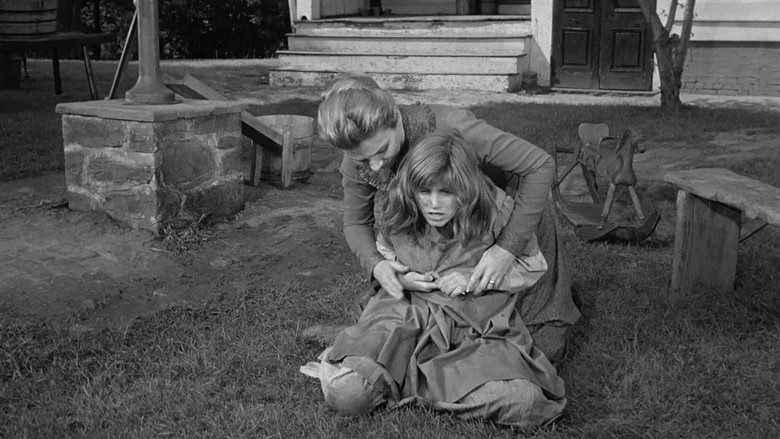
What ensues is a monumental battle of wills between the stubborn and brilliant Helen and the equally tenacious Anne. Anne recognizes that before she can teach Helen language, she must first instill discipline and break through the walls of pity and indulgence the family has built around the child. The film chronicles their intense and often physically grueling struggle, as Anne uses finger spelling to try and make Helen understand that everything has a name, leading to one of cinema's most iconic and emotionally transcendent breakthroughs.


Core Meaning

The core meaning of "The Miracle Worker" is the profound message that language is the key to unlocking the human mind and spirit. The film posits that without communication, an individual is trapped, unable to learn, grow, or connect with others in a meaningful way. Director Arthur Penn wanted to convey that perseverance, discipline, and a refusal to give in to pity are essential in overcoming seemingly insurmountable barriers. The "miracle" of the title is not a supernatural event, but the hard-won, transformative power of education and the profound connection between a teacher and a student who, together, achieve the impossible.

Thematic DNA

The Importance of Communication 35%
Perseverance and Patience 30%
Pity vs. Love and Discipline 20%
Overcoming Adversity 15%

The Importance of Communication

This is the central theme of the film. Helen's inability to communicate leaves her frustrated, isolated, and prone to violent outbursts. The entire narrative revolves around Anne's relentless effort to teach Helen that words, represented by finger spelling, are the bridge to understanding the world. The film argues that language is more than just a tool; it is the fundamental element that allows for thought, connection, and the very essence of a fulfilling human life.

Perseverance and Patience

Anne Sullivan's character is the embodiment of perseverance. Despite physical and emotional abuse from Helen, opposition from the Keller family, and her own past traumas, she refuses to give up. Her unwavering patience and stubborn belief in Helen's potential are the driving forces behind the eventual breakthrough. The film celebrates the idea that true change and monumental achievements are not instantaneous but are the result of tireless, often painful, dedication.

Pity vs. Love and Discipline

The film draws a sharp contrast between the pity the Keller family feels for Helen and the tough, disciplined love Anne provides. The Kellers' pity has allowed Helen to become tyrannical and undisciplined, hindering her growth. Anne argues that true love and respect require expecting more from Helen, not less. Her struggle to impose order and manners, particularly in the famous dining room scene, is not about cruelty but about treating Helen as an intelligent being capable of learning and worthy of discipline.

Overcoming Adversity

Both main characters are defined by their struggles against adversity. Helen is trapped in the prison of her disabilities, while Anne is haunted by her own past of blindness, poverty, and the death of her brother in an asylum. Anne's journey to teach Helen is also a journey of healing for herself. By unlocking Helen's potential, she finds redemption and a purpose that transcends her own painful memories. The film is a testament to the resilience of the human spirit.

Character Analysis

Anne Sullivan

Anne Bancroft

Archetype: The Mentor / The Miracle Worker
Key Trait: Unflinching Perseverance

Motivation

Anne is driven by a profound sense of duty and a fierce belief that language is the gateway to a full life. Having been blind herself, she understands the isolation Helen faces and is determined to prevent her from being sent to an asylum like the one that scarred her and took her brother. Her motivation is a mix of professional dedication and a deep-seated need for personal redemption.

Character Arc

Anne arrives as a determined but inexperienced young woman, haunted by the guilt and trauma of her past, particularly the death of her brother Jimmie. She is headstrong and clashes with the Keller family. Her primary arc is one of healing; by refusing to give up on Helen, she confronts her own inner demons. She learns to move beyond the toughness that was a survival mechanism and opens her heart, culminating in her final, whispered admission, "I love Helen."

Helen Keller

Patty Duke

Archetype: The Innocent / The Wild Child
Key Trait: Innate Intelligence

Motivation

Initially, Helen is motivated by basic, instinctual desires: food, comfort, and sensory exploration. Her tantrums are a desperate, primal form of communication. As Anne introduces language, Helen's motivation shifts to a burgeoning, intense curiosity. Once she makes the connection at the water pump, she is driven by an insatiable hunger to learn the names for everything in her world.

Character Arc

Helen begins the film as an intelligent but feral child, trapped by her disabilities and spoiled by her family's pity. Her world is one of physical sensation without meaning, leading to frustration and violence. Her arc is a dramatic transformation from darkness to light. Through her battles with Anne, she first learns discipline and then, in a climactic epiphany, grasps the concept of language. By the end, she is no longer an object of pity but a person on the cusp of a limitless future, able to connect with and express love for those around her.

Captain Arthur Keller

Victor Jory

Archetype: The Skeptical Patriarch
Key Trait: Authoritarian

Motivation

His primary motivation is a mixture of love for his daughter and a desire for peace in his household. He is frustrated by his inability to help Helen and is protective of her, which manifests as indulgence. He is also a man of his time and place, accustomed to being in command and finds Anne's confrontational style difficult to accept.

Character Arc

Captain Keller is a proud, stubborn Civil War veteran who loves his daughter but is deeply skeptical of Anne's methods, viewing her as a brash, inexperienced "Yankee schoolgirl." He initially resists her attempts to instill discipline, preferring to indulge Helen. His arc is one of humbling himself and learning to trust. Witnessing Anne's progress and the eventual "miracle," his stern facade breaks, and he comes to deeply respect and value the teacher he once wanted to dismiss.

Kate Keller

Inga Swenson

Archetype: The Hopeful Mother
Key Trait: Maternal Devotion

Motivation

Kate's motivation is her unwavering, desperate love for her daughter and the hope of finding a way to reach her. She is the one who initiates the search for a teacher and is Anne's most consistent, if sometimes wavering, supporter within the family.

Character Arc

Kate is caught between her deep love for Helen, which often leads to pitying indulgence, and her growing hope that Anne can succeed. Initially, she struggles to let go and allow Anne to take control. Her arc involves finding the strength to support Anne's difficult methods, even when it pains her as a mother and brings her into conflict with her husband. She transforms from a parent crippled by guilt and sorrow into an ally who recognizes that tough love is what Helen truly needs.

Symbols & Motifs

Water Pump

Meaning:

The water pump is the most powerful symbol in the film, representing Helen's miraculous breakthrough and rebirth. Water itself symbolizes knowledge, communication, and life. It is at the pump that the connection between a physical object (water) and a word spelled into her hand finally clicks, unlocking the world of language for Helen.

Context:

The climactic scene of the movie takes place at the water pump. After a struggle, Anne holds Helen's hand under the flowing water while repeatedly spelling "w-a-t-e-r" into her other palm. Helen's sudden comprehension marks the turning point of the entire story.

Keys and Locked Doors

Meaning:

Keys and locks symbolize both Helen's confinement and the means of her liberation. Helen is metaphorically "locked" inside herself, unable to communicate. The key represents the tool—language and education—that can unlock her mind and potential.

Context:

Early in the film, Helen locks Annie in her room and hides the key, a literal representation of her resistance and control. Annie's struggle to get out mirrors her larger struggle to "unlock" Helen's understanding. The eventual discovery of the key parallels the eventual breakthrough in communication.

Dolls

Meaning:

The dolls are symbolic of Helen's limited understanding of the world and serve as a primary tool for Annie's teaching. Initially, Helen treats the doll as an object without identity. The doll with no eyes represents Helen's own blindness. Annie uses a doll to introduce the concept of language by spelling "d-o-l-l" into Helen's hand.

Context:

Annie gives Helen a doll upon her arrival and immediately tries to teach her the corresponding word. Helen's violent reaction, wanting the doll but not the "word," demonstrates her initial resistance to language.

Smoked Glasses

Meaning:

Annie's smoked glasses are a constant visual reminder of her own partial blindness and her unique qualification to teach Helen. They symbolize that she can see the world differently, both literally and metaphorically. Her impairment gives her an empathy and understanding that the fully sighted Kellers lack, allowing her to see Helen's potential beyond the disability.

Context:

Annie wears the glasses throughout the film. They are a gift from the children at the Perkins school, connecting her to her past and her own journey of overcoming visual impairment.

Memorable Quotes

The room's a wreck, but her napkin is folded.

— Annie Sullivan

Context:

Spoken to Kate Keller after the famous, protracted physical battle between Annie and Helen in the dining room, where Annie has forced Helen to eat with a spoon and sit at the table.

Meaning:

This quote encapsulates the first major victory in the battle for Helen's discipline. It signifies that despite the chaos and immense struggle of their fight in the dining room, a crucial lesson in order and obedience has been learned. It's a testament to Annie's perseverance and the first sign that her methods, however harsh, can yield results.

Obedience without understanding is a blindness, too.

— Annie Sullivan

Context:

Annie says this to the Kellers when they are pleased with Helen's improved behavior after two weeks in the garden house. Annie is frustrated, feeling she has only taught obedience, not the true meaning of words, which is the real key to unlocking Helen's mind.

Meaning:

This line reveals the core of Annie's teaching philosophy. She explains that mere discipline is not the end goal. Her objective is not just to make Helen behave, but to make her understand the world through language. It highlights the film's central theme that true sight and freedom come from comprehension, not just compliance.

Wah. Wah.

— Helen Keller

Context:

Uttered by Helen at the water pump after Annie has repeatedly spelled "w-a-t-e-r" into her hand while pumping water over it. It's the moment of her great epiphany.

Meaning:

This is the phonetic utterance of the word "water," the first word Helen consciously comprehends and speaks. It represents the "miracle" of the film's title—the moment language is unlocked and Helen's mind is set free from its dark and silent prison. It is the climax of the entire story.

I think Helen's worst handicap is your love. And pity.

— Annie Sullivan

Context:

Spoken to Kate and Captain Keller during one of their early disagreements over how Helen should be handled. It crystallizes the central conflict between Annie's methods and the family's approach.

Meaning:

A brutally honest and pivotal line where Annie confronts the Kellers about the true obstacle to Helen's progress. She identifies their well-intentioned but ultimately damaging pity as a greater barrier than Helen's deafness or blindness, as it prevents them from treating her as a capable individual who needs discipline and expectations.

Philosophical Questions

What is the relationship between language and consciousness?

The film explores this question by presenting Helen as a being with intelligence and will but without the framework to structure her thoughts or connect with the world conceptually. Annie's statement, "Language is to the mind more than light is to the eye," suggests that without words, the mind itself is blind. Helen's transformation from a feral child to a conscious, inquisitive student the moment she understands the concept of a word demonstrates the film's belief that language is the fundamental building block of human consciousness and identity.

Does true compassion require discipline over pity?

"The Miracle Worker" presents a compelling argument that pity is a destructive force that infantilizes and disables. The Kellers' love, expressed through pity, keeps Helen trapped in a state of dependency and rage. Annie's approach, which appears harsh, is framed as the truest form of compassion because it is rooted in respect for Helen's potential. The film forces the audience to question the nature of kindness, suggesting that allowing someone to exist without expectations is a form of cruelty, while demanding growth and discipline is an act of profound love.

Alternative Interpretations

While the dominant interpretation of "The Miracle Worker" is one of inspiration and triumph, some modern critics and disability advocates offer alternative perspectives. One view critiques the film's title and central concept of a "miracle worker," arguing that it frames Anne Sullivan as a savior figure, which can perpetuate the trope of a non-disabled person "fixing" a disabled one. This perspective suggests the narrative, while powerful, centers the teacher's struggle rather than fully exploring Helen's own agency and internal experience.

Another interpretation focuses on the class and social dynamics. Anne is a poor, Irish, working-class woman with her own disability, entering the home of a wealthy, genteel Southern family. Her methods are not just about pedagogy but also about challenging the patriarchal and pity-based structure of the Keller household. Her victory can be seen not just as an educational one, but as a subversion of the established social order. Some analyses also point out that the film, by focusing on this early breakthrough, simplifies the lifelong complexities of Helen Keller's radical socialist politics and activism, presenting a more sanitized and universally palatable version of her story for mainstream audiences.

Cultural Impact

"The Miracle Worker" had a profound cultural impact upon its release and continues to resonate today. The film, based on William Gibson's acclaimed play and Helen Keller's own 1903 autobiography, brought the remarkable story into the mainstream consciousness in a visceral, unforgettable way. It was a critical and commercial success that solidified the story of Keller and Sullivan as a cornerstone of American inspirational tales.

The performances by Anne Bancroft and Patty Duke are considered iconic and set a new standard for physically and emotionally demanding acting. The film's raw, black-and-white cinematography and intense, close-up direction by Arthur Penn were praised for their realism and emotional power, avoiding the sentimentality that could have diluted the story. Critics lauded the film for its unflinching portrayal of the struggle involved in Helen's education.

The film significantly raised public awareness about the capabilities of deaf and blind individuals, challenging societal perceptions of disability. It presented Helen not as a pitiable object, but as an intelligent, strong-willed person, and Anne as a complex, flawed, but brilliant professional. The story has been remade for television multiple times, demonstrating its enduring power and educational value. It remains a staple in schools, used to teach themes of perseverance, the importance of education, and the history of disability rights.

Audience Reception

Audiences have overwhelmingly praised "The Miracle Worker" since its 1962 release, and it maintains a very high approval rating on aggregate sites. Viewers consistently highlight the powerhouse, Oscar-winning performances of Anne Bancroft and Patty Duke as the film's greatest strength, frequently describing them as breathtaking, raw, and emotionally devastating. The intense physicality of their interactions, especially the iconic dining room scene, is often cited as one of the most memorable sequences in film history. The film is lauded for its inspirational and emotionally cathartic story of perseverance and triumph over unimaginable adversity. The black-and-white cinematography is also frequently praised for adding to the film's dramatic intensity and timeless quality. Criticism is rare, but some viewers occasionally find the physical confrontations harrowing or the emotional intensity overwhelming. Overall, the audience verdict is that it is a timeless, must-see classic that tells a powerful and unforgettable story of the human spirit.

Interesting Facts

  • Both Anne Bancroft and Patty Duke won Academy Awards for their roles, for Best Actress and Best Supporting Actress, respectively.
  • At 16, Patty Duke became the youngest person at the time to win a competitive Oscar.
  • The nine-minute-long dining room fight scene took five days to film and required three cameras. Both actresses wore padding under their clothes to prevent serious injury during the intense physical struggle.
  • The film was adapted from the 1959 Broadway play of the same name, which was also directed by Arthur Penn and starred Bancroft and Duke in the same roles.
  • The studio, United Artists, initially wanted Elizabeth Taylor for the role of Annie Sullivan and only provided a small budget when director Arthur Penn insisted on casting Anne Bancroft.
  • Patty Duke, at fifteen, was considered by some to be too old to play the seven-year-old Helen Keller, but was cast after Bancroft was secured as Annie.
  • Before filming the movie, Patty Duke had the opportunity to meet the real, elderly Helen Keller.
  • The title of the play and film was inspired by a quote from Mark Twain, who called Helen Keller a "miracle" and Anne Sullivan the "miracle-worker."

⚠️ Spoiler Analysis

Click to reveal detailed analysis with spoilers

Frequently Asked Questions

Explore More About This Movie

Dive deeper into specific aspects of the movie with our detailed analysis pages

Comments (0)

Leave a comment

No comments yet. Be the first to share your thoughts!