"It’s a hard world for little things."
The Night of the Hunter - Symbolism & Philosophy
Symbols & Motifs
LOVE / HATE Tattoos
The tattoos on Powell's knuckles are the film's most iconic symbol, representing the duality of human nature and the central conflict of good versus evil. They are a physical manifestation of the internal war Powell claims is fought within all of humanity, a sermon he uses to manipulate and intimidate. Ironically, while he preaches this balance, he is almost entirely consumed by hate.
Powell performs a chilling "sermon" with his hands, making his fingers wrestle to illustrate the story of love and hate. The tattoos are a constant visual reminder of his duplicitous and dangerous nature, reducing a complex moral struggle to a crude and violent parable.
The River
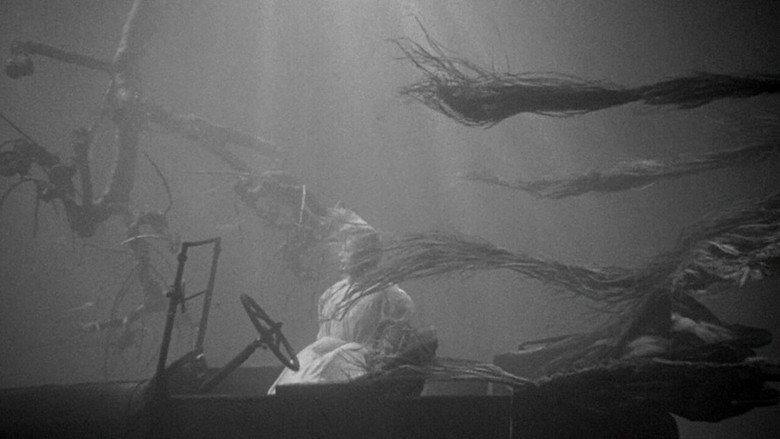
The Ohio River symbolizes a journey from danger to sanctuary, a path of escape and purification for the children. It is a mythic, dreamlike space, populated by the creatures of the natural world, representing a temporary haven from the horrors of the adult world. It has been compared to the journey of Moses in the bulrushes.
After escaping Powell, John and Pearl drift down the river in a small skiff. The journey is depicted in a lyrical, almost surreal sequence, with shots of animals on the shore watching them pass. This dreamlike escape contrasts sharply with the stark, expressionistic horror of the scenes with Powell.
Spiders and Webs
The spider web is a powerful symbol of the trap Powell has laid for the children and their mother. Powell is the predatory spider, and his victims are the flies caught in his web of deceit and religious rhetoric.
During their river journey, the children's boat floats under a giant, shimmering spider's web, visually representing the danger they are still in. Earlier, a stylized spider and web are seen as the children flee Powell, reinforcing his predatory nature.
Pearl's Doll
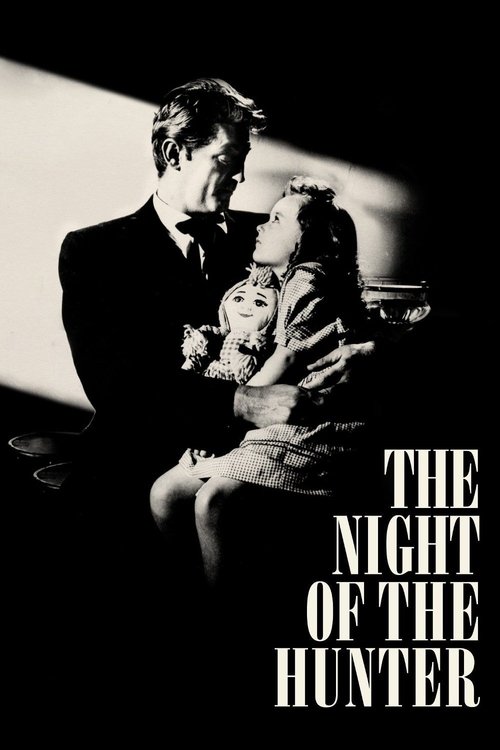
The doll, where the stolen money is hidden, symbolizes corrupted innocence. It is an object of childhood comfort and love, but it has become the container for the source of all their danger and trauma—the adult world's obsession with money. Pearl's fierce attachment to it puts them in constant peril.
Ben Harper stuffs the $10,000 into Pearl's doll before his arrest. Throughout the film, Powell relentlessly tries to get Pearl to reveal the money's location, manipulating her through the doll. The doll is the MacGuffin of the story, the object driving the entire terrifying hunt.
Animals (Owl, Rabbit, Fox, Sheep)
The animals observed during the river journey serve as a fable of the natural world, reflecting the children's plight. They represent the concepts of predator and prey, hunter and hunted. An owl snatching a rabbit from the riverbank mirrors Powell's predatory nature and the vulnerability of the children. The sheep at Rachel's farm represent the flock of lost children she protects.
In a beautifully shot montage, the camera cuts between the children sleeping in the boat and various nocturnal animals. This sequence universalizes their struggle, placing it within the larger, amoral context of the natural world where survival is a constant battle.
Philosophical Questions
What is the true nature of faith and goodness?
The film contrasts two forms of Christianity. Harry Powell's is performative, loud, and used as a weapon for personal gain and to justify hatred. Rachel Cooper's is quiet, practical, and expressed through selfless action and protection of the vulnerable. The film asks the viewer to consider whether faith is defined by public declarations and scripture-quoting or by private acts of compassion and endurance. It posits that true goodness is resilient and protective, not judgmental and punitive.
Can innocence survive in a fundamentally corrupt world?
John and Pearl are vessels of innocence who are forced on a terrifying journey through the heart of adult corruption, greed, and violence. The adults in their lives repeatedly fail to protect them until they find Rachel. The film explores the immense resilience of children, suggesting that while their innocence can be scarred and tested, it has a powerful will to "abide and endure." The ending offers a hopeful, if not simplistic, answer: innocence can be preserved, but only through the intervention of genuine, unwavering goodness.
Where is the line between righteous judgment and hateful hypocrisy?
Through the character of Harry Powell, the film scrutinizes the human tendency to cloak personal hatred and prejudice in the language of religious morality. Powell genuinely seems to believe his misogyny is a holy crusade. The townspeople who embrace him are quick to judge Willa and even quicker to form a lynch mob against Powell once he's exposed. The film raises the question of whether any human is truly qualified to pass righteous judgment, suggesting that a focus on condemnation ('HATE') inevitably leads to violence, while true strength lies in compassion ('LOVE').
Core Meaning
At its core, "The Night of the Hunter" is an allegorical fable about the primordial struggle between good and evil, and the perilous journey of innocence through a corrupt adult world. Director Charles Laughton crafts what he called "a nightmarish sort of Mother Goose tale," exploring the potent dangers of religious hypocrisy and blind faith. The film posits that true faith and goodness, embodied by the resilient matriarch Rachel Cooper, are not found in loud, performative piety but in quiet strength, endurance, and protective love. It serves as a powerful cautionary tale, suggesting that evil often wears a deceptively holy mask and that the resilience of children is a formidable force against the darkness.