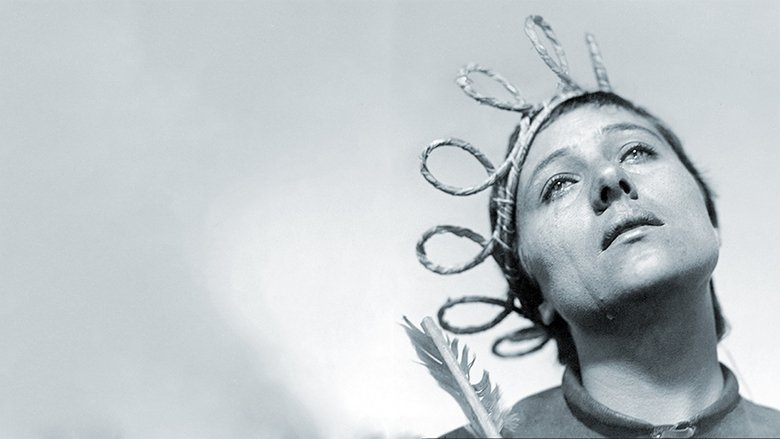
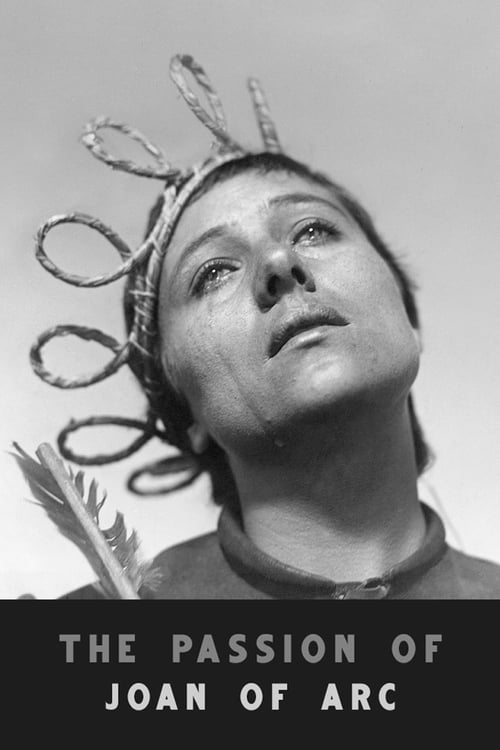
La Passion de Jeanne d'Arc
"An Immortal Screen Classic that will live Forever!"
The Passion of Joan of Arc - Ending Explained
⚠️ Spoiler Analysis
The film's narrative culminates in Joan's final, agonizing decision. After enduring relentless interrogation and being shown instruments of torture, Joan is taken to the prison courtyard where a stake is being prepared. Overwhelmed by fear, she finally breaks and agrees to sign a confession, recanting her divine claims. The judge condemns her not to death, but to life imprisonment on bread and water.
In her cell, as a jailer crudely shaves her head, the full weight of her decision dawns on her. This act of humiliation serves as a moment of terrible clarity. She realizes she has saved her mortal life at the cost of her soul and her divine mission. Filled with renewed conviction, she tells the jailer to summon the judges and courageously recants her confession, choosing death over a life of spiritual falsehood.
She is then taken to the stake. The film portrays her execution with harrowing realism. As the flames rise, the crowd of onlookers, who had been watching with a mix of mockery and curiosity, are overcome with grief and horror, realizing they are witnessing the death of a saint. Their grief turns to rage, and they begin to riot against the English soldiers, who brutally suppress the uprising. The hidden meaning becomes clear: Joan's physical defeat is her spiritual triumph. Her martyrdom ignites the spirit of the people, ensuring that her cause will live on. The final intertitle declares that the flames sheltered her soul as it rose to heaven, cementing her legacy as a martyr and the heart of France.
Alternative Interpretations
While the dominant interpretation focuses on spiritual faith and martyrdom, the film also invites other readings. A feminist interpretation sees Joan as a woman persecuted by a patriarchal system for defying gender norms. Her insistence on wearing men's clothes and her direct line to divine authority, bypassing the all-male church hierarchy, represents a profound threat to their power. Her trial becomes a symbolic struggle of a woman trying to maintain her autonomy and identity against a monolithic male institution determined to crush her.
A political interpretation views the trial less as a theological dispute and more as a political show trial. The French clergymen are aligned with the English, and their goal is to delegitimize the French king, Charles VII, whose coronation Joan inspired. By proving Joan a heretic, they prove that the king's power does not come from God. In this light, Joan is a political prisoner, and the religious charges are merely a pretext for political ends.
Another reading focuses on the film as an artistic and meta-cinematic statement. Dreyer's style, which deconstructs space and narrative continuity, can be seen as an exploration of cinema's unique ability to represent psychological and spiritual reality over physical reality. The film is not just about Joan's passion, but about the passion of seeing—the camera's ability to penetrate the soul through the landscape of the face.