La Passion de Jeanne d'Arc
"An Immortal Screen Classic that will live Forever!"
The Passion of Joan of Arc - Symbolism & Philosophy
Symbols & Motifs
The Close-Up
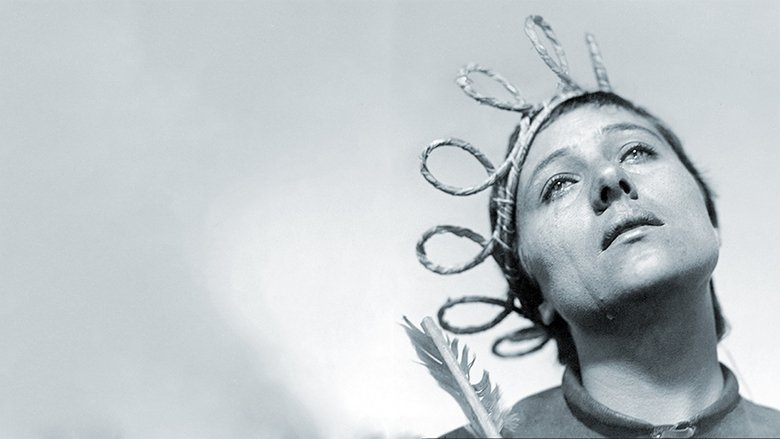
The close-up functions as a symbol of both intense scrutiny and spiritual revelation. It isolates Joan, emphasizing her loneliness against her accusers, while also allowing the audience an intimate, unfiltered view into her soul and suffering. It transforms her face into the film's central landscape, where the entire drama unfolds.
Used relentlessly throughout the film, almost to the exclusion of establishing shots. Dreyer films both Joan and her interrogators in tight close-ups, creating a confrontational and claustrophobic atmosphere that traps the viewer in the intensity of the trial.
The Cross
The cross is a recurring symbol of Christ's passion, divine comfort, and Joan's ultimate martyrdom. It represents the true faith she clings to, in contrast to the corrupted version wielded by her judges.
A cross-shaped shadow on the floor of her cell provides Joan with comfort. A makeshift cross is given to her before her execution. The final shot of the film frames her stake against a cross on a nearby chapel, explicitly linking her death to Christ's sacrifice.
Crown of Thorns
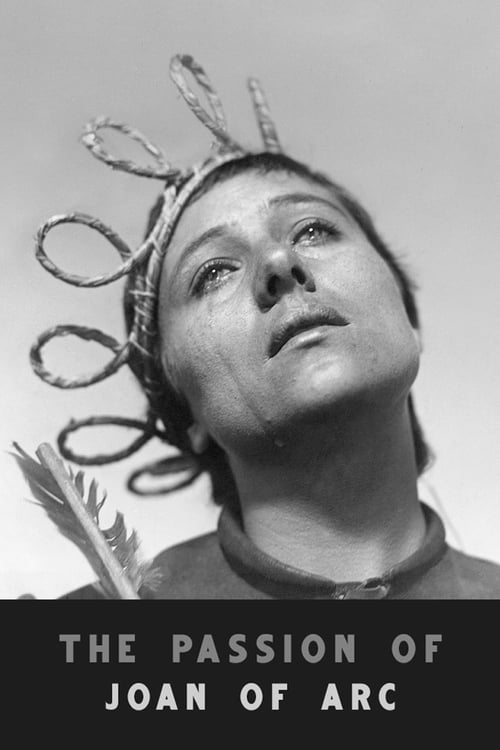
This directly alludes to the mockery of Christ before his crucifixion, symbolizing Joan's martyrdom and her sanctification through suffering. It represents the cruel parody of justice and piety enacted by her tormentors.
In her cell, jailers taunt Joan by placing a woven crown of straw on her head. Later, after she recants her confession, the act of sweeping away this humble crown helps trigger her realization that she has betrayed her mission, prompting her to face her death.
Shaved Head
The shaving of Joan's head symbolizes her ultimate humiliation and the stripping away of her identity. However, it also becomes the catalyst for her final spiritual victory. It is a moment of violation that clarifies her purpose and leads her to recant her confession, choosing martyrdom over a life of imprisonment and compromise.
After Joan signs a confession to save herself from being burned, she is condemned to life imprisonment. As a jailer shaves her head, the dehumanizing act makes her realize she has been unfaithful to God, and she immediately demands to see the judges to retract her statement.
Philosophical Questions
What is the relationship between individual faith and organized religion?
The film explores this question by setting up an irreconcilable conflict between Joan's personal, direct experience of God and the rigid, hierarchical structure of the Church court. Her faith is pure and unmediated, while the religion of her judges is a system of power, politics, and dogma. The film asks whether institutions that claim to represent God can become the greatest obstacles to true faith, and whether a single individual's conviction can hold more spiritual truth than a powerful, established religion.
Where is the line between divine inspiration and madness?
The court's entire purpose is to force Joan to admit her visions are not from God, implying they are either demonic or a product of delusion. The film never explicitly shows her visions, focusing instead on her unwavering belief in them. It leaves the viewer to grapple with the nature of her experience. By portraying her suffering with such raw humanity and her faith with such integrity, the film challenges the viewer to question whether the sanity of the individual can be judged by a society that persecutes them. It forces us to consider that what one system calls heresy, another calls sainthood.
Can suffering be a path to spiritual triumph?
The film's title directly invokes the Passion of Christ, framing Joan's suffering not as a defeat but as a necessary trial leading to a spiritual victory. Joan endures immense psychological torture, fear, and betrayal. Yet, it is through this suffering, and her ultimate embrace of martyrdom, that she achieves what the film calls her "great victory" and "deliverance." The film poses the question of whether the ultimate test of faith is the willingness to endure unbearable pain, and whether spiritual transcendence can only be found by confronting and passing through the deepest forms of human suffering.
Core Meaning
Carl Theodor Dreyer intended "The Passion of Joan of Arc" to be a "hymn to the triumph of the soul over life." The film's core meaning lies in the exploration of individual faith clashing with institutionalized power and dogmatism. It examines the nature of suffering, martyrdom, and spiritual conviction. Dreyer focuses on Joan's internal struggle, portraying her not just as a historical icon or warrior, but as a terrified, yet resolute young woman whose personal connection to God is incomprehensible and threatening to the rigid religious authorities. The film suggests that true faith is a deeply personal and spiritual experience, often persecuted by the very institutions that claim to represent it. Joan's ultimate victory is not a military one, but a spiritual martyrdom that affirms her soul's integrity in the face of immense pressure and cruelty.