Director: Geeta Gandbhir
Cast: Susan Lorincz, Ajike Owens, Pamela Dias
The Perfect Neighbor — Characters & Cast
Character Analysis
Susan Lorincz
Susan Lorincz (herself, in archival police and interrogation footage)
Motivation
To be believed: to have her fear ratified by authority and the neighborhood rearranged around her sense of threat. Her calls are demands for the state to enforce a boundary she cannot enforce herself.
Character Arc
She appears first as a chronic complainant — aggrieved, insistent, convinced of her own victimhood — and is, over dozens of recorded encounters, gradually revealed by the footage rather than by any filmmaker's commentary. In the interrogation room her story visibly shifts, and neighbors' accounts contradict her claims. She ends the film convicted, sentenced to 25 years in prison for manslaughter with a firearm.
Ajike "AJ" Owens
Ajike Owens (herself, in archival footage and photographs)
Motivation
To protect her children and secure their right to play, unbothered, in their own neighborhood.
Character Arc
Because the film is built from surveillance and evidence, Owens exists in fragments: glimpsed on camera, described by neighbors, remembered by family. Her arc is inverted — we come to know her more fully after her death than before it, as the record fills in the woman a 35-year-old mother of four actually was. The film's refusal to reduce her to a victim is its central act of restoration.
Pamela Dias
Pamela Dias (herself)
Motivation
Justice for her daughter and guardianship — literal and moral — of the four grandchildren left behind.
Character Arc
Owens's mother enters the story at its worst moment and carries its aftermath. She moves from raw shock to the composed, insistent public grief of a survivor demanding that the case not be quietly absorbed by the machinery of Stand Your Ground, becoming the face of the family's pursuit of accountability.
The Marion County Sheriff's deputies
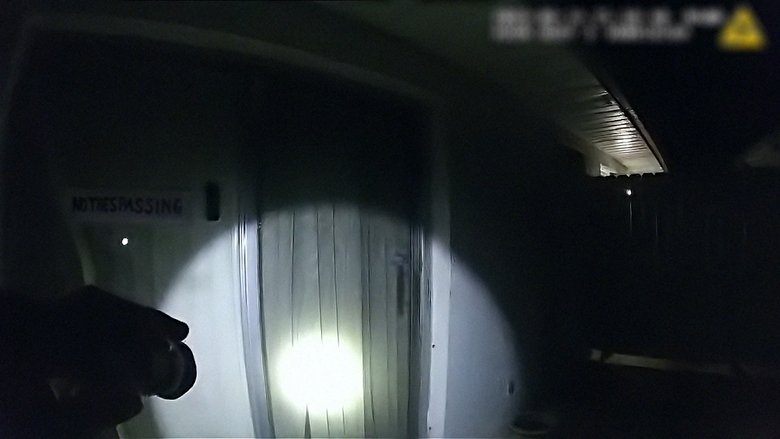
Themselves (body-camera footage)
Motivation
To resolve each call in front of them and move on — the procedural logic that makes the pattern invisible from inside it.
Character Arc
Recurring officers arrive repeatedly, listen, mediate and leave. Several are visibly skeptical of Lorincz's escalating claims. Their arc is the film's most uncomfortable: competent individuals operating inside a framework that offers no mechanism to stop what everyone can see coming, until they are finally responding to a homicide.
The neighborhood children
Themselves (body-camera and interview footage)
Motivation
To play outside; later, simply to tell the truth about what happened.
Character Arc
Introduced as the supposed nuisance at the story's origin, they end as the case's most affecting testimony, questioned on camera about a killing they saw or heard. The film's structure turns them from the alleged problem into the moral center.
Cast
Explore More About This Movie
Dive deeper into specific aspects of the movie with our detailed analysis pages