The core meaning of "The Pitt" is an unflinching examination of the profound human cost of a broken healthcare system. The creators sought to shine a light on the post-pandemic reality for medical professionals, moving beyond the idealized hero narrative to reveal their vulnerability, burnout, and the mental health crises they face. The series argues that the fragility of the healthcare system is directly proportional to the fragility of its practitioners' mental health. It's a tribute to the resilience and compassion of these individuals, while simultaneously serving as a powerful critique of a system that asks them to perform miracles in an environment of scarcity and overwhelming pressure, ultimately questioning how much trauma the healers can endure before they break themselves.

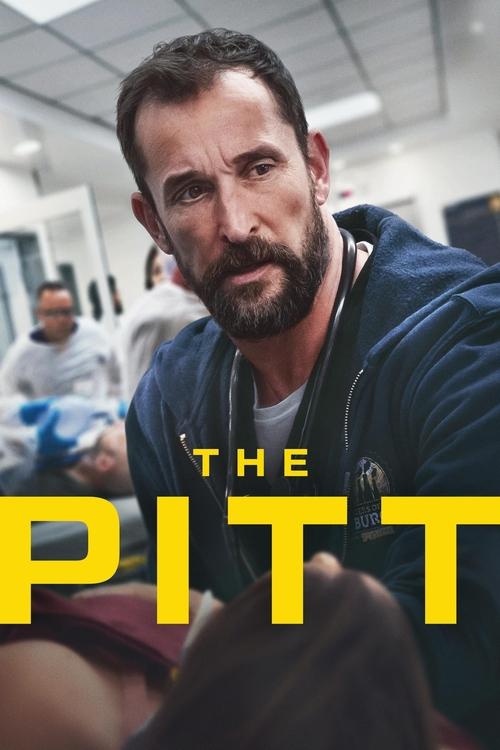
"15 episodes. 15 hours. 1 shift."
Cast: Noah Wyle, Tracy Ifeachor, Patrick Ball, Katherine LaNasa, Supriya Ganesh
The Pitt — Symbolism & Philosophy
Symbols & Motifs
The Hospital Rooftop
The rooftop of the Pittsburgh Trauma Medical Center symbolizes a place of ultimate crisis, contemplation, and fragile connection. It represents the precipice—both literally and metaphorically—where the characters confront the overwhelming weight of their job and their own mortality.
The rooftop bookends the first season. In the premiere, "7:00 A.M.", Dr. Robby finds his night-shift counterpart, Dr. Abbott, on the ledge, contemplating suicide after a brutal shift. In the finale, "9:00 P.M.", the roles are reversed. After his own complete breakdown, a traumatized Robby finds himself on the same ledge, only to be found and talked down by Dr. Abbott, bringing their shared experience of trauma and support full circle.
The Overflowing Waiting Room
The waiting room, constantly shown to be packed with patients waiting for hours or even days, is a persistent visual motif that symbolizes the brokenness and inadequacy of the healthcare system. It's a physical manifestation of the staff shortages and lack of resources that plague the hospital.
From the very first scene of the series, the waiting room is depicted as chaotic and overflowing. It is a constant source of stress for the characters, who are painfully aware of the people suffering just outside the ER doors. Dr. Robby explicitly tells the new interns to keep an eye on the waiting room to ensure no one dies out there, highlighting it as a zone of constant, unmanageable risk.
Philosophical Questions
What is the true cost of empathy in professions defined by trauma?
The series explores this by showing how the doctors' compassion is both their greatest strength and their greatest vulnerability. Dr. Robby's deep empathy makes him an excellent mentor and physician, but it also leads to his profound psychological breakdown as he absorbs the endless suffering around him. The show questions whether it's possible to remain empathetic and effective without eventually being consumed by the immense grief inherent in the work.
Where is the line between professional duty and personal survival?
This question is central to the arcs of several characters. Dana Evans reaches her limit and seemingly chooses survival by quitting. Dr. Langdon's addiction is a twisted form of survival that jeopardizes his duty. Dr. McKay removes her ankle monitor—a legal violation—to fulfill her medical duty during a crisis. The series constantly places characters in situations where their oath to 'do no harm' conflicts with their own well-being, forcing them to make impossible choices.
In a broken system, what does it mean to be a 'good' doctor?
"The Pitt" challenges the traditional definition of a good doctor. Is it Dr. Mohan, who takes time with patients but is criticized for being slow? Is it Dr. Santos, who is brilliant and efficient but often lacks bedside manner? Or is it Dr. Robby, the ideal physician who is privately falling apart? The series suggests that in an underfunded, understaffed system, the metrics for success are warped, and simply surviving a shift can be its own form of victory.
Core Meaning
Explore More About This Movie
Dive deeper into specific aspects of the movie with our detailed analysis pages