
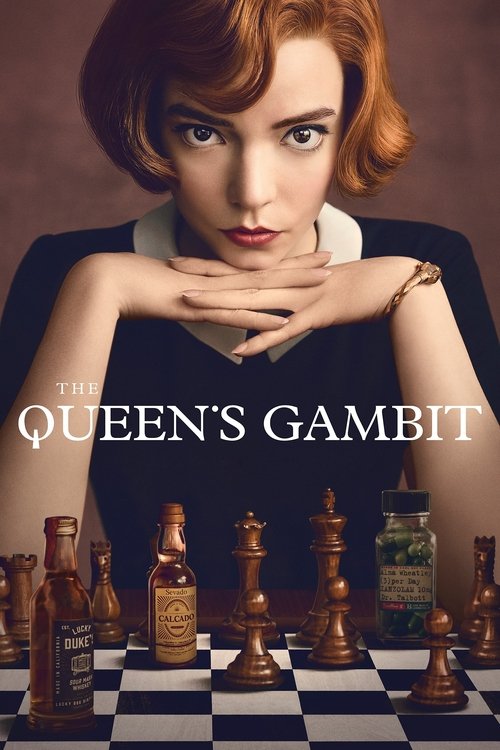
"The Queen's Gambit" traces Beth Harmon's life from her mother's suicide and her childhood in an orphanage. There, the janitor, Mr. Shaibel, teaches her chess, while the institution inadvertently seeds her lifelong addiction by giving the children daily tranquilizers. After being adopted by Alma Wheatley, a lonely woman with her own alcohol dependency, Beth begins her competitive career, quickly rising through the national ranks.
A key turning point occurs in Mexico City, where Beth suffers her first loss to Soviet World Champion Vasily Borgov and simultaneously, her adoptive mother Alma dies of hepatitis. This trauma sends Beth into a deeper spiral of alcohol and drug abuse. Her journey is marked by significant relationships with former rivals, including Harry Beltik and Benny Watts, who later become her allies and mentors. Despite their help, her addiction leads to a humiliating public loss to Borgov again in Paris. At her lowest point, her childhood friend from the orphanage, Jolene, reappears. Jolene helps Beth confront her past, including grieving Mr. Shaibel's recent death, and provides her with the money needed to travel to the prestigious Moscow Invitational.
In the finale, a sober and focused Beth faces Borgov for the third time. Aided by Benny, Harry, and other players who call in from the U.S. to help her analyze the adjourned game, Beth plays the best chess of her life. She uses the titular Queen's Gambit opening, a symbolic move representing the sacrifices she has made. She defeats Borgov, becoming the de facto world champion. The series ends not with a formal celebration, but with Beth finding simple joy by playing chess with elderly men in a Moscow park, finally at peace with herself and her love for the game, having conquered both her opponents and her personal demons.