The Queen's Gambit
A coming-of-age period drama that feels like a tense, elegant chess match, painting a portrait of obsession and genius against a stylish, melancholic backdrop.
The Queen's Gambit

The Queen's Gambit

23 October 2020 — 23 October 2020 United States of America 1 season 7 episode Ended ⭐ 8.5 (5,090)
Cast: Anya Taylor-Joy, Chloe Pirrie, Marcin Dorociński, Matthew Dennis Lewis, Russell Dennis Lewis
Drama
Genius and Obsession Addiction and Mental Health Feminism and Individualism The Search for Family and Connection

Overview

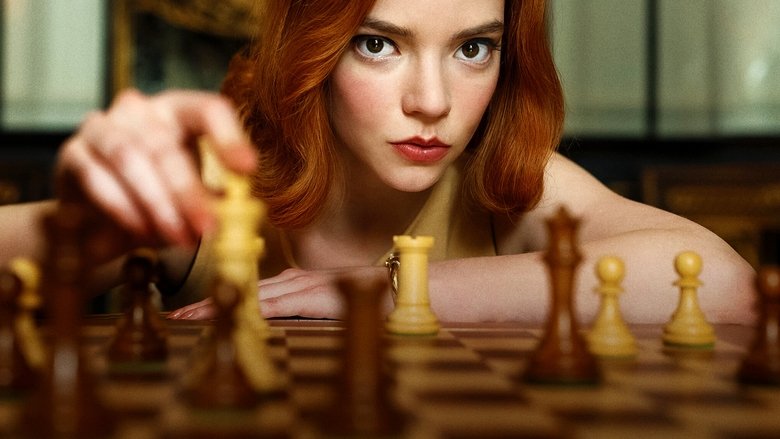
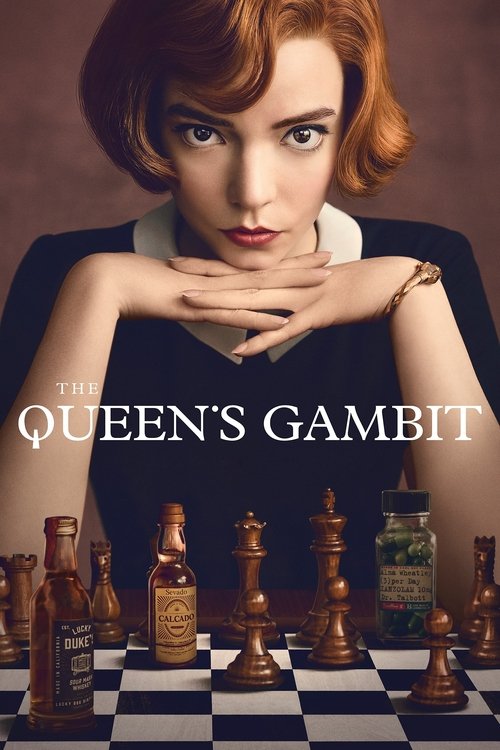
"The Queen's Gambit" follows the life of Beth Harmon, an orphan who discovers an astonishing talent for chess in 1950s America. The seven-episode miniseries charts her meteoric rise from a quiet Kentucky orphanage to the glamorous and perilous world of international chess grandmasters.

As she conquers the male-dominated field, Beth must battle her own demons, including a growing dependency on tranquilizers and alcohol, which she believes are the key to her visionary talent. The series is a gripping exploration of the true cost of genius, the search for connection, and the struggle to find one's place in a world that consistently underestimates you.

Core Meaning

"The Queen's Gambit" is fundamentally a story about overcoming personal trauma and addiction to find a sense of self and belonging. It explores the idea that true strength and genius do not have to be inextricably linked with self-destruction. The series posits that family and connection can be found in the most unexpected places—not through blood, but through shared passion and mutual respect. Ultimately, it’s a narrative of triumph over adversity, where the protagonist's greatest victory is not just over her opponents on the chessboard, but over the internal demons that threaten to consume her.

Thematic DNA

Genius and Obsession 35%
Addiction and Mental Health 30%
Feminism and Individualism 20%
The Search for Family and Connection 15%

Genius and Obsession

Beth Harmon's prodigious talent for chess is the central driving force of the series. Her genius, however, is portrayed as a double-edged sword, bordering on a self-destructive obsession. The narrative deeply explores the sacrifices required to achieve greatness and questions whether her incredible ability is a gift or a curse that isolates her from the world and fuels her addictions.

Addiction and Mental Health

From a young age, Beth becomes dependent on tranquilizers, believing they unlock her ability to visualize chess games on the ceiling. This dependency evolves into a struggle with alcohol and substance abuse throughout her career. The series powerfully depicts addiction as both a coping mechanism for her trauma and loneliness and a significant obstacle to her success and personal well-being.

Feminism and Individualism

Set in the 1950s and 60s, the series highlights Beth's journey as a woman navigating and dominating the male-centric world of professional chess. It subverts typical gender narratives by showing her male competitors evolving from rivals into allies who respect her purely for her skill. The story celebrates female empowerment, independence, and the dismantling of stereotypes.

The Search for Family and Connection

As an orphan, Beth's life is defined by a profound sense of loneliness and a search for belonging. She forms unconventional family bonds throughout her journey: with the orphanage custodian Mr. Shaibel, her adoptive mother Alma Wheatley, and eventually, her community of chess rivals-turned-friends like Harry Beltik and Benny Watts. The series emphasizes that connection is crucial for overcoming personal struggles.

Character Analysis

Elizabeth 'Beth' Harmon

Anya Taylor-Joy

Archetype: The Orphaned Hero/Prodigy
Key Trait: Intensely focused and obsessive

Motivation

Beth's primary motivation is to win and achieve a sense of control over her world, which she finds within the 64 squares of the chessboard. This desire stems from the chaos and loss of her childhood. As she matures, her motivation evolves from a purely competitive drive to a deeper desire for connection and self-acceptance, realizing that winning alone isn't enough to make her whole.

Character Arc

Beth's arc is a classic bildungsroman, tracing her journey from a traumatized, isolated orphan to the world's greatest chess player. Initially, she is fiercely independent and emotionally closed off, relying on pills and alcohol to cope with her past and the pressures of competition. Throughout the series, she learns to accept friendship and support, realizing that her genius is her own and not a product of her addictions. Her final victory over Borgov, achieved with a clear mind and the help of her friends, signifies her complete transformation into a self-assured woman who has found peace and a sense of belonging.

Alma Wheatley

Marielle Heller

Archetype: The Flawed Mentor
Key Trait: Artistic and melancholic

Motivation

Initially motivated by a desire to alleviate her profound loneliness, Alma's motivation shifts to finding vicarious fulfillment and freedom through Beth's extraordinary life. She yearns for the travel, recognition, and glamour that the world of chess offers, which provides an escape from her own unlived dreams.

Character Arc

Alma begins as a lonely, melancholic housewife trapped in an unhappy marriage. Adopting Beth brings purpose and excitement into her life. She transforms from a reluctant guardian into Beth's manager and closest companion, finding her own form of liberation through Beth's success. Though she struggles with her own alcoholism and enables some of Beth's destructive behavior, she provides Beth with a crucial, albeit complicated, form of maternal love and support before her tragic death in Mexico City.

Benny Watts

Thomas Brodie-Sangster

Archetype: The Rival and Ally
Key Trait: Confident and strategic

Motivation

Benny is driven by a deep love and respect for the game of chess. While initially motivated by the desire to be the best, his ultimate motivation is to see the game played at its highest level. This pushes him to support Beth, as he understands her potential to defeat the world's best player, Borgov.

Character Arc

Benny is first introduced as an arrogant and formidable rival, the reigning U.S. Chess Champion. After Beth defeats him, his character evolves significantly. He sheds his lone-wolf persona to become one of Beth's most important mentors and friends. He recognizes her superior talent and dedicates himself to helping her prepare for her matches against the Soviets, demonstrating a shift from individual ambition to collaborative support.

Harry Beltik

Harry Melling

Archetype: The Humbled Rival
Key Trait: Studious and earnest

Motivation

Harry is motivated by a genuine admiration for Beth's talent and a desire to see her succeed. After his defeat, his motivation shifts from personal ambition to a wish to contribute to her journey. He is also motivated by a romantic interest in Beth and a sincere concern for her well-being.

Character Arc

Harry starts as a confident Kentucky State Champion who is swiftly humbled by a young Beth. Initially a rival, he later re-enters Beth's life as a supportive friend and mentor. He tries to help her professionalize her study of chess and also attempts to connect with her on a personal level. Though their romantic connection fizzles, his arc is one of maturation, as he gracefully accepts his own limitations and channels his energy into supporting a greater talent.

Symbols & Motifs

The Chessboard on the Ceiling

Meaning:

This symbolizes Beth's inner world, her sanctuary, and the source of her genius. It represents a space of absolute control and predictability, a stark contrast to the chaos of her real life. It is initially unlocked by tranquilizers, tying her genius to her addiction in her own mind.

Context:

From her first nights at the Methuen orphanage, Beth uses the green pills to hallucinate a chessboard on the ceiling, where she plays out entire games and hones her skills. This visual motif recurs throughout the series during pivotal moments of preparation and crisis, representing her deepest connection to the game.

Green Tranquilizer Pills

Meaning:

The pills represent both a source of power and a crutch for Beth. She associates them with her ability to access her genius, creating a psychological dependency that blurs the line between her natural talent and her addiction. They symbolize the destructive side of her quest for control and tranquility.

Context:

Introduced at the orphanage to keep the children docile, Beth begins saving and abusing them. She relies on them before important matches, and her struggle to overcome this addiction is a central conflict, culminating in her decision to play the final match against Borgov sober.

Fashion and Clothing

Meaning:

Beth's wardrobe symbolizes her evolution, growing confidence, and financial independence. Her clothing choices reflect her journey from a drab orphan to a sophisticated, world-renowned competitor. In the final scene, her all-white outfit evokes the image of the White Queen, the most powerful piece in chess, signifying she has achieved ultimate control and mastery over her life and the game.

Context:

Her style evolves from plain orphanage uniforms to homemade dresses, then to stylish, store-bought outfits as she begins earning prize money. Her fashion sense, particularly the use of checkered patterns, subtly incorporates the lines of the chessboard into her identity. Her final white coat and hat are a deliberate visual statement of her final triumph.

Memorable Quotes

Chess isn't always competitive. Chess can also be beautiful.

— Beth Harmon

Context:

Spoken during a press interview for Life magazine in Episode 4, "Middle Game." Beth explains what drew her to chess, describing the 64 squares as a world she can control and dominate, where she only has herself to blame for any mistakes.

Meaning:

This quote reveals the core of Beth's connection to the game. For her, chess is more than just a competition; it is a world of art, logic, and safety. It encapsulates her view of the board as a predictable, controllable universe where she feels secure, a stark contrast to her turbulent life.

The strongest person is the person who isn't scared to be alone.

— Alice Harmon

Context:

This line is heard in a flashback in Episode 2, "Exchanges." Beth's mother, a brilliant but troubled woman, imparts this wisdom to her daughter, shaping Beth's solitary and self-reliant nature from a young age.

Meaning:

Delivered by Beth's biological mother, this piece of advice becomes a defining, yet problematic, philosophy for young Beth. It encourages a fierce independence that helps her survive but also fosters an emotional isolation that she spends the rest of the series learning to overcome.

To tell you the truth of it, child, you're astounding.

— Mr. Shaibel

Context:

Mr. Shaibel says this to Beth in the orphanage basement in Episode 1, "Openings," after she demonstrates her rapidly advancing skills. His words provide a crucial foundation of belief in herself at a formative time in her life.

Meaning:

Coming from the reserved and stoic Mr. Shaibel, this praise is a monumental moment of validation for young Beth. It is one of the first times her talent is truly acknowledged, giving her the confidence to pursue the game and affirming that she has a special gift.

Let's play.

— Beth Harmon

Context:

This is the final line of the series, from Episode 7, "End Game." Instead of flying home to celebrations, Beth walks through a park in Moscow, sits down with a group of elderly local players, and begins a new game, bringing her journey full circle.

Meaning:

These simple words, spoken in Russian, are the culminating moment of the entire series. Beth, having achieved the pinnacle of the chess world, finds pure joy not in ceremony or fame, but in returning to the game for its own sake. It signifies she is finally at peace, playing out of love, not obsession or necessity.

Episode Highlights

Openings

S1E1

This episode masterfully sets the stage for Beth's entire journey. It establishes her traumatic childhood, her introduction to chess in the orphanage basement with the janitor Mr. Shaibel, and the beginning of her lifelong addiction to tranquilizers. It lays the crucial groundwork for her two parallel obsessions: chess and pills.

Significance:

"Openings" is the foundational episode that defines Beth's character, motivations, and internal conflicts. The bonds she forms and the habits she develops here resonate through every subsequent episode, making it essential for understanding her entire arc.

Exchanges

S1E2

Beth is adopted by the lonely Alma Wheatley and thrust into the alien world of suburban high school. This episode explores her social awkwardness and introduces her to the formal world of competitive chess. The development of her complex, codependent relationship with Alma begins, setting them on a path of mutual discovery and shared vices.

Significance:

This episode marks Beth's transition from the confines of the orphanage to the wider world. It establishes the pivotal relationship with Alma, who becomes both a maternal figure and a flawed enabler, and it launches Beth's official competitive career.

Middle Game

S1E4

In Mexico City, Beth faces the Russian Grandmaster Vasily Borgov for the first time and suffers a crushing defeat. The episode is a turning point, as she also deals with the sudden and tragic death of her adoptive mother, Alma. This leaves her utterly alone and forces her to confront a new level of grief and responsibility.

Significance:

"Middle Game" is an emotional gut-punch that raises the stakes for Beth personally and professionally. Alma's death strips away her support system, and her loss to Borgov makes her realize the immense challenge she faces, pushing her into a deeper spiral upon her return home.

Adjournment

S1E6

This episode depicts one of Beth's lowest points. In Paris for a rematch with Borgov, she succumbs to a night of heavy drinking and loses catastrophically. Her self-destructive behavior alienates her from her friends and leaves her at rock bottom, seemingly squandering her immense talent.

Significance:

"Adjournment" is the classic 'dark night of the soul' moment in Beth's arc. Her spectacular failure is a direct result of her unchecked addiction and emotional turmoil, making it the necessary catalyst for her to finally confront her demons before the finale.

End Game

S1E7

The series finale provides a deeply satisfying conclusion to Beth's journey. With the financial help of her old friend Jolene and the remote strategic support of her former rivals, Beth travels to Moscow sober and clear-headed. She finally defeats Borgov in a brilliant and tense match, using the titular Queen's Gambit opening.

Significance:

This episode brings all the show's themes to a powerful resolution. Beth's victory is not just a chess win but a personal triumph over addiction and loneliness. She achieves her goal not in isolation, but through the strength she draws from her found family, completing her transformation.

Philosophical Questions

Is genius inextricably linked to madness or self-destruction?

The series constantly explores the 'troubled genius' trope. Initially, Beth believes her talent is fueled by her tranquilizer abuse, creating a dangerous link between her gift and her addiction. The narrative questions whether her brilliance is a natural ability or a byproduct of her trauma and substance use. The finale ultimately refutes this trope, as Beth achieves her greatest success only after she becomes sober, suggesting that true genius can be liberated from, rather than dependent on, self-destruction.

What is the true nature of family?

As an orphan who loses both her biological and adoptive mothers, Beth's story is a profound exploration of found family. She builds deep, meaningful connections with people who are not her blood relatives: a janitor, a lonely housewife, and a group of former chess rivals. The series argues that family is not defined by traditional structures but by shared passions, mutual support, and the conscious choice to be there for one another, especially in moments of crisis.

Can one find order in a chaotic world?

Beth is drawn to chess because the 64 squares represent a perfect, logical, and controllable world. This contrasts sharply with the unpredictable trauma and emotional chaos of her life. Her journey is a constant struggle to impose the order of the chessboard onto her messy reality. The series explores whether such control is truly attainable or if peace comes from accepting life's inherent unpredictability and finding stability through human connection rather than rigid control.

Alternative Interpretations

While widely praised, some alternative interpretations and critiques of the series have emerged. One perspective is that the series presents an overly romanticized and simplified portrayal of addiction. Beth's ability to overcome her severe substance abuse with relative speed in the final episode, seemingly through willpower and friendship alone, has been viewed by some as unrealistic and downplaying the true difficulties of recovery.

Another interpretation focuses on its depiction of the chess world. Some critics felt that the series created a kinder, more supportive version of the competitive circuit than exists in reality. Beth encounters very little overt sexism, and her male rivals quickly and almost universally become her staunch supporters. This has been interpreted both as a refreshing, aspirational fantasy and as an overly simplistic take that sidesteps the harsher realities women often face in male-dominated fields.

Cultural Impact

"The Queen's Gambit" became a massive global phenomenon upon its release in 2020, earning critical acclaim and becoming Netflix's most-watched scripted miniseries at the time. Its most significant cultural impact was the revitalization of chess worldwide. Sales of chess sets increased by hundreds of percent, and online chess platforms like Chess.com saw a massive influx of new players, particularly women and girls. The series was lauded for making chess feel exciting, stylish, and emotionally resonant for a mainstream audience.

The show also had a notable influence on fashion, with Beth's 1960s wardrobe inspiring trends. Beyond its aesthetic appeal, the series was praised for its handling of complex themes like addiction, trauma, and female empowerment. It won numerous awards, including 11 Primetime Emmy Awards and two Golden Globes, cementing its legacy as a landmark piece of television that demonstrated the immense audience appetite for intelligent, character-driven storytelling.

Audience Reception

"The Queen's Gambit" received overwhelmingly positive reactions from audiences and critics alike. On review aggregator sites, it holds exceptionally high scores. Audiences praised Anya Taylor-Joy's magnetic lead performance, the stunning cinematography, the meticulous period details, and the compelling, emotionally intelligent writing. Many viewers who had no prior interest in chess found themselves captivated by the suspense and drama of the matches.

The main points of praise focused on the satisfying character arc of Beth Harmon and the show's inspirational and uplifting tone. Criticisms were minor and infrequent but sometimes pointed to a predictable sports-drama narrative arc and an overly idealized depiction of the male-dominated chess community. Overall, the series was hailed as a binge-worthy triumph and is considered one of Netflix's best original productions.

Interesting Facts

  • The series is based on the 1983 novel of the same name by Walter Tevis.
  • Former World Chess Champion Garry Kasparov and renowned chess coach Bruce Pandolfini served as consultants to ensure the accuracy and authenticity of the chess matches depicted.
  • Heath Ledger was slated to direct a film adaptation of the novel before his death in 2008.
  • Anya Taylor-Joy knew nothing about chess before taking the role but learned the specific sequences for each game minutes before filming the scenes.
  • The actors played out every single chess game seen on screen, even in scenes where the board isn't the primary focus.
  • Though set primarily in Kentucky, Mexico, Paris, and Moscow, the majority of the series was filmed in Berlin, Germany.
  • The show's popularity led to a massive surge in public interest in chess, with sales of chess sets and books skyrocketing after its release.
  • The final match against Borgov is inspired by the historic 1972 World Championship match between American Bobby Fischer and Russian Boris Spassky.
  • Real historical chess games were incorporated into the series. For example, Beth's win for the Kentucky State Championship was based on a 1955 game from Riga, Latvia.

Easter Eggs

In the final episode, a news report mentions that a women's world champion, Nona Gaprindashvili, has "never faced men." This line led to a real-life lawsuit.

The real Nona Gaprindashvili, a chess icon from Georgia, had in fact faced dozens of male competitors by 1968, the year the episode is set. She filed a defamation lawsuit against Netflix for the inaccurate and sexist portrayal. The case was later settled out of court.

The character of Benny Watts is visually and stylistically based on a real-life chess grandmaster.

Benny's swagger, cowboy hat, and knife are inspired by the real American Grandmaster Bobby Fischer, who was known for his eccentric personality and dominance in the chess world. The series creators, however, based Beth Harmon's journey more on Fischer's competitive path rather than his personality.

⚠️ Spoiler Analysis

Click to reveal detailed analysis with spoilers

Frequently Asked Questions

Explore More About This Movie

Dive deeper into specific aspects of the movie with our detailed analysis pages

Comments (0)

Leave a comment

No comments yet. Be the first to share your thoughts!