
The Queen's Gambit - Symbolism & Philosophy
Symbols & Motifs
The Chessboard on the Ceiling
This symbolizes Beth's inner world, her sanctuary, and the source of her genius. It represents a space of absolute control and predictability, a stark contrast to the chaos of her real life. It is initially unlocked by tranquilizers, tying her genius to her addiction in her own mind.
From her first nights at the Methuen orphanage, Beth uses the green pills to hallucinate a chessboard on the ceiling, where she plays out entire games and hones her skills. This visual motif recurs throughout the series during pivotal moments of preparation and crisis, representing her deepest connection to the game.
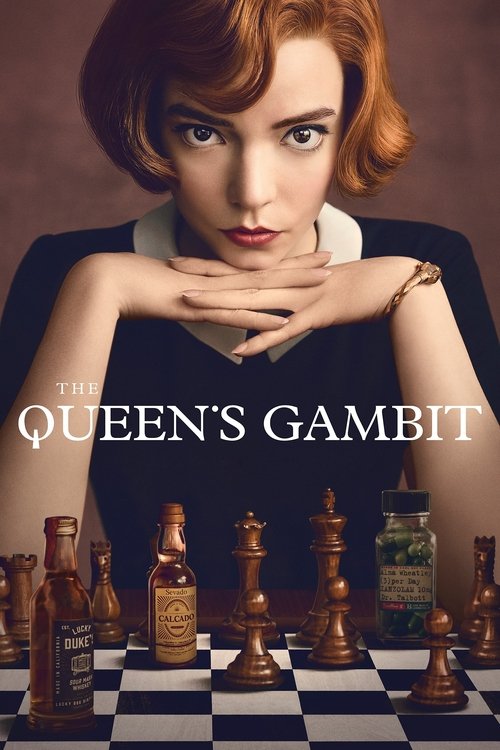
Green Tranquilizer Pills
The pills represent both a source of power and a crutch for Beth. She associates them with her ability to access her genius, creating a psychological dependency that blurs the line between her natural talent and her addiction. They symbolize the destructive side of her quest for control and tranquility.
Introduced at the orphanage to keep the children docile, Beth begins saving and abusing them. She relies on them before important matches, and her struggle to overcome this addiction is a central conflict, culminating in her decision to play the final match against Borgov sober.
Fashion and Clothing
Beth's wardrobe symbolizes her evolution, growing confidence, and financial independence. Her clothing choices reflect her journey from a drab orphan to a sophisticated, world-renowned competitor. In the final scene, her all-white outfit evokes the image of the White Queen, the most powerful piece in chess, signifying she has achieved ultimate control and mastery over her life and the game.
Her style evolves from plain orphanage uniforms to homemade dresses, then to stylish, store-bought outfits as she begins earning prize money. Her fashion sense, particularly the use of checkered patterns, subtly incorporates the lines of the chessboard into her identity. Her final white coat and hat are a deliberate visual statement of her final triumph.
Philosophical Questions
Is genius inextricably linked to madness or self-destruction?
The series constantly explores the 'troubled genius' trope. Initially, Beth believes her talent is fueled by her tranquilizer abuse, creating a dangerous link between her gift and her addiction. The narrative questions whether her brilliance is a natural ability or a byproduct of her trauma and substance use. The finale ultimately refutes this trope, as Beth achieves her greatest success only after she becomes sober, suggesting that true genius can be liberated from, rather than dependent on, self-destruction.
What is the true nature of family?
As an orphan who loses both her biological and adoptive mothers, Beth's story is a profound exploration of found family. She builds deep, meaningful connections with people who are not her blood relatives: a janitor, a lonely housewife, and a group of former chess rivals. The series argues that family is not defined by traditional structures but by shared passions, mutual support, and the conscious choice to be there for one another, especially in moments of crisis.
Can one find order in a chaotic world?
Beth is drawn to chess because the 64 squares represent a perfect, logical, and controllable world. This contrasts sharply with the unpredictable trauma and emotional chaos of her life. Her journey is a constant struggle to impose the order of the chessboard onto her messy reality. The series explores whether such control is truly attainable or if peace comes from accepting life's inherent unpredictability and finding stability through human connection rather than rigid control.
Core Meaning
"The Queen's Gambit" is fundamentally a story about overcoming personal trauma and addiction to find a sense of self and belonging. It explores the idea that true strength and genius do not have to be inextricably linked with self-destruction. The series posits that family and connection can be found in the most unexpected places—not through blood, but through shared passion and mutual respect. Ultimately, it’s a narrative of triumph over adversity, where the protagonist's greatest victory is not just over her opponents on the chessboard, but over the internal demons that threaten to consume her.