
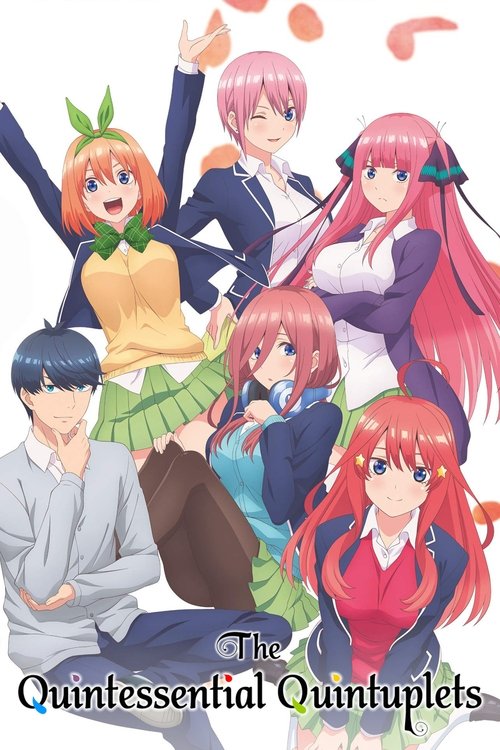
The entire narrative of "The Quintessential Quintuplets" is a flashback leading up to Futaro Uesugi's wedding to one of the five Nakano sisters. The central mystery is the identity of the bride.
Key reveals throughout the story solve multiple smaller mysteries. The girl Futaro met in Kyoto five years prior, who inspired him to study, was Yotsuba Nakano. She kept this a secret due to her immense guilt over failing academically and forcing her sisters to transfer schools with her. For a time, Itsuki pretends to be this girl, calling herself "Rena," at Yotsuba's request to try and sever Futaro's ties to the past.
Another major twist is the identity of the "bell kisser" during the "Scrambled Eggs" arc. Under the Bell of Vows, it was also Yotsuba who kissed Futaro. This was an impulsive act driven by her long-suppressed feelings. This fact is only revealed to the audience near the very end of the story, re-contextualizing the event as a pivotal moment for the eventual final couple.
The series culminates during the final school festival, where Futaro finally makes his choice. After deliberating on his feelings for all five sisters, he confesses his love to Yotsuba Nakano. He chooses her not because of their shared past, but because she has always been his biggest supporter and the one with whom he could truly be himself. Yotsuba initially rejects him, believing she doesn't deserve happiness, but Futaro pursues her and she finally accepts her feelings and his confession. The story concludes with a time skip five years into the future, showing their wedding ceremony, with all four of the other sisters happily supporting them.