Skip to content
The Runner
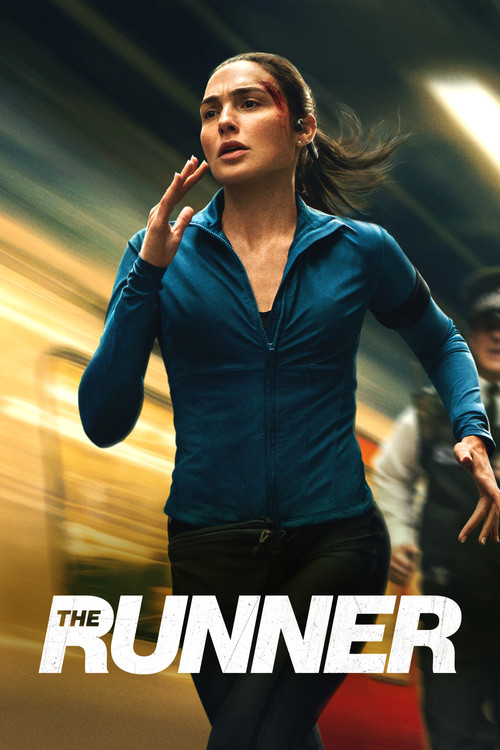
A mother's pulse rendered as cinema: London becomes a treadmill of glass and traffic, and every heartbeat costs blood sugar. Desperation runs in real time, filmed like a documentary chasing a woman who cannot stop.
The Runner

The Runner

"One hour. One chance to save her son."

03 September 2026 United States of America 86 min 6.7 (285)

Director: Kevin Macdonald

Cast: Gal Gadot, Damian Lewis, Rory Wilmot, Alfred Enoch, Phoenix Di Sebastiani

Action Thriller Motherhood as an exploitable weakness — and a weapon Justice versus the individual conscience The body as the last resource The city as indifferent machine Voice, surveillance and disembodied power

Overview

The Runner is a 2026 British action thriller directed by Kevin Macdonald from a screenplay by Mark Gibson. Gal Gadot plays Maia Marten, an émigré single mother and prosecuting attorney at a top London firm, in the middle of building a case against a notorious crime boss accused of murdering two women. The star witness is scheduled to testify that day, and Maia's professional life is arranged around that single morning in court.

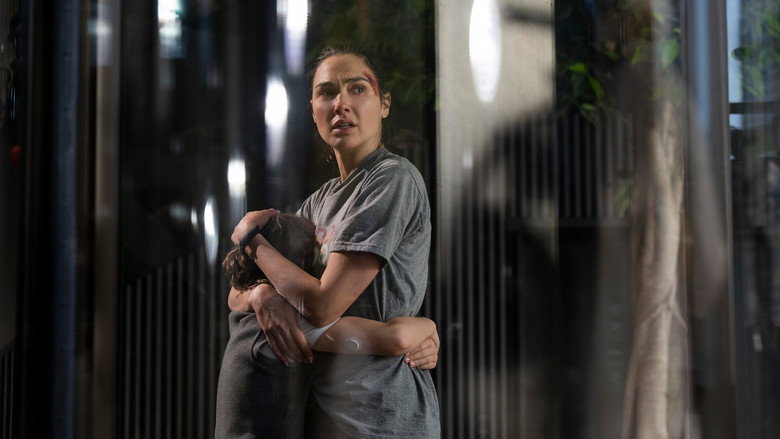
Then her phone rings. An unknown caller (Damian Lewis, heard almost entirely as a disembodied voice) tells her that her son Noah has been taken, and that she has one task: stop the witness from testifying. To prove the threat is real, the caller streams live readings of Noah's glucose levels to Maia's smartphone — the boy is diabetic, and the clock is not metaphorical. What follows is a race across London on foot, on public transport, through crowds, with instructions arriving faster than Maia can think.

Macdonald strips the thriller to its sinew: a single day, a single objective, a woman moving. The film leans on Gadot's physicality and on London itself, shot loose and handheld among real pedestrians, so that the city reads less as a backdrop than as an obstacle course. Beneath the sprint sits a quieter question — how far a person will bend the law they have devoted their life to, when the price of principle is their child.

Core Meaning

At its centre, The Runner is about the collision between institutional justice and maternal love. Maia has built a career on the premise that the system works — that testimony, procedure and evidence deliver truth. The caller's demand is designed to prove the opposite: that every system rests on individuals, and every individual has one thing they will not trade.

Macdonald's framing — real streets, real crowds, hidden cameras catching genuine bystander reactions — argues that this crisis is not superheroic but civic. A woman sprints past people who have no idea what she is carrying, and nobody stops her. The film's message is that the machinery of law and the indifference of a city are the same machinery: enormous, impersonal, and utterly dependent on whether one exhausted person keeps moving.

The resolution, in which Maia refuses the binary she has been handed, reframes the whole ordeal as a study in agency under coercion. The caller's power depends on Maia believing she has only two options. Her escape is not physical strength but the discovery of a third move.

Thematic DNA

Motherhood as an exploitable weakness — and a weapon 30%
Justice versus the individual conscience 22%
The body as the last resource 18%
The city as indifferent machine 17%
Voice, surveillance and disembodied power 13%

Motherhood as an exploitable weakness — and a weapon

The kidnapper's leverage is precise: not a ransom demand but Noah's glucose readings streamed live to Maia's phone, turning her son's body into a countdown clock. The film treats maternal love as the one variable no legal system can account for. Yet the same devotion that makes Maia controllable is what makes her uncontrollable — she outlasts, outthinks and finally outmanoeuvres a man who assumed love only produces obedience.

Justice versus the individual conscience

Maia is a prosecutor building a case against a crime boss for the murder of two women; her entire professional identity is invested in a witness taking the stand. The caller demands she personally dismantle that. The film keeps two dead women in the background as a moral counterweight — someone else's children, someone else's justice — so that Maia's choice is never merely private.

The body as the last resource

Maia is a former competitive pentathlete, and the film mines that biography relentlessly: the plot is literally endurance. Macdonald shot Gadot running through unclosed London streets, and the exhaustion is diegetic — Gadot reportedly finished the shoot on crutches. Physical depletion becomes the film's honest register of stakes, replacing the invulnerability of the star's best-known role.

The city as indifferent machine

London is shot among real pedestrians who did not know a film was being made. A woman in visible terror moves through commuters, tourists and traffic, and the crowd simply parts and reforms. The urban environment is neither ally nor antagonist — it is bystanding at civic scale, which is the film's bleakest observation.

Voice, surveillance and disembodied power

Damian Lewis's antagonist exists mostly as a voice in an earpiece and data on a screen. He sees Maia through cameras, phones and a child's medical monitor; she cannot see him at all. The asymmetry dramatises modern coercion — power that never needs to be present in the room to occupy it entirely.

Character Analysis

Maia Marten

Gal Gadot

Archetype: Reluctant hero / hunted protector Key Trait: Endurance — physical, as a former competitive pentathlete, and psychological

Motivation

Keep Noah alive. Every legal, ethical and professional consideration is subordinate, and the film is honest that this is not noble so much as non-negotiable.

Character Arc

Begins as an assured prosecuting attorney whose faith in procedure is total, and is stripped within hours to pure animal endurance. The arc runs from compliance to improvisation: she first obeys, then negotiates, then finally constructs a deception of her own that turns the caller's demand into the mechanism of his capture. By the end she has neither betrayed the case nor sacrificed her child — but only by stepping outside the rules she began the day defending.

The Caller

Damian Lewis

Archetype: Invisible antagonist / puppeteer Key Trait: Calm, disembodied authority

Motivation

Ensure the crime boss's star witness never testifies, using a mother's love as the cheapest available instrument.

Character Arc

Functions less as a character than as a controlling intelligence, heard mostly as a voice on the phone. His arc is the slow erosion of omniscience: he begins in total informational command and ends undone by the one thing his surveillance cannot capture — what Maia decides in the privacy of her own intention. He is finally seen, and arrested.

All 4 characters and cast

Symbols & Motifs

The glucose monitor

Meaning:

The film's most original image of hostage-taking: a child's metabolism converted into a ransom clock. It symbolises a love that has been quantified, and the way intimate biological data becomes an instrument of control.

Context:

The caller sends Maia live readings of Noah's blood sugar to her smartphone throughout the ordeal, using rising or falling numbers to enforce compliance and to prove that the threat is real without ever showing the boy.

The phone

Meaning:

Simultaneously umbilical cord and leash. It carries the only proof her son lives and the voice commanding her; connection and captivity are the same device.

Context:

Maia can never put it down. The antagonist is experienced almost exclusively through it, making the handset the film's true antagonist-object and the reason she cannot simply stop running.

Running itself

Meaning:

Motion as substitute for choice. As long as Maia runs, she does not have to decide; the sprint is both obedience and the postponement of obedience.

Context:

Structured through Maia's pentathlete past, the film's near-continuous forward movement through London becomes its central formal gesture — an action grammar built on legs rather than vehicles or gunplay.

The gun and its ammunition

Meaning:

The object that appears to close all options is the one that opens them. Loaded ammunition means a murdered witness; what the gun actually contains becomes the measure of Maia's refusal to be authored by someone else.

Context:

Central to the climax, where Maia's calm preparation of her weapon is staged for two audiences at once — the caller watching, and the viewer who has not been let in on the plan.

The witness stand

Meaning:

The abstract ideal of testimony — the belief that speaking the truth publicly can bind the powerful. It stands for everything Maia is being asked to sacrifice.

Context:

The unreached destination that organises the entire day: the crime boss's trial depends on one protected witness reaching the court, and the film's whole route map is drawn against that appointment.

Crowds of strangers

Meaning:

Anonymity as both cover and abandonment. The crowd hides Maia from the police and hides her ordeal from anyone who might help.

Context:

Achieved literally — Macdonald placed hidden cameras in unclosed London streets and let Gadot run through genuine, unsuspecting members of the public, whose real reactions remain in the film.

Philosophical Questions

Can a choice made under total coercion be called a moral choice at all?

Maia is given two options, both authored by someone else: kill a witness or lose her child. The film's answer is that morality survives coercion only through invention — the discovery of a third path the coercer did not anticipate. Her plan with the blanks is presented as the moment agency returns, implying that freedom is less about choosing well between offered options than about refusing the frame in which they were offered.

Is impartial justice possible for anyone who loves someone?

Maia's entire professional identity assumes that a prosecutor can be neutral. The kidnapper's premise is that no one can. The film sets two murdered women's justice against one living boy's survival and refuses to pretend the scales are balanced — but engineers an ending in which Maia does not have to choose, which some read as moral clarity and others as evasion.

What does it mean to be watched by someone you cannot see?

The Caller exists as voice and data — phone, cameras, a child's glucose feed — while Maia is fully visible to him and he is invisible to her. The film treats this asymmetry as the essential shape of modern power, and its climax argues that the one thing surveillance can never capture is intention: what a person has decided but not yet performed.

Does a crowd that does not intervene bear any guilt?

Shot among real, unsuspecting Londoners, the film repeatedly places a visibly terrified woman inside indifferent crowds who part and reform without acting. The camera does not judge them — they genuinely did not know — but the effect is a portrait of civic bystanding in which no individual is culpable and the collective failure is total.

Alternative Interpretations

The withheld-plan reading versus the cheat reading. The climax turns on information the audience is never shown: that Maia had coordinated with police and swapped her ammunition for blanks. One camp views this as the film's cleverest move — the viewer is placed in the caller's position, surveilling Maia and drawing exactly the wrong conclusion, so that the twist enacts the theme of asymmetric information. The opposing reading, closer to the critical consensus, is that the film simply cheats: a real-time thriller that has withheld nothing else suddenly withholds everything, and the effect is a reversal that cannot be earned retroactively.

Full ending explanation

Cultural Impact

The Runner arrives as a case study in the economics of mid-2020s streaming cinema. Kevin Macdonald — an Academy Award winner for documentary and the director of The Last King of Scotland and Touching the Void — applied a documentary sensibility to a genre exercise, shooting in unclosed London streets with hidden cameras among real pedestrians. That method connects the film to a lineage of real-time, single-objective urban thrillers, and to the vérité action tradition in which the city is captured rather than constructed.

Its casting is its most legible cultural gesture. Macdonald has explicitly said he wanted the actor audiences know as Wonder Woman placed in a world with no powers, no armour and no rescue — a deliberate demystification of a superhero persona, arriving at a moment when many stars of the 2010s comic-book cycle are seeking post-franchise identities. Gadot's on-set exhaustion, ending the shoot on crutches, became part of the film's press narrative and of its claim to physical authenticity.

The reception exposed a widening gap between criticism and consumption. The film was savaged — 9% on Rotten Tomatoes from roughly 33–35 critics with a 3.7/10 average, and a Metacritic score of 39 — while simultaneously topping Prime Video's charts on 3 September 2026, the day after release. As such, its most durable cultural significance may be as evidence that streaming success and critical consensus have decoupled almost entirely: a film can be dismissed as 'dumbed down' by nearly every major outlet and still be the most-watched title on a global platform within twenty-four hours.

Audience Reception

The critical verdict was close to unanimous rejection. On Rotten Tomatoes only 9% of roughly 33–35 reviews were positive, with an average rating of 3.7/10; Metacritic settled at 39. Reviews from The Hollywood Reporter, Variety, RogerEbert.com and Flickering Myth converged on the same complaint: that this is Macdonald's most streamlined and dumbed-down work, sacrificing narrative complexity for undifferentiated adrenaline. Variety called it uninspired; RogerEbert.com's notice was blunt enough to suggest taking a jog instead.

Audience behaviour told a different story. FlixPatrol recorded the film as the number one title on Prime Video on 3 September 2026, one day after its release — a reminder that streaming's frictionless viewing rewards a clear premise and a recognisable star regardless of consensus. What audiences appear to have responded to is exactly what critics dismissed: propulsion, a single legible objective, and a running time spent entirely in motion.

Most praised. Gadot's committed physical performance and the plain fact of her visible exhaustion; the documentary-style capture of London with real crowds and hidden cameras, which gives the chase a texture no closed-street shoot could achieve; Damian Lewis's controlled, largely disembodied menace; and the genuinely inventive glucose-monitor conceit.

Most criticised. A thin screenplay and underwritten supporting roles; a premise that strains credulity the longer it is sustained; the sense that a director of Macdonald's calibre is operating well below his register; and, most contentiously, a climactic twist built on information deliberately withheld from the audience, which divided viewers between admiration for the misdirection and irritation at being played.

Overall. A film that failed critically and succeeded commercially on the same weekend — best understood as an efficient streaming vehicle whose real interest lies in its casting logic and its street-level shooting method rather than its script.

Interesting Facts

  • Principal photography began on 22 April 2025 in London and wrapped around early July 2025.
  • The screenplay is by Mark Gibson; the film is a British production directed by Kevin Macdonald.
  • Macdonald shot Gal Gadot running through busy London streets without closing them down, using hidden cameras to capture the genuine reactions of unsuspecting members of the public — reactions that remain in the finished film.
  • Macdonald has said he was drawn to casting Gadot precisely because she is known as Wonder Woman, and he wanted to place that figure in a wholly real, non-superheroic world as 'a desperate woman running through the crowd.'
  • Gadot described the approach as capturing the film like a documentary — 'very raw and loose' — and credited Macdonald with executing it.
  • The physical demands were severe: Gadot has said the role was exhausting day after day and that she finished the shoot on crutches.
  • The film premiered directly on Amazon Prime Video on 2 September 2026 rather than receiving a wide theatrical rollout.
  • Despite scathing reviews, FlixPatrol recorded The Runner as the number one movie on Prime Video on 3 September 2026, the day after release — a striking split between critical and audience traffic.
  • Critics widely characterised it as Macdonald's most streamlined and stripped-down film, trading the narrative complexity of his earlier work for sustained adrenaline.
  • Damian Lewis's antagonist is heard mostly as a voice on the phone, keeping one of the film's two leads largely off screen.

Frequently Asked Questions

Explore More About This Movie

Dive deeper into specific aspects of the movie with our detailed analysis pages

Comments (0)

Leave a comment

No comments yet. Be the first to share your thoughts!

Similar Movies