Skip to content
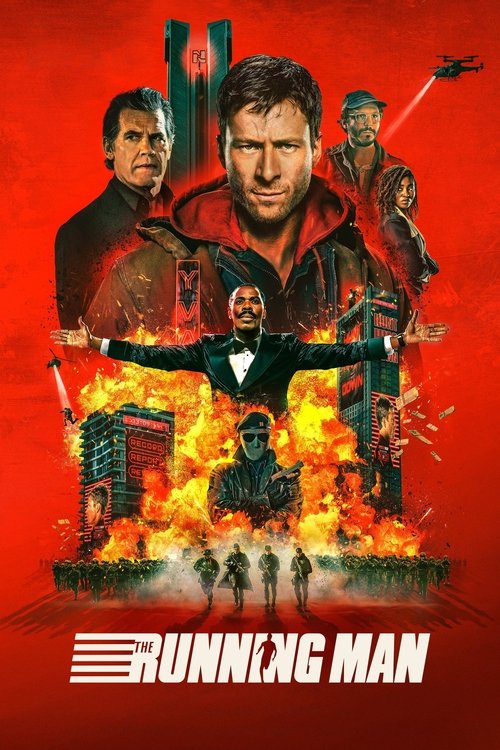
The Running Man
A pulse-pounding dystopian thrill ride dripping with feral rage, where neon-drenched corporate excess clashes against the desperate grit of a father running through a rigged, bloodthirsty reality-television nightmare.
The Running Man

The Running Man

"Hunt him down."

11 November 2025 United States of America 133 min 6.8 (1,822)

Director: Edgar Wright

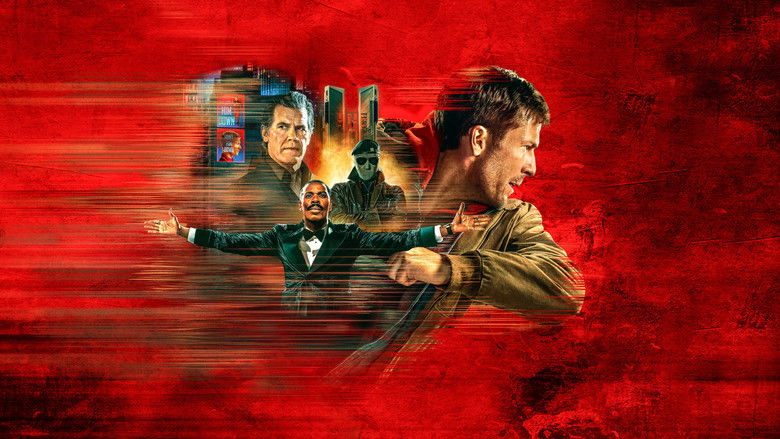
Cast: Glen Powell, Colman Domingo, Lee Pace, Josh Brolin, William H. Macy

Action Thriller Science Fiction Media Manipulation and Manufactured Truth Economic Inequality and Class Warfare Spectacle Violence and Voyeurism Defiance, Rage, and Individual Agency
Budget: $110,000,000
Box Office: $69,000,000

Overview

Set in a bleak near-future dystopian America of 2025, society is governed by "The Network"—a ruthless corporate media monopoly that pacifies an impoverished, healthcare-starved populace with violent game shows and low-brow reality entertainment on FreeVee. The undisputed crown jewel of this state-sanctioned programming is The Running Man, a lethal nationwide manhunt in which contestants attempt to survive for 30 days while being pursued by elite assassins and a public eager to collect bounty rewards.

Ben Richards (Glen Powell), an unemployed blue-collar worker from the decaying slums of Co-Op City, finds himself blacklisted and unable to afford life-saving medication for his gravely ill infant daughter, Cathy. Pushed to absolute desperation, Ben submits to The Network and is coerced by its cunning executive producer, Dan Killian (Josh Brolin), into entering The Running Man as the show's next contestant.

Equipped with a $1,000 allowance and a 12-hour head start, Ben is thrust into the open world. To secure the $1 billion grand prize, he must navigate an environment where every citizen is a potential informant, all while submitting mandatory daily video footage to maintain his standing in the broadcast. Armed with raw instincts, unyielding fury, and unexpected allies, Ben’s fight for survival quickly threatens to dismantle the very system designed to destroy him.
Core Meaning

Directed by Edgar Wright and co-written with Michael Bacall, The Running Man (2025) returns to the dark, satirical roots of Stephen King’s original 1982 novella (written under his Richard Bachman alter ego). The film serves as a razor-sharp critique of hyper-capitalism, corporate media consolidation, and a pacified society addicted to sensationalized, broadcasted cruelty.

At its core, the director's message is that oppressive corporate systems keep the working class submissive by maintaining constant economic desperation, providing distracting violent spectacles, and engineering public paranoia. By forcing impoverished citizens to hunt and turn against one another for cash rewards, the ruling elite ensures that the public remains focused on running away rather than turning around to confront the actual figures of power sitting comfortably in executive boardrooms.

Thematic DNA

Media Manipulation and Manufactured Truth 30%
Economic Inequality and Class Warfare 25%
Spectacle Violence and Voyeurism 25%
Defiance, Rage, and Individual Agency 20%

Media Manipulation and Manufactured Truth

The Network actively edits, contextualizes, and deepfakes live footage to construct false narratives. Ben Richards' genuine desperation and self-defense are twisted into villainy on television, highlighting how authoritarian structures control truth through broadcast media.

Economic Inequality and Class Warfare

Systemic poverty forces the lower class to risk their lives for basic survival and medical care. The film illustrates a stark divide between the wealthy elite in luxury suites and the starving masses in industrial slums.

Spectacle Violence and Voyeurism

The public’s appetite for sensationalized bloodsport is weaponized by the state. Reality television acts as a modern bread-and-circuses tool to numb empathy and divert attention from societal decay.

Defiance, Rage, and Individual Agency

Ben Richards’ explosive anger is not a flaw, but his greatest strength. His refusal to play by the rigged rules transforms him from a desperate father into an unscripted symbol of popular resistance.

Character Analysis

Ben Richards

Glen Powell

Archetype: Reluctant Antihero / Working-Class Rebel Key Trait: Ferocious, explosive anger paired with unyielding moral integrity.

Motivation

Earning enough money on The Running Man to keep his daughter Cathy alive.

Character Arc

Evolves from a jobless, anger-prone father desperate to buy medicine for his sick infant into a fierce, unscripted revolutionary who turns the game back on its creators.

Dan Killian

Josh Brolin

Archetype: The Cynical Corporate Mastermind / Primary Antagonist Key Trait: Cold, pragmatic charm and ruthless corporate elitism.

Motivation

Maximizing broadcast ratings, controlling public narrative, and maintaining state stability.

Character Arc

Maintains a cold, calculating stance throughout, treating human tragedy as ratings gold until Ben's defiance threatens his entire network empire.

All 5 characters and cast

Symbols & Motifs

The Crimson Runner Jumpsuit

Meaning:

Symbolizes corporate branding and the commodification of human life.

Context:

Ben is outfitted in an eye-catching red suit to ensure he remains visible to Hunters and public informants, turning his body into a literal television property.

Daily Video Tapes / Camcorders

Meaning:

Symbolizes the illusion of voice versus corporate control.

Context:

Contestants must record and mail daily video tapes to stay in the game; however, The Network weaponizes these tapes by editing them to manipulate public perception.

"Arnie Bucks" (Schwarzenegger Currency)

Meaning:

Symbolizes the total blurring of pop culture, authoritarian authority, and commercial illusion in this alternate dystopian reality.

Context:

A prominent motif where paper currency features Arnold Schwarzenegger’s portrait.

Studio Neon vs. Slumside Industrial Blue

Meaning:

Visual motif reinforcing the vast economic gulf dividing society.

Context:

Contrasts hyper-saturated, glittering television studio lighting with the cold, grimy blue-gray palette of Co-Op City.

Memorable Quotes

More than enough... to burn this building down and everyone in it!
— Ben Richards

Context

Spoken to host Bobby Thompson during his live pre-game studio interview when asked how long he thinks he will survive.

Meaning

Establishes Ben's fierce defiance, signaling to the audience that he is not playing to survive passively, but to dismantle the system.

The rich are even more full of shit than daddy thought.
— Ben Richards

Context

Said to his infant daughter Cathy while watching a trivia show broadcast that highlights luxury jetliner amenities.

Meaning

Highlights Ben's deep-seated class resentment and sharp, cynical humor before entering the game.

All 3 quotes

Philosophical Questions

Is human empathy eroded when real violence is consumed as entertainment?

The film explores how media screens distance audiences from genuine human suffering.

Can personal morality survive within a completely commodified system?

It questions whether working-class citizens can maintain integrity when forced to fight one another for basic necessities like healthcare.

Where is the boundary between individual free choice and systemic coercion?

It examines whether Ben's decision to risk his life on a lethal game show can be called "free will" when the alternative is his child's death.

Alternative Interpretations

The Anti-Capitalist Revolutionary Reading: The film can be viewed as an optimistic narrative about how genuine working-class anger, when unedited and broadcast directly, can shatter state propaganda and ignite collective resistance.

Full ending explanation

Cultural Impact

Released in late 2025, The Running Man resonated with contemporary discussions surrounding AI deepfakes, wealth disparity, media consolidation, and reality television culture. Grossing $69 million worldwide against a $110 million budget, the film generated extensive conversation among critics and audiences for its balance of Edgar Wright's signature kinetic filmmaking with bleak sociopolitical commentary. Alongside The Long Walk, it marked a major resurgence in adapting Stephen King's darker Bachman stories for modern audiences.

Audience Reception

Praised Aspects: Glen Powell’s charismatic, rage-infused performance, Josh Brolin’s cold villainy, Edgar Wright’s signature kinetic pacing, and faithful adherence to Stephen King’s original book structure.

Main Points of Criticism: A 133-minute runtime that some felt dragged, occasional preachy dialogue, and a tone that shifted awkwardly between bleak satire and blockbuster popcorn action.

Overall Verdict: A fast-paced, visually stylish action-thriller that offers entertainment and sharp media satire, even if it occasionally struggles to reconcile its blocky action beats with its dark themes.

Interesting Facts

  • Edgar Wright publicly tweeted back in 2017 that if he could remake any movie, it would be The Running Man—not to remake the 1987 Schwarzenegger action film, but to adapt Stephen King's original 1982 novella.
  • Stephen King wrote the original book in 1982 under the pseudonym Richard Bachman, setting the story in the year 2025. The 2025 film release perfectly aligns with the book's futuristic setting.
  • Filming took place across the United Kingdom and Scotland, with industrial sites in Bulgaria providing the gritty open-world backdrop for Co-Op City and dystopian America.
  • Glen Powell performed a majority of his own action sequences, including jumping off high bridges and scaling down building exteriors.
  • Stephen King served as an executive producer on the film and publicly expressed enthusiasm for Wright's faithful, gritty approach to his source material.

Easter Eggs

Arnold Schwarzenegger Currency

Paper money in the film features Arnold Schwarzenegger’s face, serving as a humorous nod to the star of the 1987 film.

Homage to the 1987 Unitard

The red runner jumpsuit worn by Glen Powell pays visual tribute to the iconic outfit worn by Schwarzenegger in the original movie, modernized with tactical padding.

Fictional Network Shows

The background television channels broadcast game shows like Speed the Wheel and Treadmill to Bucks, direct nods to the fictional programming detailed in Stephen King’s 1982 novella.

Stephen King Alternate Reality Universe

The film was released in 2025 alongside another Richard Bachman adaptation, The Long Walk, highlighting King's darker dystopian worldbuilding.

Frequently Asked Questions

Explore More About This Movie

Dive deeper into specific aspects of the movie with our detailed analysis pages

Comments (0)

Leave a comment

No comments yet. Be the first to share your thoughts!

Similar Movies