"Dream the world anew."
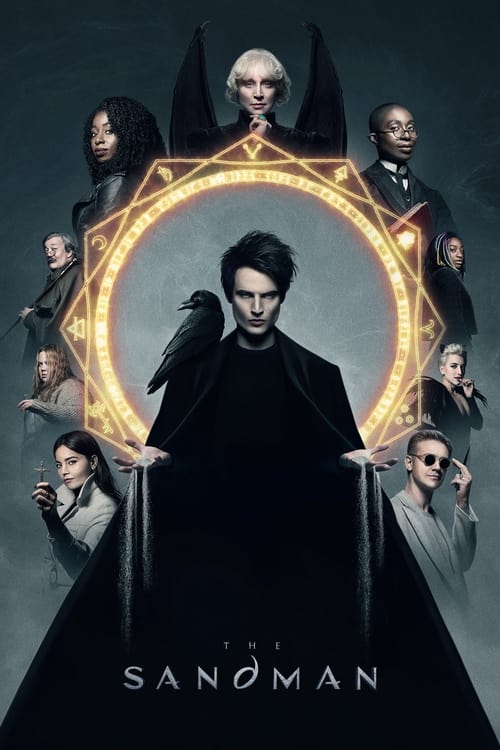
Cast: Tom Sturridge, Vivienne Acheampong, Patton Oswalt, Boyd Holbrook, Nina Wadia
The Sandman — Characters & Cast
Character Analysis
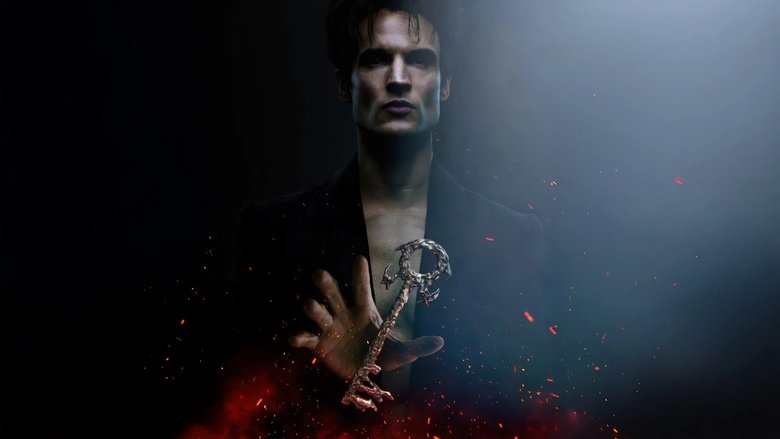
Dream / Morpheus
Tom Sturridge
Motivation
Initially pure self-restoration: to be whole, potent and obeyed again. This mutates into duty — the Dreaming and its residents must be maintained because they depend on him. By the second season the motivation is atonement: undoing the cruelties of his own past, however much it costs, until responsibility outweighs even self-preservation.
Character Arc
He begins the series as a proud, unexamined absolute monarch, and is immediately humbled: stripped, caged and displayed for a century. Season one is restoration — reclaiming tools, realm and authority — but each victory quietly exposes how badly his rule was built, and the season's most important reversals are the ones where he chooses to undo old punishments rather than impose new ones. Season two turns the screw: he accepts an inheritance he does not want, goes looking for the sibling who proved that a function can be abandoned, and is finally brought face to face with the person he wronged most irreparably. The mercy he ultimately extends is the moral climax of the entire show and, by the rules that bind his family, also his sentence. His long-term transformation is from a being who could not change into one who can only change by ending.
Lucienne
Vivienne Acheampong
Motivation
To preserve the Dreaming and its stories, including the ones never written. Her motivation deepens from custodianship into something closer to guardianship of her ruler's soul — she wants Dream to survive himself, not merely to reign.
Character Arc
Librarian of the Dreaming, gender-flipped from the comics' Lucien. She held the realm together alone through a century of her ruler's absence, and the series gives her the slow, difficult arc of a subordinate learning to speak plainly to a king. Early on she defers, hedges and is overruled; over both seasons she becomes the one voice Dream cannot dismiss, warning him about his blind spots and taking on genuine authority in the running of the realm. Her arc is a study in institutional loyalty — she serves the office rather than the man, which is precisely why she matters most when the office changes hands.
Death
Kirby Howell-Baptiste
Motivation
To do her job with kindness and to keep her family honest. Her private motivation, sharpened in the later season, is love for a brother she cannot save from his own nature — so she settles for making sure he is not alone.
Character Arc
Death does not develop so much as reveal, and the series uses her as a fixed point against which everyone else's motion is measured. Introduced in season one's most acclaimed episode, she diagnoses her brother's self-pity in a single afternoon of ordinary work. Across the run she reappears at each of Dream's inflection points, always with the same equanimity, and her role expands in the final season from adviser to something more like a witness and executor — the sibling who understands what is coming and neither prevents nor mourns it inappropriately. The second season's concluding special gives her a story of her own.
The Corinthian
Boyd Holbrook
Motivation
Initially appetite and autonomy — the desire to be a person rather than a function, and to see what humanity does when nightmares walk among them. After his remaking, the motivation inverts into loyalty, though the show never lets viewers forget what he is underneath.
Character Arc
A nightmare who slipped his leash during Dream's imprisonment and spent decades in the waking world as a serial killer, cultivating an admiring subculture of imitators. He is the season one antagonist not because he is powerful but because he is free — the proof that Dream's creations can outgrow their maker. His arc is the show's most surprising, moving from predator to unmade thing to a remade version of himself returned to service, a second existence in which the same appetite is aimed at duty. He becomes the case study for the series' question of whether a story can be given a different ending.
Matthew the Raven
Patton Oswalt (voice)
Motivation
At first simple curiosity and a desire to be useful in an afterlife he did not choose. This deepens into loyalty and then love, until his motivation becomes keeping Dream company through decisions he cannot stop.
Character Arc
A newly made raven who was once a man, assigned to Dream against his master's initial objections. He starts as comic relief and exposition device — the one character permitted to ask stupid questions about cosmology — and grows into the emotional centre of the later story. Over two seasons he transforms from a nervous employee into the only figure who will argue with Dream out of pure affection, and the series' most devastating late passages are filtered through his grief and his refusal to accept what his master has decided.
Cast
Explore More About This Movie
Dive deeper into specific aspects of the movie with our detailed analysis pages